



ACF-50 vs. CorrosionX: A Side-By-Side Comparison
Key Takeaways
- ACF-50 and CorrosionX are both thin-film fluid compounds that displace moisture and inhibit corrosion on aircraft, meeting the same core military and aviation standards.
- ACF-50's slow-creeping formula makes it the stronger choice for interior surfaces, tight seams, and avionics bays, with a recommended reapplication interval of 12 to 24 months.
- CorrosionX's Polar Bonding technology and thicker film offer longer-lasting protection in high-moisture and high-wear environments, often outperforming ACF-50 in salt-spray durability testing.
- Both products are dielectric and safe for use on avionics, wiring, composites, and painted surfaces – and both have proven useful well beyond aviation in marine, industrial, and consumer applications.
- For comprehensive corrosion control, keeping both products on hand is a practical approach, since each has distinct strengths depending on the application
Corrosion is one of the most persistent and damaging threats to aircraft safety, performance, and longevity. Whether it's driven by moisture, salt, pollutants, or extreme temperature fluctuations, corrosion in aircraft components can lead to costly repairs, reduced efficiency, and – in worst-case scenarios – critical in-service failures. For that reason, aircraft maintenance professionals treat corrosion prevention as a core element of every airworthiness program.
The aviation industry has developed several high-performance corrosion control solutions to address this threat, but two products stand out for their reach and reputation: ACF-50 and CorrosionX. Both are designed to combat corrosion on aircraft by displacing moisture, inhibiting rust formation, and creating long-lasting protective barriers. Each meets key aviation standards – including MIL-PRF-81309H and MIL-PRF-81309F Type II – and has earned a loyal following across aviation, marine, and industrial sectors.
We've previously compared ACF-50 vs. WD-40 in a dedicated post about aircraft corrosion protection, but this time we're focusing on a true apples-to-apples matchup. In this article, we'll explore the similarities and differences between ACF-50 and CorrosionX, helping you decide which option best suits your aircraft maintenance needs.
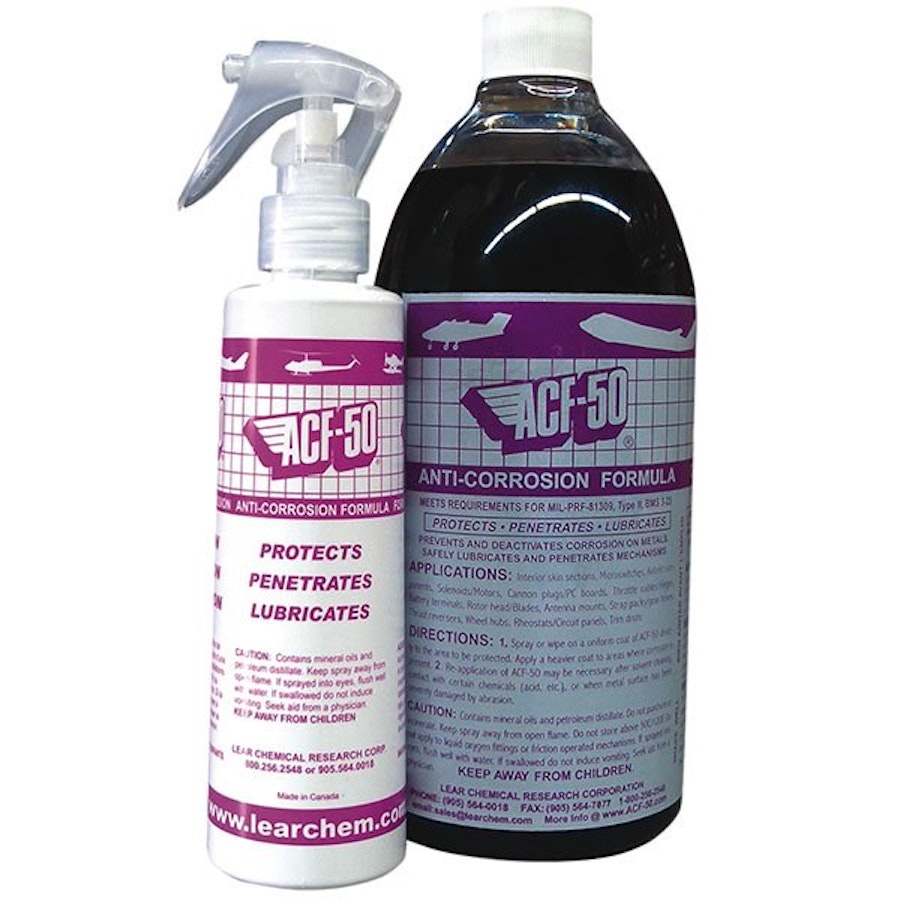
What Is ACF-50?
ACF-50 (Anti-Corrosion Formula) was developed specifically for the aviation industry to combat corrosion on aircraft. It's a corrosion-inhibiting thin-film fluid compound (TFFC) that goes on wet, penetrates deeply into seams and joints, and actively stops existing corrosion while preventing new corrosion from forming. ACF-50 is most commonly applied via a spray bottle, an aerosol can, or fogging equipment for hard-to-reach areas.
One of ACF-50's signature benefits is its ability to "creep" into tight spaces and displace water – a critical advantage in controlling aircraft corrosion at the seams, joints, and overlapping panels where moisture loves to hide. It's nonflammable, nontoxic, and safe for use on avionics, wiring, painted surfaces, and composite materials. ACF-50 doesn't dry out or become brittle over time; instead, it gradually wears off and should be reapplied every 12 to 24 months, depending on exposure levels.
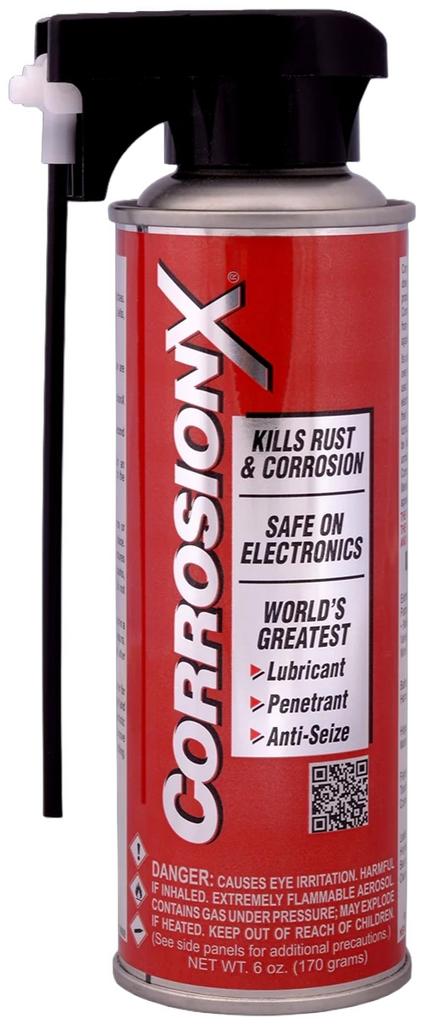
What Is CorrosionX?
CorrosionX is a versatile, dielectric corrosion-prevention compound and penetrant that delivers long-term protection across a wide range of applications, including aviation, marine, military, and industrial uses. Like ACF-50, it's a TFFC that stops and prevents aircraft corrosion by displacing moisture and forming a resilient barrier on metal surfaces.
CorrosionX is particularly known for its lubricating properties and its ability to withstand harsh environments. It features patented Polar Bonding technology that allows the formula to bond with metal at a molecular level, creating a long-lasting protective film that resists wash-off and repels moisture even in saltwater conditions. Beyond aircraft, CorrosionX is widely used on sheaves, hinges, windlasses, wire rope, and other moving parts that require both corrosion protection and a lubricating film.
How CorrosionX and ACF-50 Protect Against Corrosion
Both ACF-50 and CorrosionX work by penetrating moisture-prone areas and preventing the electrochemical reaction that drives aircraft corrosion. ACF-50 forms an ultra-thin, active barrier that halts corrosion in progress and repels water through chemical action. It continuously neutralizes corrosive elements, which makes it especially effective in hard-to-reach areas of the airframe.
CorrosionX, on the other hand, leverages Polar Bonding to cling tightly to metal surfaces, resisting displacement from water, vibration, or friction. It remains effective even in wet or salt-laden conditions, delivering superior rust prevention in extreme environments. Both products are classified as TFFCs and are approved under MIL-PRF-81309, the military specification for corrosion-inhibiting compounds used across U.S. military aviation.
How Long Each Product Lasts
ACF-50 typically remains effective for up to 12 months on interior or protected surfaces. In more exposed areas – such as landing gear or wheel wells – it may need to be reapplied every 6 to 12 months. Its performance is influenced by environmental factors and the frequency of aircraft use.
CorrosionX, particularly its Heavy-Duty formulation, offers extended protection with durability exceeding 2,000 hours in salt-spray testing (ASTM B-117). It's often the better choice for applications that require longer intervals between treatments, and operators frequently report that CorrosionX continues to perform even after exposure to washdowns or heavy rain.
Aircraft Compatibility and Safety
Both ACF-50 and CorrosionX are formulated for use on all common aircraft materials, including aluminum, steel, magnesium, composite structures, electrical connectors, and painted surfaces. Neither product is electrically conductive, and both are safe for use on avionics, circuit boards, and wiring harnesses.
Each has undergone extensive testing and meets the aviation and military standards that matter for fleet-wide use, including MIL-PRF-81309 and Boeing D6-17487. Just as importantly, neither product promotes dust or dirt buildup – a key consideration in sensitive aviation maintenance environments where contaminated surfaces can mask wear or corrosion in its earliest stages.
Non-Aviation Applications
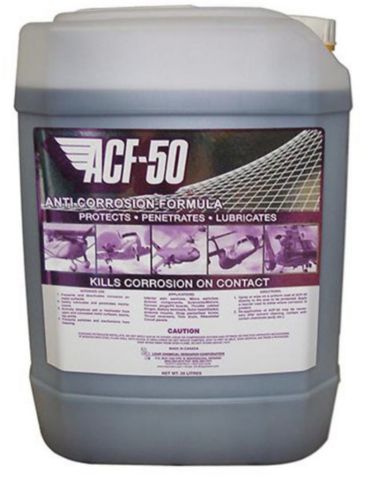
While ACF-50 and CorrosionX were both originally formulated for aviation, they've proven their value across many other industries. ACF-50 is regularly used on motorcycles, cars, drones, firearms, and marine equipment to protect metal parts from rust and corrosion in high-moisture environments.
CorrosionX is widely used in the marine and offshore industries for its exceptional water-displacement and corrosion-control properties, and it's equally trusted for electrical systems, hand tools, industrial machinery, and even home use. Both products also pull double duty as light-duty lubricants and anti-seize treatments for fasteners and mechanical linkages.
Key Differences Between CorrosionX and ACF-50
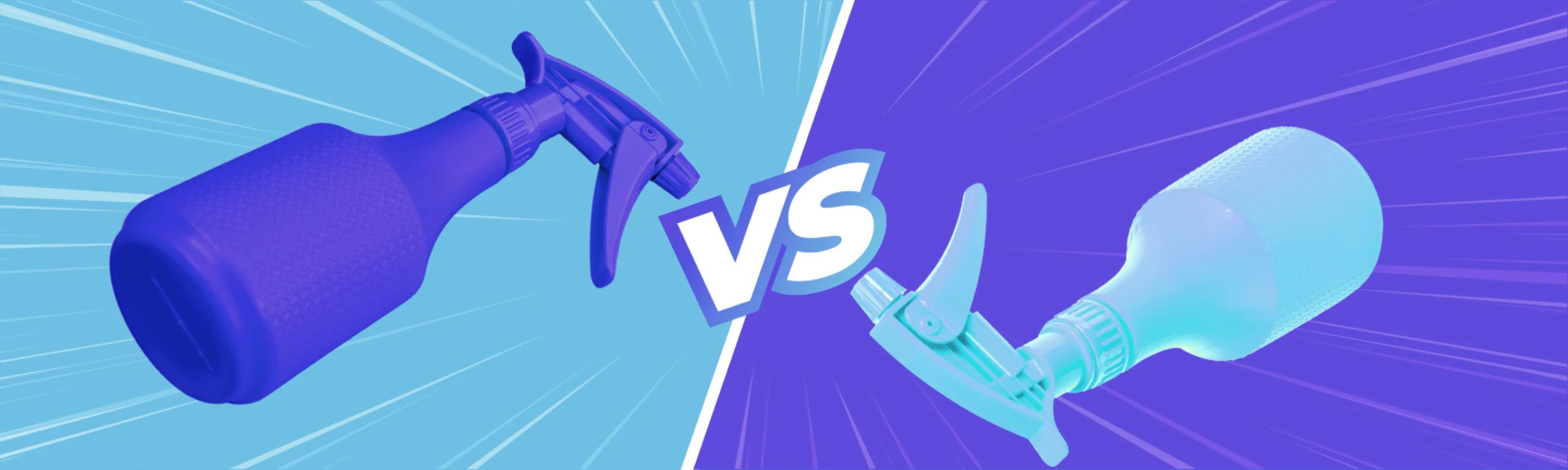
Here's a side-by-side comparison of the most important features of each product:
| Feature | ACF-50 | CorrosionX |
| Film Thickness | Thin, invisible layer | Thicker, visible film |
| Penetration Speed | Slower, creeping action | Rapid penetration |
| Lubrication Properties | Minimal lubrication | Strong lubricant / anti-seize |
| Application Methods | Aerosol, spray bottle, fogging | Aerosol, trigger spray, bulk |
| Electrical Safety | Dielectric, safe on avionics | Dielectric, >39,000V dielectric strength |
| Drying Time | Remains wet, evaporates slowly | Forms semi-dry film |
| Longevity | Up to 12 months | Often exceeds 12 months |
| Certifications | MIL-PRF-81309, Boeing D6-17487 | MIL-PRF-81309H, ASTM B117, D877 |
Choosing Between ACF-50 and CorrosionX
Both ACF-50 and CorrosionX are outstanding products for preventing corrosion on aircraft, and the best choice ultimately depends on where and how you're applying them. If you're primarily looking to treat tight seams, areas behind panels, or complex electrical systems, ACF-50's creeping formula and fogging capability make it the natural fit. It's especially well-suited for interior protection and periodic maintenance.
CorrosionX is the better option when you need robust, long-lasting protection in high-wear or high-moisture environments. Its thicker film, faster penetration, and dual function as a penetrant and lubricant make it highly effective on moving parts and exterior surfaces. For most operators, the most thorough corrosion-control strategy is to keep both products on the shelf and reach for the right one based on the job at hand.

Where to Buy ACF-50 and CorrosionX
Pilot John International® (PJi®) carries a full range of aircraft consumables, including corrosion protection products like ACF-50 and CorrosionX. Whether you're operating an FBO, MRO, or flight department – or you're a private pilot looking after a single aircraft – PJi makes it easy to get what you need with fast shipping and friendly support.
We stock multiple sizes and packaging formats, so you can choose the option that best fits your aircraft, your workflow, and your budget. Need help selecting the right corrosion treatment product? Our experienced team of aviation specialists is here to help.
The Bottom Line
ACF-50 vs. CorrosionX isn't about declaring a winner – it's about choosing the right tool for the job. ACF-50 excels at preventing creeping corrosion and protecting internal spaces, while CorrosionX delivers superior longevity, lubrication, and rugged outdoor performance. Both belong in any serious corrosion-control program.
At PJi, we make it easy to stock either product – or both. Trust our team to supply the anti-corrosion compounds and expert guidance you need to protect your aircraft from the inside out. Reach out to us by phone, email, or live chat today to get your next shipment moving.
Frequently Asked Questions
How often should ACF-50 be applied to an aircraft?
ACF-50 should generally be reapplied every 12 to 24 months on interior or protected surfaces, with more frequent reapplication – every 6 to 12 months – on exposed components like landing gear and wheel wells. The exact interval depends on the operating environment, flight hours, and how often the aircraft is washed. Operators in salt-air environments or who fly through frequent precipitation should plan on the shorter end of the range.
Can ACF-50 and CorrosionX be used together on the same aircraft?
Yes – many operators use both products in the same maintenance program, applying each where it performs best. ACF-50 is typically used on internal areas, behind panels, and in seams where its creeping action shines, while CorrosionX is reserved for moving parts, exposed surfaces, and high-wear components that benefit from its thicker film and added lubrication. Just avoid layering them on the exact same surface in the same session.
Are ACF-50 and CorrosionX safe to use on aircraft avionics?
Yes. Both ACF-50 and CorrosionX are dielectric, which means they're safe for use on avionics, circuit boards, electrical connectors, and wiring harnesses. CorrosionX is rated for dielectric strength above 39,000V, and ACF-50 is widely used inside aircraft electronics bays for the same reason. As always, follow the product manufacturer's application instructions and your Aircraft Maintenance Manual (AMM).
What is the best anti-corrosion lubricant for general aviation aircraft?
There isn't a single best anti-corrosion lubricant – the right choice depends on where it's being applied and the conditions the aircraft sees. ACF-50 is the go-to for creeping into seams, joints, and electrical compartments, while CorrosionX shines on moving parts and exposed surfaces because of its lubricating film and Polar Bonding chemistry. Many operators use both products as complementary tools in a single corrosion-control program.
What causes aircraft corrosion in the first place?
Aircraft corrosion is an electrochemical reaction that starts when metal surfaces are exposed to moisture, salt, pollutants, dissimilar-metal contact, or chemical contamination. It usually appears first in places that trap water and resist drying – seams, fasteners, lap joints, control surfaces, and battery bays are common offenders. Routine inspections, prompt cleanup of spills, and consistent use of corrosion preventatives are the most reliable defenses.
Do ACF-50 and CorrosionX meet aviation and military specifications?
Yes. Both products meet MIL-PRF-81309 – the U.S. military specification for corrosion-preventive compounds – as well as additional aerospace standards, such as Boeing D6-17487, and CorrosionX also meets MIL-PRF-81309H and ASTM B117. These approvals make them suitable for use on a wide range of military, commercial, and general aviation aircraft. Always verify the acceptable corrosion-preventative methods in your specific aircraft maintenance manual.
Will an anti-corrosion lubricant damage aircraft paint or composite surfaces?
No – both ACF-50 and CorrosionX are formulated to be safe on paint, composites, plastics, rubber, and most common aircraft finishes. Neither product breaks down coatings, attacks elastomers, or leaves residue that interferes with future repairs. As a precaution, always perform a small spot test on an inconspicuous area before applying a corrosion preventative to a newly painted or aftermarket surface.