




Safe Aircraft Jacking Procedures for Maintenance Operations
Key Takeaways
- Aircraft jacks are essential for safely lifting aircraft during maintenance procedures such as tire changes, brake servicing, landing gear inspections, engine work, and structural repairs.
- Axle jacks and tripod jacks serve different maintenance purposes – axle jacks are designed for wheel, tire, and brake work, while tripod jacks provide the stability and lifting capacity required for major maintenance operations and full-aircraft lifting.
- Aircraft tail stands help stabilize certain aircraft during lifting procedures and forward-section maintenance, reducing the risk of tipping and improving overall maintenance safety.
- Aircraft jack pads and adapters protect the airframe during lifting by distributing loads correctly at approved jacking points and ensuring secure contact between the aircraft and jack.
- Safe aircraft jacking requires proper equipment selection, level lifting procedures, regular inspections, and strict adherence to OEM maintenance guidelines and safety protocols.
- Routine inspection, maintenance, and load testing of aircraft jacks, tail stands, and related equipment help ensure long-term reliability, regulatory compliance, and safe maintenance operations.
Safety is one of the most important considerations during any aircraft maintenance procedure, especially when lifting and supporting an aircraft with jacking equipment. Improper aircraft jacking procedures, incorrect equipment selection, or inadequate stabilization can result in serious airframe damage, maintenance delays, or injuries to technicians working around the aircraft.
Whether servicing a light general aviation aircraft, a business jet, or a large commercial platform, maintenance teams must use the correct aircraft jacks, tail stands, and jack pads to ensure safe, stable lifting operations.
In this article, we’ll explore the role of aircraft jacks and tail stands in aviation maintenance, explain how supporting equipment like jack pads and extension stands improve safety, and outline best practices for safe aircraft jacking procedures and equipment maintenance.
Aircraft Jack Applications & Main Jack Types
Aircraft jacks are essential pieces of ground support equipment used to lift and stabilize aircraft during inspections, servicing, repairs, and scheduled maintenance procedures. Maintenance teams rely on aircraft jacks for tasks such as landing gear servicing, tire changes, brake replacement, strut maintenance, gear retraction tests, and structural repairs. By safely elevating the aircraft, technicians gain access to critical components that would otherwise be difficult or impossible to service.
The type of aircraft jack used depends on the maintenance procedure, aircraft size, and lifting requirements. The two primary categories used throughout the aviation industry are axle jacks and tripod jacks.

Axle Jacks
Axle jacks are compact, portable lifting systems designed to raise the aircraft at the landing gear axle or strut. These aircraft jacks are commonly used for wheel, brake, tire, and shock strut maintenance, particularly when only one section of the aircraft needs to be lifted. Because of their portability and targeted lifting capability, axle jacks are widely used on general aviation aircraft, business jets, and line maintenance operations.
Axle jacks are available in several configurations, including bottle jacks, hand-carry models, and alligator-style aircraft jacks for heavier applications. Their compact design allows technicians to position them easily beneath landing gear assemblies during routine maintenance tasks.

Tripod Jacks
Tripod jacks are heavy-duty aircraft jacks designed to lift larger sections of the aircraft – including the nose, tail, wings, or fuselage – during extensive maintenance procedures. Their three-legged design provides exceptional stability and load capacity, making them ideal for engine changes, landing gear retraction tests, structural repairs, and major inspections.
These aircraft jacks are commonly used in hangars and MRO facilities where full-aircraft lifting procedures are required. Because tripod jacks support significantly larger loads than axle jacks, they play a critical role in commercial aviation and heavy maintenance operations.
Aircraft Tail Stands & Stability During Maintenance
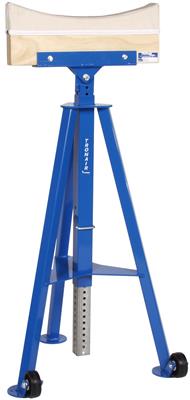
Aircraft tail stands are specialized stabilizing supports used alongside aircraft jacks to maintain proper aircraft balance during maintenance operations. These supports are particularly important when lifting the nose of the aircraft, servicing nose landing gear systems, performing forward fuselage maintenance, or conducting procedures that alter the aircraft’s center of gravity.
Without an aircraft tail stand, some aircraft may become unstable and tip backward during lifting procedures or component removal. Tail stands help counterbalance the aircraft and maintain safe working conditions for technicians operating around or beneath the airframe.
Aircraft tail stands are most commonly used on larger business jets, cargo aircraft, commercial airliners, and military aircraft with longer fuselages or heavier aft sections. Many manufacturers specify tail stand requirements and approved stabilization procedures in the Aircraft Maintenance Manual (AMM). Some advanced tail stands also include built-in alarm systems that alert technicians if excessive load is applied during maintenance.
Proper positioning and secure mating between the aircraft tail stand and the aircraft structure are essential for maintaining stability and preventing structural damage during maintenance operations.

The Role of Aircraft Jack Pads & Adapters
Aircraft jack pads and adapters are critical components used during aircraft lifting operations to ensure safe load distribution and proper contact between the aircraft and the jack. These components help prevent structural damage by distributing lifting forces across approved aircraft jacking points.
Some aircraft include integrated aircraft jack pads built directly into the airframe, while others require removable jack pad adapters designed specifically for the aircraft model and jack configuration. Using the wrong jack pad – or failing to use one entirely – can create uneven loading conditions, increase the risk of slippage, and potentially damage the aircraft structure during lifting procedures.
Aircraft jack pads work alongside both axle jacks and tripod jacks to provide stable lifting interfaces and improve overall safety during maintenance operations. Because different aircraft manufacturers use unique jacking point designs, technicians must always verify compatibility between the aircraft, jack system, and jack adapter before beginning maintenance.

Tripod Jack Extension Stands & Increased Lifting Capability
Tripod jack extension stands are specialized components designed to increase the lifting height and reach of standard tripod jacks during aircraft maintenance procedures. These extension systems are commonly used when servicing aircraft with greater ground clearance or when additional lift height is required to access specific components.
By increasing the aircraft jack's operational height, extension stands allow technicians to safely perform maintenance tasks that would otherwise be difficult to accomplish with a standard tripod jack configuration alone. These components are especially valuable during heavy maintenance, landing gear servicing, and structural inspection procedures.
Because extension stands directly affect lifting geometry and stability, they must always be matched to compatible tripod jack models and operated according to OEM guidelines. Proper installation and load management help maintain lifting stability and reduce the risk of imbalance during aircraft maintenance operations.
Safe Aircraft Jacking Procedures & Best Practices
Following proper aircraft jacking procedures is essential for protecting technicians, preventing equipment failures, and maintaining aircraft stability during maintenance operations. Using the correct aircraft jacks, aircraft tail stands, and aircraft jack pads – while following approved lifting procedures – significantly reduces operational risks.
1) Inspect Equipment Before Use
Inspect all aircraft jacks, aircraft tail stands, jack pads, and adapters before each use. Check for hydraulic leaks, damaged hoses, cracked welds, corrosion, worn seals, loose hardware, and proper hydraulic fluid levels.
2) Position the Aircraft on a Stable Surface
Whenever possible, perform aircraft jacking procedures inside a hangar on a level, stable surface. Avoid uneven pavement, excessive slope, or outdoor wind conditions that could compromise aircraft stability during lifting.
3) Verify Jack Pad & Jacking Point Compatibility
Ensure the correct aircraft jack pad or aircraft jack adapter is installed and properly aligned with the manufacturer-approved jacking points identified in the Aircraft Maintenance Manual. Incorrect positioning can damage the airframe or create unstable lifting conditions.
4) Raise the Aircraft Evenly
Operate all aircraft jacks in unison to keep the aircraft level throughout the lifting process. Uneven lifting can place unnecessary stress on the airframe and increase the risk of instability.
5) Engage Safety Locking Devices
As the aircraft is raised, engage speed ram lockouts, hand wheel safety nuts, and any mechanical locking systems equipped on the aircraft jack. These features provide additional protection in the event of hydraulic pressure loss.
6) Use Aircraft Tail Stands When Required
Install aircraft tail stands whenever specified by the Aircraft Maintenance Manual or when maintenance procedures may alter the aircraft’s center of gravity. Proper stabilization helps prevent tipping during lifting operations.
7) Maintain Safe Personnel Positioning
Never place hands, tools, or body parts between the aircraft and the jack pad during lifting or lowering procedures. Personnel should also avoid entering or moving the aircraft while it is supported solely by aircraft jacks.
8) Lower the Aircraft Slowly & Carefully
After maintenance is complete, lower the aircraft gradually and evenly while ensuring all personnel, tools, and equipment remain clear of the aircraft and jacking systems.
Inspection & Maintenance of Aircraft Jacking Equipment
Routine inspection and preventative maintenance are essential for maintaining the safety and reliability of aircraft jacks, aircraft tail stands, and related lifting equipment. Because these systems operate under substantial loads, regular servicing helps identify wear, hydraulic issues, and structural fatigue before failures occur.
Axle jacks should be visually inspected before each use for hydraulic leaks, damaged seals, worn components, and proper fluid levels. Annual maintenance typically includes more detailed inspections, calibration checks, and load-testing procedures to verify safe operation.
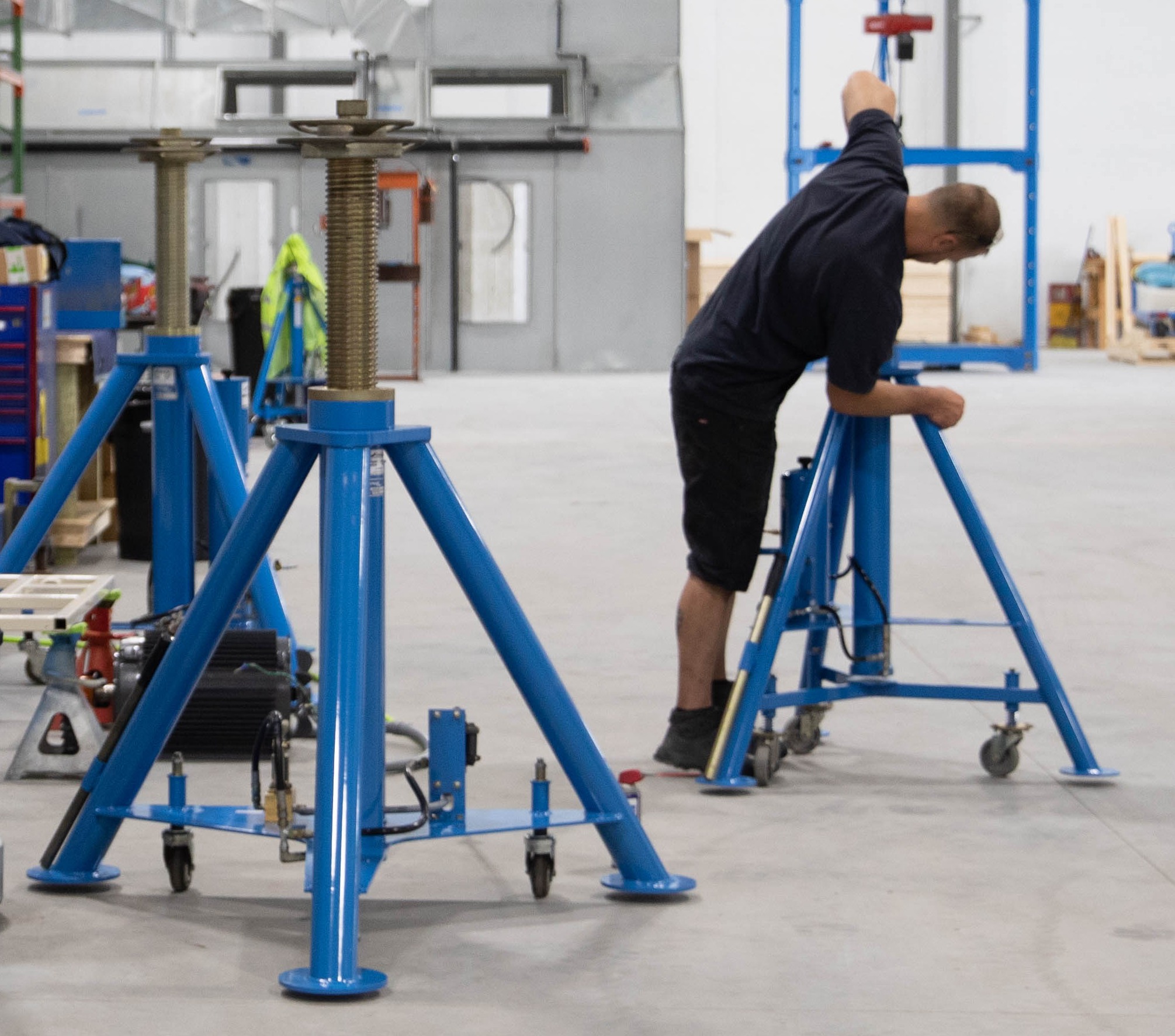
Tripod jacks require more comprehensive preventative maintenance due to their higher lifting capacities and structural complexity. Every 90 days, technicians should inspect locking pins, welded joints, hydraulic cylinders, mechanical extensions, and corrosion-prone areas while cycling the jack through its full range of motion. Annual load testing and component replacement may also be required, depending on OEM recommendations and operational use.
Aircraft tail stands should also undergo routine inspections for structural damage, corrosion, worn fasteners, caster performance, and proper alarm operation when applicable. Although annual load testing is not typically required for tail stands, regular inspections and preventative maintenance are essential for maintaining safe aircraft stabilization procedures.

The Bottom Line
Safe and effective aircraft jacking procedures are fundamental to successful aviation maintenance operations. Understanding the differences between axle jacks and tripod jacks, the importance of aircraft tail stands, and the role of aircraft jack pads and extension stands helps technicians perform lifting procedures safely while protecting both personnel and aircraft structures.
Regular inspection, preventative maintenance, and proper equipment selection further reduce operational risks and help ensure compliance with aviation safety standards and OEM procedures.
Pilot John International® (PJi®) offers a comprehensive selection of new and used aircraft jacks, including axle jacks and tripod jacks, as well as aircraft tail stands, jack pads and adapters, and tripod jack extension stands from trusted manufacturers like Tronair, Malabar, Columbus Jack, Bogert Aviation, Gulfstream, and Alberth Aviation.
PJi also provides expert maintenance, repairs, and overhauls for aircraft jacks at our state-of-the-art GSE service center. Whether you need help selecting the right aircraft jacking equipment or restoring existing equipment to like-new condition, our aviation specialists are ready to assist. Contact us today by phone, email, or live chat to get started!
Frequently Asked Questions
What are aircraft jacks used for?
Aircraft jacks are used to safely lift and support aircraft during maintenance procedures such as tire changes, brake servicing, landing gear inspections, and structural repairs. Different aircraft jack types are designed for specific lifting applications depending on the aircraft size and maintenance task.
What is the difference between axle jacks and tripod jacks?
Axle jacks are compact lifting systems typically used for wheel, tire, and brake maintenance at the landing gear assembly. Tripod jacks are larger aircraft jacks designed to lift substantial portions of the aircraft during heavy maintenance procedures, structural repairs, or landing gear testing.
Why are aircraft tail stands important during maintenance?
Aircraft tail stands help stabilize the aircraft and prevent tipping during lifting operations or maintenance tasks that shift the aircraft’s center of gravity. They are commonly used on larger aircraft during nose gear servicing, cargo loading, or forward fuselage maintenance.
What role do aircraft jack pads play in aircraft lifting?
Aircraft jack pads help distribute lifting loads safely across approved aircraft jacking points while protecting the airframe from structural damage. Properly matched jack pads improve lifting stability and reduce the risk of slippage during maintenance operations.
How often should aircraft jacks be inspected?
Aircraft jacks should be visually inspected before each use for hydraulic leaks, worn seals, damaged hoses, and structural issues. More detailed preventative maintenance inspections and load testing are typically performed annually or in accordance with manufacturer recommendations.
Can aircraft jacking procedures be performed outdoors?
Yes, aircraft jacking procedures can be performed outdoors when necessary, but technicians should ensure the aircraft is positioned on a stable, level surface. Wind, uneven pavement, and environmental conditions can increase operational risks during lifting procedures.
What is a tripod jack extension stand?
A tripod jack extension stand is a component that increases the lifting height of a tripod jack during maintenance operations. Extension stands are commonly used when servicing larger aircraft or when additional clearance is needed for inspections or repairs.
Why is preventative maintenance important for aircraft jacking equipment?
Routine preventative maintenance helps identify hydraulic problems, structural wear, corrosion, and damaged components before equipment failure occurs. Proper maintenance improves safety, extends equipment life, and helps ensure compliance with aviation maintenance standards.