What Is Permaswage Tooling Used for in Aircraft Maintenance?
Key Takeaways
- Permaswage tooling installs permanent, cold-swaged tube connections on aircraft hydraulic, fuel, and pneumatic systems without heat, welding, or threads – qualifying to SAE standards and major OEM specifications.
- The system is built around two distinct swaging methods – radial (DLT/DET) and axial (DAT/Permalite) – each engineered for different tube sizes, pressure ratings, and access constraints.
- Compared to threaded fittings, swaged connections eliminate vibration-related loosening and retorquing, while reducing tube system production time by more than half.
- Permaswage joints carry permanent repair status in aviation maintenance documentation, requiring no follow-up action items once the swage is verified.
- Choosing the right kit comes down to four variables: tube material, tube size, operating pressure, and the degree of access available at the installation point.
Aircraft hydraulic, fuel, and pneumatic systems operate under conditions that leave no margin for compromised connections. Pressure spikes, constant vibration, and temperature extremes can loosen threaded hardware, degrade welded joints, and create leak paths in systems where leak-free performance isn’t a preference – it’s a requirement.
That’s why swaged tube connections have become the standard across commercial, corporate, and military aviation: they create a permanent, metal-to-metal seal without heat, flux, or threads, holding tight across the full lifecycle of the tubing they’re installed on.
At the center of that standard is Permaswage tooling – a purpose-built system of hydraulic tools, fitting kits, and inspection gauges engineered to install permanent swage fittings on aircraft tubing to aerospace specification. In this article, we’ll break down how Permaswage tooling works, where it fits into aviation maintenance, and how to select the right system for your team.
What Is Permaswage Tooling?
Permaswage is a brand name that has become nearly synonymous with aerospace tube swaging – and for good reason. Designed and qualified in 1972 to meet McDonnell Douglas and Boeing aerospace specifications, Permaswage has spent more than five decades proving itself across some of the most demanding operational environments in aviation.
The core of the system is cold swaging: a hydraulic process that permanently joins a fitting to metal tubing by radially or axially compressing the fitting until it forms a tight, metal-to-metal seal. No heat, no welding, no brazing, and no threaded engagement.
The result is a joint qualified to SAE AS4459, AS18280, and AS85421, as well as to OEM specifications from Boeing, Bombardier, Cessna, Lockheed, and others – giving maintenance teams a clear compliance path for approved repairs and installations.
How Does the Swaging Process Work?
The swaging installation sequence is methodical, and each step matters. It begins with tube preparation: the tube is cut cleanly and deburred, and the insertion depth is marked using the appropriate marking tool from the kit. Permaswage fittings accommodate a 0.300” tube insertion tolerance, which minimizes prestress on the tube and fitting during the swage operation.
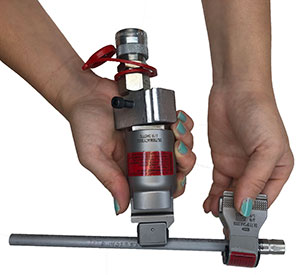
With the tube prepared, the fitting is inserted to the marked depth, and the swage head – matched to the tube OD and fitting type – is positioned over the fitting body. The hydraulic pump is engaged, applying controlled radial or axial compression that cold-works the fitting onto the tube to form the metal-to-metal seal. No heat, no flux.
Once the swage cycle is complete, an inspection gauge verifies that the fitting has been swaged to the correct depth and dimensional specification – a straightforward visual check that confirms the connection meets requirements. Permaswage joints assembled with matched fittings and tooling are guaranteed for the life of the tube.
Where Is Permaswage Tooling Used in Aircraft Maintenance?
Permaswage connections are found throughout an aircraft’s fluid systems – wherever metal tubing needs to be permanently joined, repaired, or replaced to withstand operational pressure and vibration. The primary application areas are hydraulic systems, including flight control actuators, landing gear actuation circuits, and braking systems; fuel line assemblies; and pneumatic lines on commercial, corporate, and military aircraft.
One of the practical strengths of Permaswage tooling is its compact footprint. The tool heads are engineered to work in tight aircraft compartments where welding isn’t viable and access is restricted – making Permaswage equally suited to hangar-based production work and field or AOG repairs where the aircraft can’t be moved. Airlines, MROs, OEMs, and military maintenance teams worldwide rely on the system for both scheduled maintenance events and unplanned line repairs.
What Are the Advantages of Permaswage Over Traditional Fittings?
The case for swaged connections starts with what they eliminate. Threaded fittings – including flared and flareless configurations – are subject to loosening from vibration over time, require periodic retorquing, and contribute weight to the assembly. Welded and brazed joints address the vibration concern but require heat, specialized skill, and equipment that can’t follow the aircraft to a remote ramp. Permaswage addresses both problems at once.
A correctly swaged Permaswage connection resists pressure fluctuations and vibration characteristic of flight operations, with radial systems rated up to 4,000 PSI and axial systems reaching 5,000 PSI and beyond. The system is compatible with aluminum, stainless steel, and titanium tubing, and fittings are Teflon-coated and color-coded by material for fast identification in the field.
Permaswage’s second-generation tooling – with enhanced load distribution and improved reliability compared to the original design – reduces tube system production time by more than 50%, a difference that matters both on the production line and when an aircraft is grounded awaiting repairs.
What Is the Difference Between Radial and Axial Permaswage Systems?
Permaswage tooling isn't a single system – it's a family built around two distinct swaging methods, each engineered for different tube sizes, pressure requirements, and access conditions. Understanding the differences is essential for selecting the right tool, yet most generic resources leave this distinction unexplained.
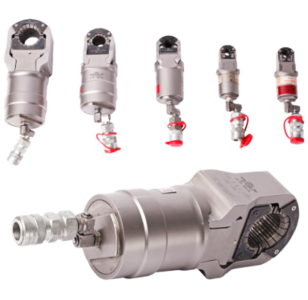
Radial (DLT) swaging is the original and most widely deployed Permaswage method. The swage head compresses the fitting uniformly from all sides simultaneously, covering tube sizes from 3/16” to 1.5” OD (sizes 03 to 24) at pressures up to 4,000 PSI. DLT tooling is lightweight, portable, and compact enough for in situ repairs in confined aircraft compartments.
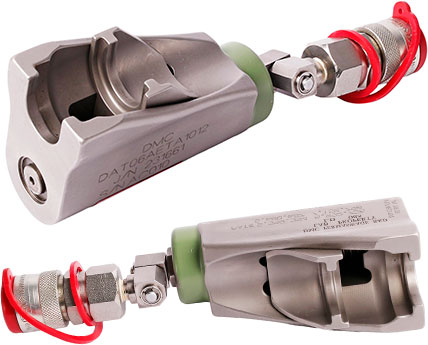
Axial (DAT/Permalite) swaging drives a swage ring lengthwise along the fitting rather than compressing it radially, requiring only 180° of access. This makes DAT tooling well-suited to tight or awkward installation locations. Permalite covers a broader size range – 3/16” to 2” OD (sizes 03 to 32) – supports pressures up to 5,000 PSI, and accommodates temperatures from -65°F to 275°F (-54°C to 135°C). The system exceeds the operating pressure of its qualified systems by a factor of four, making it the right choice for the most demanding applications.
What Tools Are Typically Included in a Permaswage Tool Kit?
Permaswage tool kits are built to cover every step of the installation workflow, from tube preparation through post-swage inspection. Contents vary by tooling family and size range.
DLT (Radial) Tool Kits
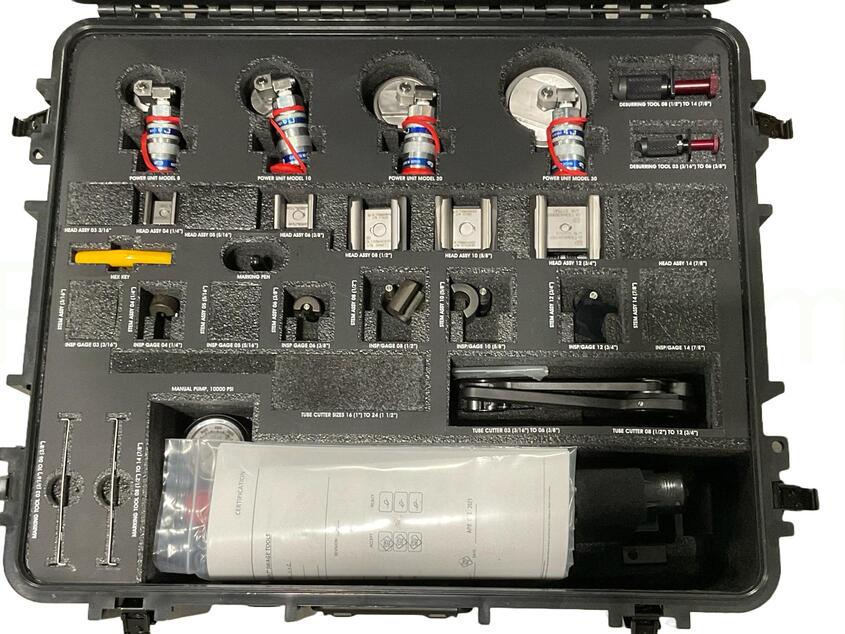
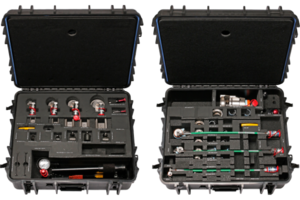
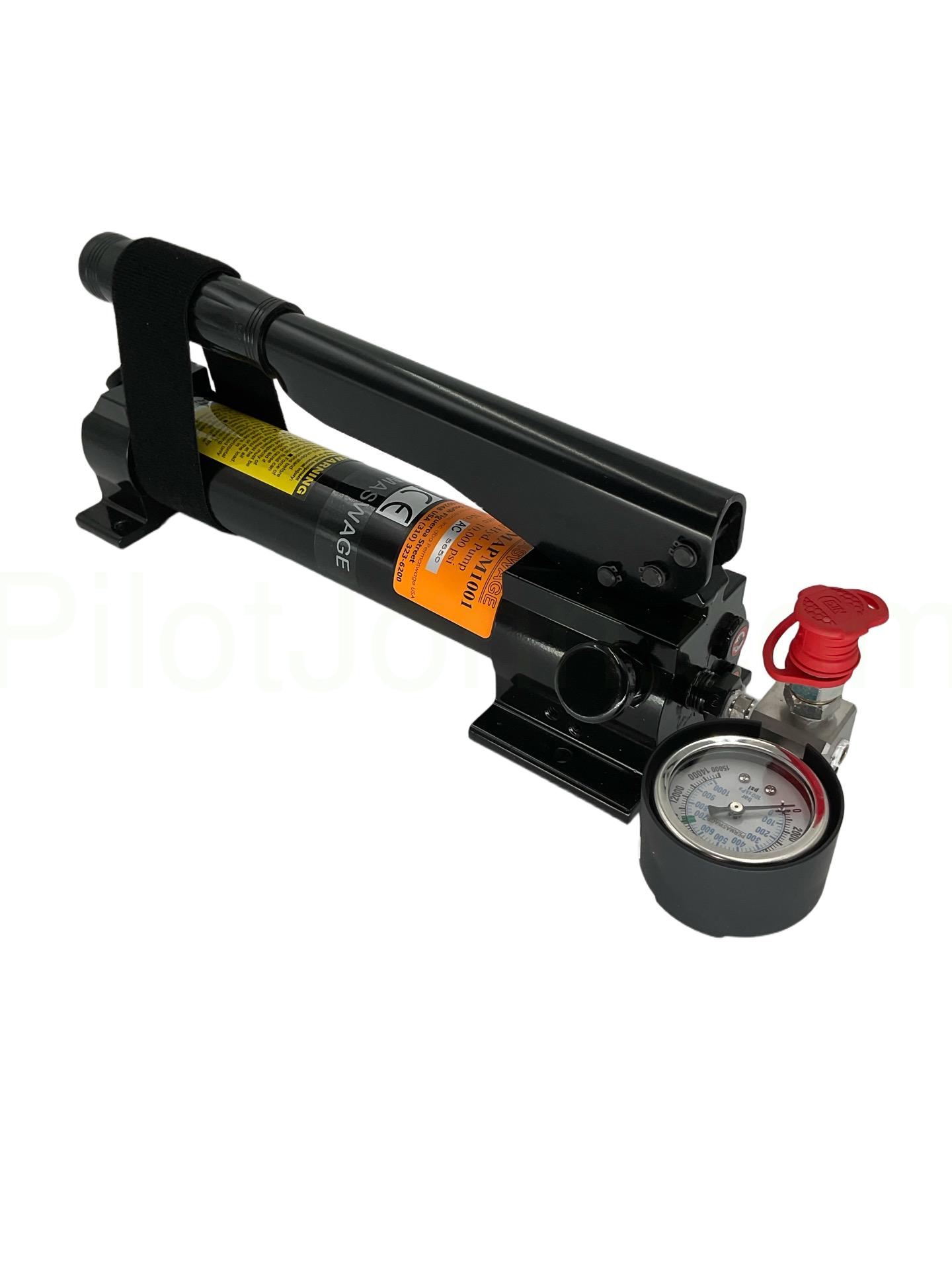
The DLTFRPSKT3001 is a comprehensive field-ready kit covering sizes 4 through 12 (1/4" to 3/4"). It includes four power units (models 8, 10, 20, and 30), five head assemblies, five inspection gauges, a 10,000 PSI manual pump, two tube cutters, two deburring tools, two marking tools, a marking pen, and a hex key – all housed in a rugged carrying case. For operations focused on a single tube size, the DLT05PSKT3000 is a size 4 (1/4") specific kit with a Certificate of Conformance and all tooling required for that swaging operation.
DET (Radial) Tool Kits
DET radial swage tool kits are Permaswage's heavy-duty option for single-tube-size swaging operations. These kits are available in multiple tube sizes and configurations – including the DET05AEKT0001 and related variants (size 05, 5/16" tube) for smaller-diameter applications and the DET22AEKT0001 (size 22, 1-3/8" tube) for larger-diameter work, with DI heavy-duty kit variants also available within the size 22 range.
DAT (Axial) Tool Kits
Permalite DAT kits include tube cutting tools, deburring tools, inspection and marking gauges, and a hand pump with hose. Available kits span a range of tube sizes and configurations – including the DAT03AEKT4023 Axial Swage Tool Kit (size 03, 3/16" tube), which handles both titanium and stainless steel fitting connections with a single kit, and full kit options such as the DAT07AEFKT0005 (size 07, 7/16") and DAT08AEFKT5000 (size 08, 1/2"). All DAT tooling is forged for reduced weight and compact dimensions.
How Do You Choose the Right Permaswage Tooling for Your Operation?
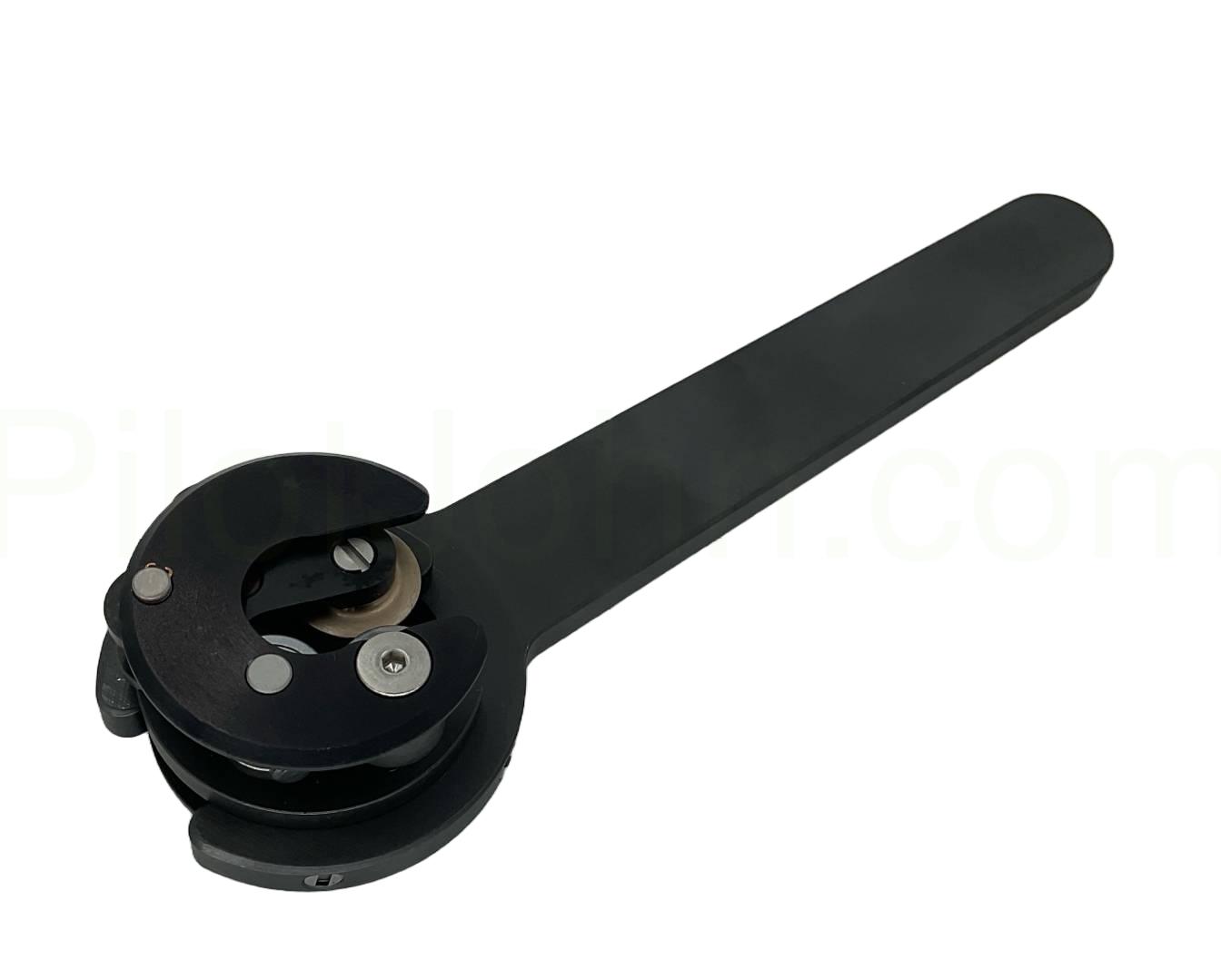
Selecting the right kit starts with a few specific variables – and getting them right matters. Mismatched tooling doesn’t just slow down the job; it can produce a non-compliant repair.
Start with tube material: aluminum, stainless steel, or titanium. Each has specific compatible fitting types and pressure ratings. Next, confirm the tube size range and operating pressure requirements for the systems involved – these determine whether radial (DLT or DET) or axial (DAT) tooling is the right starting point and which kit within that family applies. For access constraints, radial tooling requires 360° clearance around the fitting; axial tooling is the solution when access is limited to 180°.
Beyond those core variables, consider the deployment environment. Portable field repair kits are designed for AOG situations and mobile maintenance operations; DET heavy-duty kits are better suited to hangar-based work with higher throughput. Finally, verify OEM specifications and adapter kit requirements for the specific aircraft platform. Not all tooling configurations are approved across all aircraft types, and sourcing from an approved supplier matters for compliance.
Are Permaswage Connections Considered a Permanent Repair?
Permaswage connections are recognized as permanent repairs in standard aviation maintenance documentation – a designation that carries real weight in maintenance planning. The swaged joint is qualified to last the full service life of the tubing, with no retorquing, reinspection, or follow-up maintenance required under normal operating conditions. Replacement is necessary only if the tube or fitting sustains physical damage.
That “install once” characteristic is a primary reason MROs and military maintenance teams favor swaged systems over threaded fittings that can work loose over time. It also simplifies maintenance records: the repair is complete when the swage is verified, and no recurring action items are generated. In a high-tempo maintenance environment, that kind of clarity has genuine operational value.
The Bottom Line
Permaswage tooling has earned its place as a global standard in aerospace tube joining because it delivers what aircraft maintenance demands: permanent, specification-compliant connections that hold across the full operational life of the aircraft – without heat, without threads, and without uncertainty about long-term integrity.
Whether your team is servicing commercial hydraulics, handling military field repairs, or running an MRO facility with a mixed fleet, having the right Permaswage tool kit on hand keeps maintenance events efficient and aircraft compliant.
Pilot John International® (PJi®) offers Permaswage tool kits, fittings, and accessories for a wide range of aircraft applications. Our aviation specialists can help you match the right tooling to your tube sizes, pressure requirements, and operational environment. Contact our team by phone, email, or live chat today!