






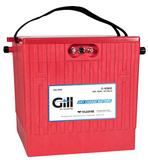
The Teledyne Gill 7638-36 Sealed Aircraft Battery brings the next generation of advanced lead-acid technology to modern aviation. Designed to handle the toughest demands, this battery is more than just an upgrade—it’s a commitment to exceptional safety, reliability, and long-lasting performance. Featuring a sealed, non-spillable valve-regulated lead-acid (VRLA) design, it delivers powerful, maintenance-free operation that meets the high standards of aviation maintenance professionals.
TSO Authorized, rigorously tested to DO-160E standards, and FAA-PMA certified, the Teledyne 7638-36 sets the bar for safety and quality, ensuring reliable power for every flight. With the first capacity inspection not required until 18 months or 1,800 hours of use, this battery minimizes maintenance downtime, keeping your aircraft ready to fly. Backed by a 2-year warranty, it performs consistently under the most challenging flight conditions.
An ideal choice for pilots seeking a dependable, long-lasting power source, the Teledyne 7638-36 is designed as an upgrade from the Teledyne Gill GE-50C Dry Charged Battery. It offers superior cranking power and enhanced energy retention, all in a lighter and more efficient package. Its advanced VRLA technology ensures it remains non-spillable, enhancing safety and ease of handling, especially in unpredictable flight environments.
Whether you’re flying for commercial, private, or military operations, the 7638-36 delivers unmatched confidence in your power source. It performs reliably across extreme temperatures, keeping your aircraft systems powered from the coldest altitudes to the hottest runways.
Equip your aircraft with the trusted power of the Teledyne Gill 7638-36 and experience the superior performance of advanced lead-acid technology, designed to meet the rigorous demands of today’s aviation.
| Alternate Models | |
|---|---|
| GE-50C | Previous Gill Battery Part Number |
| General Information | |
|---|---|
| Part # | 7638-36 |
| Manufacturer | Teledyne Gill |
| MSDS 1 | View Safety Data Sheet |
| Shipping Information | |
|---|---|
| Product Weight | 82 lbs. |
| Product Dimensions | 17 x 18 x 18 in. |
| Schedule B | 8507200090 |
| ECCN | 9A991.d |
| Specifications | |
|---|---|
| 30 Minute Emergency Rate, C/2, A | 63 |
| Model | 7638-36 |
| Nominal Voltage, V | 24 |
| One Hour Capacity, C1, Ah | 36 |
| Power Performance | 23°C (75°F): Ipp, A - 1660, Ipr, A - 1260, -18°C (0°F): Ipp, A - 1300, Ipr, A - 985, -30°C (-22°F): Ipp, A - 980, Ipr, A - 775 |
| Weight, Lb. Maximum | 84.90 |
Customers also viewed
AIRCRAFT COMPATIBILITY
| Compatible Aircraft* | |
|---|---|
| Embraer |
Phenom 300
NOTE
This aircraft requires two batteries. This battery along with the 7638-48P. The 7639-34 is also approved.
|
PRODUCT REVIEWS
This item does not have any reviews yet.
QUESTIONS & ANSWERS
The Teledyne Gill 7638-36 uses absorptive glass mat (AGM) separators to hold the electrolyte in place, eliminating free-flowing liquid inside the battery. This design enhances vibration resistance and allows the battery to operate in various orientations without risk of leakage. It also supports more consistent power delivery, making it ideal for demanding aviation environments. AGM technology ultimately contributes to improved durability and long-term reliability.
The recombinant gas design in the 7638-36 allows gases generated during operation to recombine the battery, reducing water loss and eliminating the need for maintenance. This sealed system helps extend battery life while maintaining consistent internal pressure and performance. It also minimizes emissions, making the battery safer and more efficient in enclosed aircraft compartments. This feature is especially valuable for operators seeking low-maintenance power solutions.
The Teledyne Gill 7638-36 is designed to retain charge over extended storage periods when properly maintained, reducing the need for frequent recharging. Its low self-discharge characteristics help preserve battery health, especially when stored within recommended temperature ranges. With proper monitoring, the battery can maintain usable voltage for months, improving readiness for installation or return to service. This makes it a dependable option for fleet operators and seasonal aircraft use.
Although the 7638-36 is a sealed VRLA battery, it can release small amounts of gas during normal operation and charging. Proper ventilation ensures these gases are safely dispersed, preventing buildup that could pose safety risks. Aircraft battery compartments are designed to manage this venting, helping maintain safe operating conditions. This design consideration supports both safety and long-term system reliability.
The battery is engineered to operate over a wide temperature range, but it performs most efficiently in controlled environments at standard ambient conditions. Its internal design allows it to recover capacity after exposure to colder temperatures once it warms up. Additionally, the materials used help maintain structural integrity under thermal stress. This ensures dependable power output in both hot and cold operating conditions.
The internal cell construction of the 7638-36 ensures balanced energy distribution across all cells, which helps maintain stable voltage output during operation. This consistency is critical for powering essential aircraft systems without interruption. By reducing voltage fluctuations, the battery supports smoother system performance and reduces strain on connected components. This contributes to the overall electrical reliability of the aircraft.
Using the correct charging method, such as constant-voltage charging, helps maintain the battery’s capacity and prevents premature degradation. Improper charging, including overcharging or undercharging, can reduce performance and shorten service life. The 7638-36 is designed to work with aviation-approved chargers that effectively regulate voltage and current. Following recommended charging practices ensures optimal long-term performance.
The sealed VRLA design prevents electrolyte leakage under normal operating conditions, reducing the risk of corrosion and exposure to hazardous materials. This makes the battery safer to handle during installation, transport, and maintenance. In addition, the nonspillable classification simplifies shipping and regulatory compliance. These safety benefits make it a practical choice for aviation professionals.


