






Tronair 02A7859C0100 – 12-Ton Tripod Jack, Air Pump


Create yours now for free.

Need a Quote?
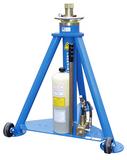
The Tronair 02A7859C0100 is a 12-Ton (24,000 lb) hydraulic aircraft tripod jack engineered to lift aircraft from the forward fuselage or main wing jacking points during maintenance, inspections, and ground operations. A factory-installed air pump allows rapid initial extension without additional equipment. CE-marked for compliance with European aviation safety standards.
Standard Features
- Factory-installed air pump for rapid initial extension and on-aircraft inflation
- Hand pump with built-in pressure relief valve
- Threaded rams with improved handwheel-style safety nut
- Quick-rising center extension for rapid initial lift
- Easy-access filler/breather cap
- Heavy-duty wheels for easy maneuverability
- Hydraulic fluid: MIL-PRF-5606
- ¾" (2 cm) spherical radius cup jack pad
- CE marked
- Durable powder-coat finish (Tronair Blue)
Technical Specifications
- Rated Capacity: 24,000 lbs (10886 kg)
- Operating Temperature: −4°F to 122°F (−20°C to 50°C)
- Air Supply Requirements:
- Minimum: 25 PSI (1.72 bar)
- Recommended: 40 PSI (2.75 bar)
- Maximum: 125 PSI (8.6 bar)
- Pressure Relief Setting: 2,500 + 250/−0 PSIG (172.4 + 17.2/−0 bar)
- Noise Level: 64 dB(A) at a distance of 120" (304.8 cm) at an inlet pressure of 100 PSI (6.9 bar)
- Hydraulic Fluid: MIL-PRF-5606
- Jack Pad: ¾" (2 cm) spherical radius cup
- Finish: Durable powder coat (Tronair Blue)
Safety Features
- Ram Lock Nut: Prevents the lowering of the ram. The ram lock nut must be lowered as the aircraft is being lifted. Ram lock nuts must be kept within 2" of the stop while raising the aircraft.
- Hold-to-Run Air Valve: Requires the operator to hold the air valve lever to raise the ram using the air pump. Releasing the air valve lever stops the upward movement of the ram.
- Lock Nut Retention Ring: Prevents the lock nut from being unscrewed from the second stage.
- Pressure Relief Valve: Prevents overload during raising operations.
Aircraft Applications
The Tronair 02A7859C0100 is designed for use with a range of commercial, regional, and business aviation aircraft requiring 12-Ton tripod jack support. Specific aircraft model compatibility is defined in the Tronair Aircraft Application Guide. Always confirm jacking capacity, adapter requirements, and placement procedures with your aircraft maintenance manual before use.
Need your Tronair 02A7859C0100 12-ton tripod jack serviced, repaired, or load tested?
Pilot John is an authorized Tronair distributor and factory-authorized Tronair service center. Every jack ships new from our warehouse with Certificates of Conformance (CofC) and FAA Form 8130-3 documentation available at no additional cost. Need jack service, load-testing, or repair? Pilot John handles that too as an OEM-trained GSE service center. For more information or to request service, see our Service Center page, and see our article on why jack load testing matters. Pilot John also operates an ISO-17025 calibration center for all of your tooling and equipment calibration needs — learn more here.
| General Information | |
|---|---|
| Part # | 02A7859C0100 |
| Manufacturer | Tronair |
| Shipping Information | |
|---|---|
| Schedule B | 8425420000 |
| ECCN | EAR99 |
Customers also viewed
AIRCRAFT COMPATIBILITY
| Compatible Aircraft* |
|---|
PRODUCT REVIEWS
This item does not have any reviews yet.
QUESTIONS & ANSWERS
The Tronair 02A7859C0100 aircraft tripod jack is designed for heavy-duty lifting operations involving commercial, regional, and business aircraft. Its 12-ton lifting capacity allows technicians to safely support aircraft during landing gear service, tire changes, brake work, and structural inspections. The welded tripod frame and high-strength hydraulic system help provide stability during elevated maintenance procedures. The unit’s rugged construction also supports long-term use in busy hangar and flight line environments.
The two-stage hydraulic ram design allows the aircraft jack to achieve substantial lifting height while maintaining controlled operation throughout the lift cycle. This configuration helps technicians position the jack more precisely beneath varying aircraft jacking points. The staged extension also supports smoother lifting during maintenance procedures that require gradual aircraft elevation. According to the Tronair service manual, the jack includes both hydraulic and mechanical extension capability for improved versatility.
The ram protection ring helps prevent deformation and improper pin placement in the locking pin area during lifting operations. The operation manual emphasizes that proper installation of the locking pin is critical for maintaining safe load support while the aircraft is elevated. Proper use of the ram protection ring helps reduce the risk of premature equipment wear or unsafe lifting conditions. This added protection supports safer maintenance practices and longer jack service life.
The factory-installed air pump enables technicians to achieve rapid ram extension with standard shop air, reducing the manual pumping required during setup. Faster extension can help maintenance teams reduce aircraft downtime and improve workflow efficiency in high-volume hangar operations. The pneumatic assist feature is especially useful when positioning multiple jacks during aircraft leveling procedures. The integrated air system also helps reduce operator fatigue during repetitive lifting tasks.
Routine maintenance plays an important role in preserving aircraft jack performance and reliability. Tronair recommends checking hydraulic fluid levels before each use, lubricating casters every three months, and performing annual capacity testing at 105% to 110% of rated load capacity. The manual also advises protecting exposed ram surfaces with approved water-repellent lubricants during extended storage periods. Following these maintenance guidelines can help reduce wear and extend operational lifespan.
Aircraft manufacturers and ground support equipment providers recommend raising and lowering all jacks simultaneously to help maintain proper aircraft balance. Uneven lifting can place additional stress on the airframe and create unsafe maintenance conditions. The Tronair manual specifically instructs technicians to keep the aircraft level throughout lifting operations. Using coordinated lifting procedures helps improve stability and supports safer maintenance practices.
The threaded ram locknuts provide a mechanical backup to the hydraulic lifting system by helping prevent unintended ram lowering while the aircraft is elevated. Technicians are instructed to lower the locknuts as the aircraft is raised so the jack remains mechanically secured during maintenance. This additional safety layer is especially important during extended inspections or repairs performed beneath the aircraft. Mechanical locking systems are widely recognized as a critical safety feature in aviation jacking equipment.
Tronair recommends storing the aircraft tripod jack with the ram fully retracted to help protect internal hydraulic components and exposed surfaces. The manual also states that the jack may be stored outdoors if covered with a waterproof tarp or canvas. Keeping the equipment clean and protected from moisture helps reduce corrosion and hydraulic contamination. Proper storage practices can help preserve lifting performance and reduce maintenance requirements over time.
MIL-PRF-5606 hydraulic fluid is widely used in aviation maintenance equipment because it offers dependable performance across a broad operating temperature range. The fluid supports smooth hydraulic response in both cold-weather and high-temperature maintenance conditions. Aviation-approved hydraulic fluids also help protect seals, valves, and internal hydraulic components from premature wear. Using the specified fluid helps maintain consistent jack operation and supports long-term reliability.
The CE marking confirms that the Tronair 02A7859C0100 meets the applicable European machinery safety requirements. According to the declaration of conformity included in the manual, the jack complies with the European Machinery Directive and related safety standards. This certification can help international airlines, MRO providers, and maintenance facilities meet regulatory and workplace-safety requirements. CE-certified equipment is often preferred for global aviation support operations.


