




Aircraft Jack Pad Safety: Best Practices for Ground Handling
Key Takeaways
- Aircraft jack pads provide a stable, load-distributing interface between a jack and an aircraft's designated lifting points, and using the wrong pad can cause structural damage, poor alignment, and unsafe lifting conditions.
- Pre-lift inspection should cover the jack pad's contact surfaces, protective materials, and locking mechanisms, as well as the work area's levelness and freedom from hazards.
- During a lift, vertical alignment of the jack pad must be maintained throughout to prevent side loading, and mechanical safety locks should always be engaged – never rely on hydraulic pressure alone.
- Jack pads should be inspected every 90 days, undergo a more thorough annual maintenance cycle, and be removed from service immediately if cracks, deformation, or seating issues are found.
- Always consult the Aircraft Maintenance Manual to confirm the correct jack point and adapter for the specific aircraft model, since even visually similar aircraft can have different jacking-point geometries and hardware requirements.
Aircraft jack pads play a critical role in ensuring safe aircraft lifting during maintenance, inspections, and ground handling. Because they interface directly with structural lifting points, proper selection, placement, and use of jack pads can help prevent costly airframe damage and reduce safety risks for maintenance personnel. In this article, we’ll outline best practices for using aircraft jack pads correctly, from pre-lift inspection to safe lifting procedures and post-use removal.
What Are Aircraft Jack Pads Used For in Aircraft Maintenance?
Jack pads (also called jack adapters or lift pads) provide a stable interface between a jack and the aircraft’s designated jacking points. In simple terms, they help ensure the jack contacts the aircraft where it’s supposed to – and in the way the aircraft manufacturer intended.
Because jack pads distribute the load and improve stability, they help reduce the chance of slipping, shifting, or uneven contact during a lift. They’re commonly used for routine maintenance tasks such as tire changes, brake work, and landing gear servicing, where safe lifting and secure support are essential.
Why Is It Important to Use Aircraft-Specific Jack Pads?
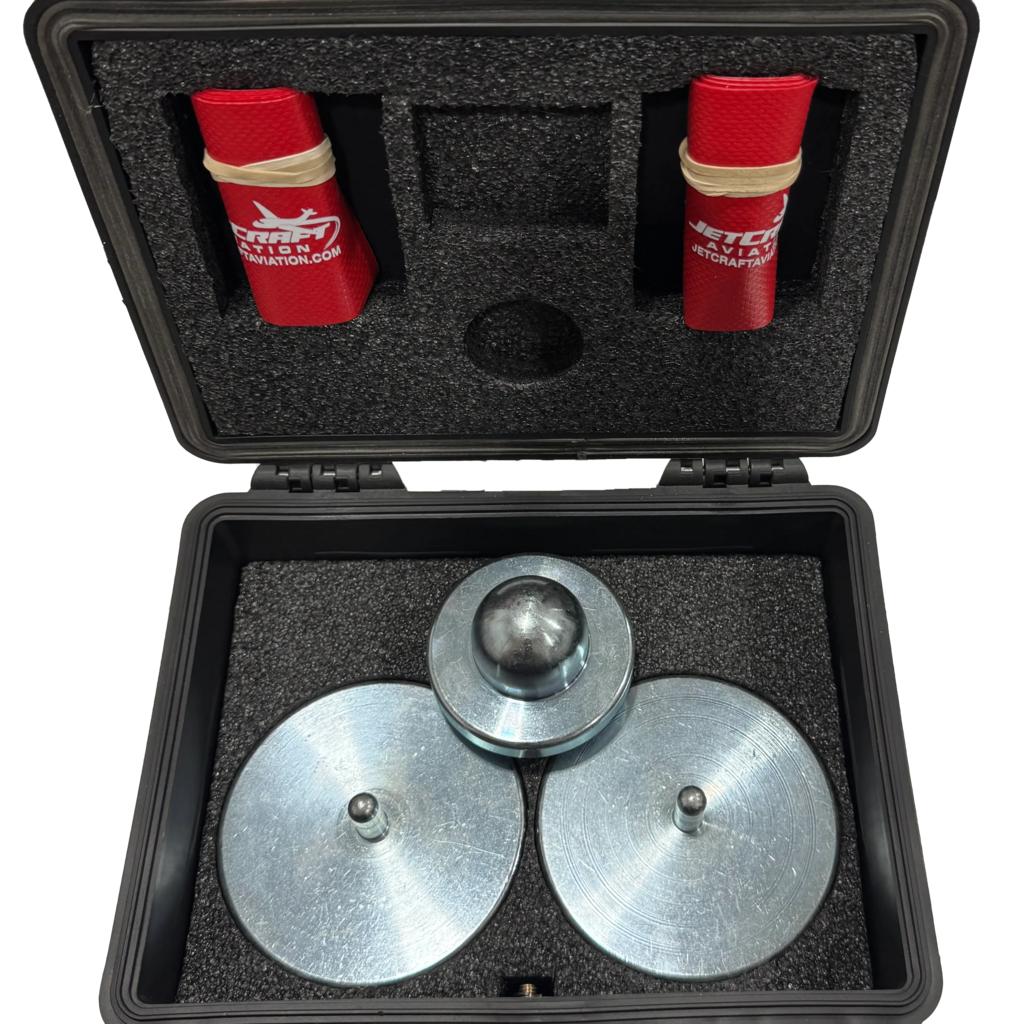
Aircraft-specific jack pads are designed to match the exact shape, engagement method, and contact area of an aircraft’s lifting points. That model-specific fit matters because it helps keep the jack pad seated correctly throughout the lift, improving stability and reducing unwanted movement as weight transfers.
Using the wrong jack pad can introduce metal-to-metal contact, poor alignment, and uneven load distribution – all of which increase the risk of crushing skin panels, damaging reinforced structure, or stressing the aircraft in ways the manufacturer didn’t intend.
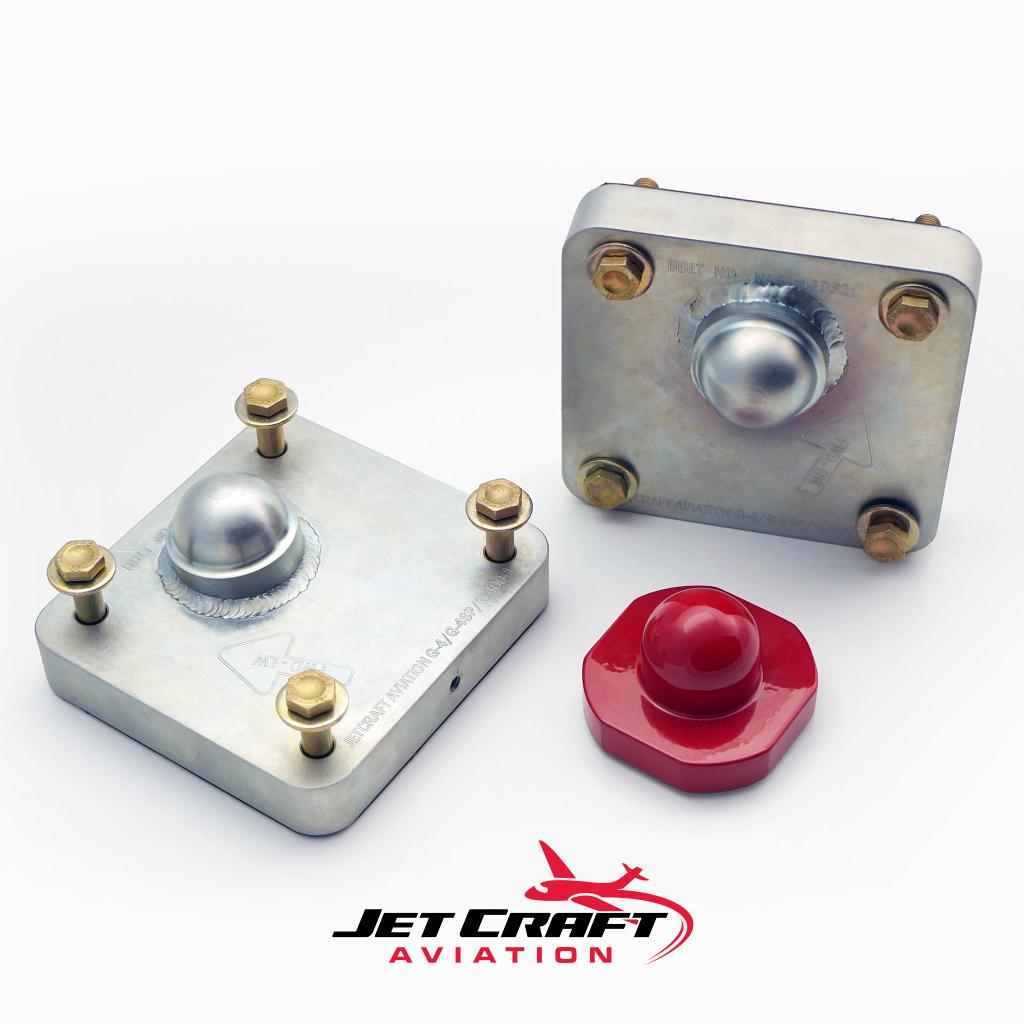
It’s also worth noting that some manufacturers, such as Jet Craft Aviation, offer customized jack pad kits for specific aircraft makes and models. That kind of aircraft-specific solution helps ensure technicians have the precise equipment needed to safely and confidently lift an aircraft.
What Should Be Inspected Before Using a Jack Pad?
Before each use, inspect the jack pad for corrosion, cracks, deformation, or contact-surface wear that could prevent proper seating. If the pad includes rubber or polyurethane surfaces, verify that the protective materials are intact, not torn, brittle, or missing.
It’s also important to confirm the jack itself is in good condition, including its locking mechanisms and overall stability. Finally, make sure the work area is clear, level, and free of hazards before beginning the lift, since environmental factors can impact safety just as much as equipment condition.
How Do You Safely Engage a Jack Pad with an Aircraft Jack?
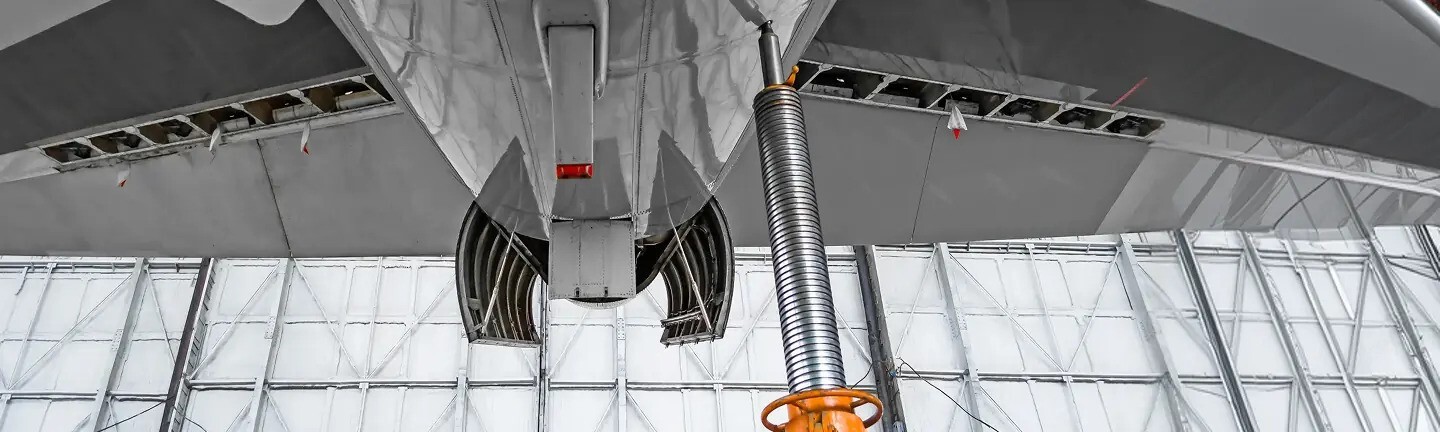
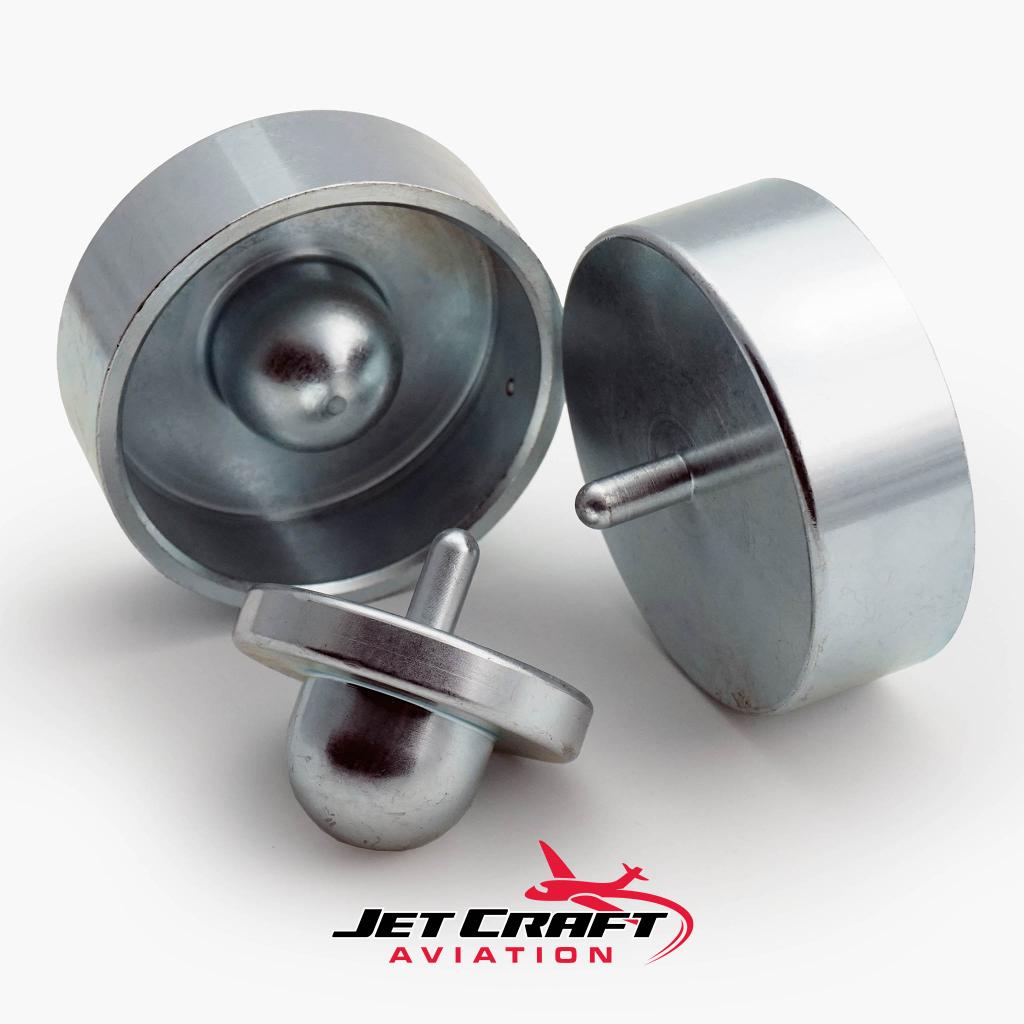
Safe engagement starts with correctly positioning the jack and raising its mechanical extension until it is close to the aircraft. Before applying hydraulic pressure, confirm the jack pad is centered and seated correctly in the designated jack point, with a secure and stable fit.
During the lift, the jack pad should remain vertically aligned to prevent side loading, which can introduce instability and increase the risk of slippage. Even a small amount of off-center pressure can create unnecessary stress at the contact point, especially as the aircraft begins to rise.
Once the work is complete, safe disengagement is just as important as engagement. Jack pads should be installed only for the lift and removed once the aircraft is safely lowered and the load is off the jack. Leaving pads installed can interfere with landing gear doors, create clearance issues, or introduce unnecessary risk during aircraft movement.
What Safety Precautions Are Necessary When Lifting an Aircraft Using Jack Pads?
Aircraft should only be lifted on a level, stable surface to reduce the risk of shifting loads, slipping pads, or jack instability. A stable hangar floor is preferred whenever possible, since wind, uneven ground, and poor footing can increase safety risks during lifting operations.
Jacks should be operated in unison to keep the aircraft balanced, especially when multiple jacking points are used to raise the aircraft evenly. Never lift using only one jack pad unless the maintenance procedure explicitly allows it, and never rely solely on hydraulic pressure without engaging mechanical safety locks.
Technicians should also maintain a strict awareness of pinch points and load paths throughout the lift. Hands and body parts should always remain clear of the area between the aircraft and the jack pad, and no one should position themselves under a load supported only by hydraulics. Safe lifting is as much about procedure and awareness as it is about the equipment itself.
How Do I Prevent the Jack Pad from Damaging the Aircraft Fuselage?
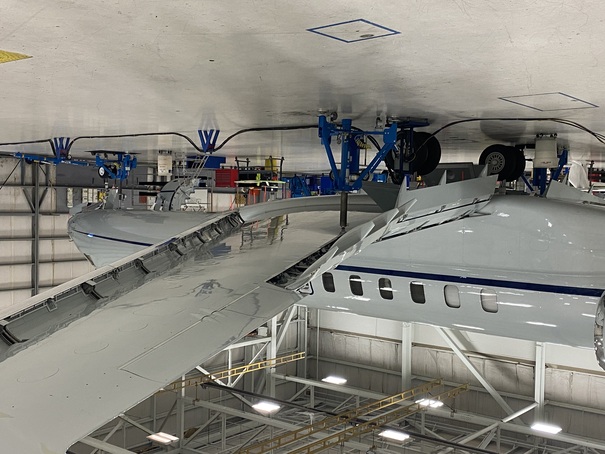
Preventing damage starts with verifying the correct OEM jack point and ensuring the pad is perfectly centered before applying any load. The contact area should be clean and corrosion-free, since debris or corrosion can affect how the pad seats and transfers load into the structure.
If the aircraft manufacturer specifies stress plates or additional support hardware, those components should be installed before lifting. Stress plates help protect the surrounding structure by distributing the load more effectively, reducing the risk of localized damage around fuselage hard points.
Proper alignment also matters throughout the lift. If the jack begins to drift, bind, or apply side pressure, the safest approach is to stop and correct positioning before continuing, rather than “forcing” the lift and risking airframe damage.
How Often Should Jack Pads Be Maintained or Replaced?
Beyond pre-use checks, jack pads should be maintained on a routine schedule to support long-term reliability and safe lifting performance. As a general best practice, jack pads should be inspected every 90 days for corrosion, structural integrity, and proper function of locking pins and threaded components.
A more comprehensive annual maintenance cycle may include load testing and replacement of worn components to ensure the pad continues to hold securely under real operating conditions. Jack pads should be removed from service immediately if they show cracks, splits, deformation, or signs that they no longer seat or lock correctly.
Storage also plays a role in longevity. Keeping jack systems properly stored (including retracting the rams, when applicable) helps reduce premature seal damage and corrosion, supporting safer performance over time.
How Do You Select the Correct Jack Pad for Your Aircraft?
The safest way to select a jack pad is to follow the Aircraft Maintenance Manual (AMM) and confirm the correct jack point and adapter style for the aircraft model. Even aircraft that appear similar can use different jacking-point geometries, engagement methods, or hardware requirements, depending on configuration and manufacturer guidance.
Using the wrong pad or adapter can lead to poor fit and unsafe lifting conditions, especially around fuselage hard points and landing gear jacking locations. When in doubt, the right approach is always to verify compatibility before lifting, rather than trying to “make it work” with an adapter that wasn’t designed for that aircraft.
The Bottom Line
Aircraft jack pad safety depends on using aircraft-specific equipment, following AMM guidance, and lifting only on stable, level surfaces with proper safety procedures in place. When these best practices become part of every lift, teams can reduce preventable risk and keep maintenance operations running smoothly and efficiently.
Pilot John International® (PJi®) is a trusted provider of high-quality jack pads for a wide range of aircraft, including popular models from Beechcraft, Bombardier, Cessna, Dassault, Embraer, Gulfstream, Hawker, Pilatus, and Piper, from top brands such as Alberth, Bogert, Jet Craft Aviation, and Tronair, and OEMs like Bombardier, Dassault, and Gulfstream.
For expert guidance on selecting the right aircraft jack pads for your ground handling and maintenance operations, contact PJi’s aviation specialists by phone, email, or live chat.