





David Clark DC ONE-X vs. Bose A20: Which Aviation Headset Is Better?
Key Takeaways
- The David Clark DC ONE-X uses Hybrid Electronic Noise Cancellation – combining feed-forward and feed-back systems – to reduce a broader range of cockpit noise frequencies than the Bose A20's standard ANR technology.
- The DC ONE-X's Outlast® fabric head pad adapts to temperature changes during flight, offering more personalized long-term comfort than the Bose A20's conventional cushioning.
- Both headsets support Bluetooth connectivity and deliver high-fidelity audio, but the DC ONE-X adds Digital Signal Processing (DSP) technology for enhanced communication clarity – a feature the A20 does not include.
- The DC ONE-X provides up to 50 hours of battery life on two AA batteries – five hours more than the Bose A20 – and includes a fail-safe mode that maintains full communication even if the battery is depleted.
- At approximately 12.3 ounces, the DC ONE-X is only marginally heavier than the A20 at 11.9 ounces, but adds a collapsible design for more compact storage – an advantage the A20 lacks.
- Pilot John International is a trusted source for the full David Clark aviation headset lineup, including the DC ONE-X, with specialists ready to help pilots find the right headset for their flying needs.
Two aviation headsets regularly come up when pilots are shopping for the best in the business: the David Clark DC ONE-X and the Bose A20. Both have earned their place at the top of the market through strong noise cancellation, comfortable design, and reliable performance across a wide range of aircraft and flying conditions.
But they're not the same headset, and the differences between them matter. From noise cancellation technology and audio processing to battery life, build quality, and portability, each model has distinct strengths worth understanding before you buy. In this article, we'll compare the DC ONE-X and Bose A20 head-to-head so you can make the right call for your cockpit.

DC ONE-X and Bose A20: Feature Overview
Before getting into the side-by-side comparisons, here's a closer look at what each headset brings to the table – the core technologies and design elements that define each model and set the baseline for the discussion ahead.
David Clark DC ONE-X
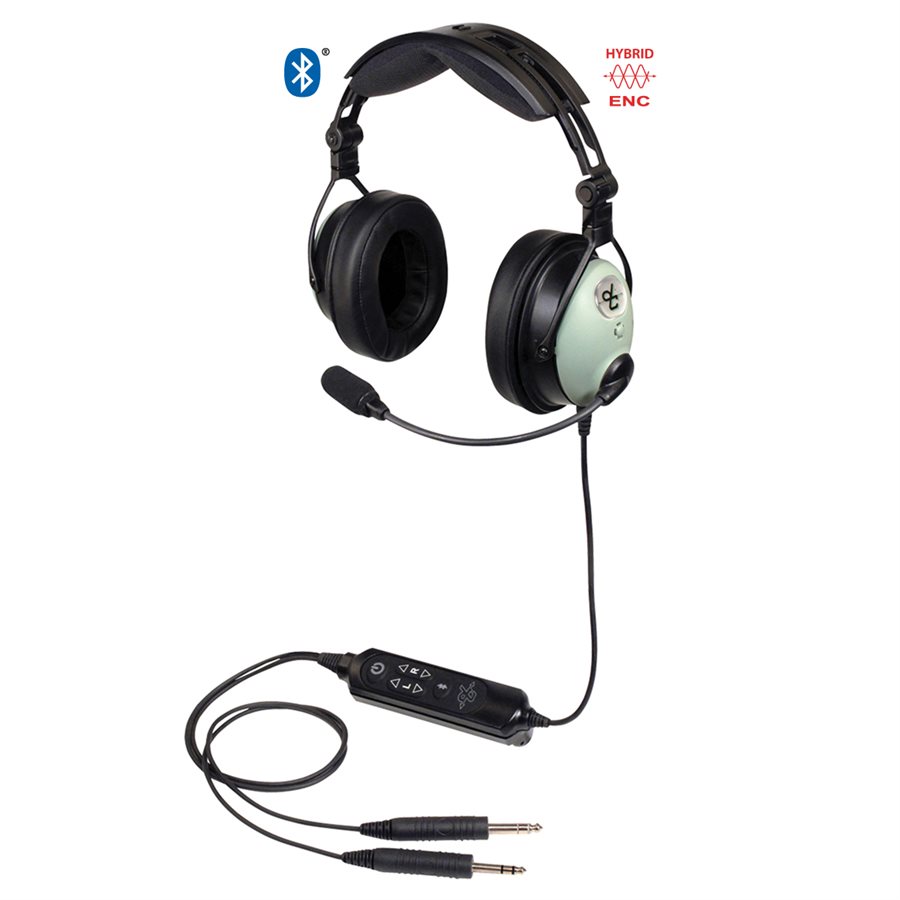
The David Clark DC ONE-X is built around Hybrid Electronic Noise Cancellation (ENC) technology, combining feed-forward and feed-back systems to address a broader spectrum of cockpit noise frequencies than a single-system approach. Its Outlast® fabric head pad responds to temperature changes to sustain comfort over long flights, and a lightweight alloy headband with plush leatherette ear seals keeps the fit secure without adding unnecessary pressure. Built-in Digital Signal Processing (DSP) refines audio signals for clearer communications, Bluetooth® connectivity supports seamless device pairing, and a compact inline control module with a backlit touch-key interface makes in-flight adjustments intuitive.
Bose A20
The Bose A20 is built around Bose's Active Noise Reduction (ANR) technology, which delivers effective noise attenuation across a broad frequency range. Bluetooth connectivity supports hands-free calling and audio streaming, and a flexible microphone boom adjusts easily for optimal positioning during flight. The A20's around-the-ear design and ergonomic cushioning provide comfortable wear during extended use, and intuitive controls make it easy to manage volume and Bluetooth functions without distraction. Customizable audio profile configurations are available for pilots who want to tailor their listening experience.
What Pilots Are Saying About the DC ONE-X
PJi recently sat down with student pilot Ben Swaggerty to hear his firsthand experience with the David Clark DC ONE-X. From noise cancellation and build quality to comfort on long flights, Ben's take on the headset cuts straight to what makes it stand out. Watch his testimonial below.
Noise Cancellation: DC ONE-X vs. Bose A20
Both headsets deliver strong noise attenuation, but the technology behind each takes a different approach – and those differences show in high-noise cockpits. The DC ONE-X's Hybrid ENC combines feed-forward and feed-back systems, working together to address a wider range of cockpit noise frequencies than a single-system design can target. The Bose A20's ANR technology is effective and well-regarded in the pilot community, but the DC ONE-X's dual-system architecture gives it a measurable edge when it comes to suppressing the broadest range of engine, wind, and airframe noise. For pilots logging serious hours in loud cockpits, that advantage translates to clearer radio communications and less listening fatigue over the course of a long flight.
Comfort for Long Flights
Both headsets are designed for extended wear, but the DC ONE-X's Outlast® fabric head pad distinguishes it from the competition. Originally developed for NASA, Outlast technology absorbs, stores, and releases heat in response to temperature changes – actively regulating comfort under the headset rather than allowing heat to build up over time. Combined with the DC ONE-X's lightweight alloy headband and plush leatherette ear seals, the result is a headset that maintains comfort through long missions without requiring the pilot to adjust or remove it. The Bose A20's around-the-ear ergonomic design is well-executed and comfortable, but doesn't offer the same adaptive thermal management that Outlast provides.
Audio Quality and Connectivity
Both the DC ONE-X and the Bose A20 deliver high-fidelity audio and support Bluetooth connectivity for pairing with personal devices – features now expected at this level of the market. The meaningful difference is the DC ONE-X's Digital Signal Processing (DSP), which actively processes and refines audio signals to improve communication clarity in noisy, high-interference environments. The Bose A20 doesn't include DSP, which means in demanding acoustic conditions, communications clarity can vary more than it does with the DC ONE-X. For pilots who fly IFR, operate in congested airspace, or spend time in high-noise cockpits where clean radio communication is critical, the DC ONE-X's DSP technology represents a genuine operational advantage.
Build Quality, Durability, and Portability
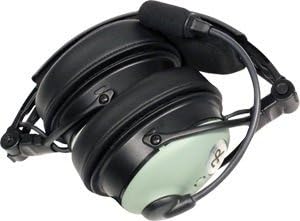
David Clark headsets are respected throughout the industry for their rugged, long-service construction, and the DC ONE-X continues that tradition. Its alloy headband and suspension system are engineered to handle daily aviation use – on the ramp, in the cockpit, and on the road between destinations. The DC ONE-X also features a collapsible design that folds down compactly for storage in a flight bag, a practical edge for pilots who travel frequently or carry their headset on commercial flights. At approximately 12.3 ounces, it's only marginally heavier than the Bose A20 at 11.9 ounces – a difference that's negligible during flight. The Bose A20 is solidly built, but without a foldable design, it's less convenient for storage and transport.
Controls, Features, and Battery Life
The DC ONE-X's inline control module pairs a backlit touch-key interface with dual volume controls and straightforward Bluetooth management – easy to operate in flight without breaking focus on the cockpit. Its most operationally significant feature may be its fail-safe mode: if the battery depletes mid-flight, the headset automatically shifts to passive communication mode, ensuring the pilot maintains uninterrupted radio contact. Battery life runs up to 50 hours on two AA batteries, outpacing the Bose A20 by five hours on the same battery type. The Bose A20 offers intuitive controls and customizable audio profiles, but doesn't include a comparable fail-safe communication mode – a meaningful gap for pilots who prioritize reliability in the air.
Which Headset Delivers More Value for Your Investment?
Both the DC ONE-X and the Bose A20 are premium aviation headsets with price tags to match, and neither represents a compromise on quality. That said, the DC ONE-X delivers a more complete feature set for the investment: Hybrid ENC, DSP audio processing, a fail-safe communication mode, five additional hours of battery life, and a collapsible design that the Bose A20 doesn't match. For pilots weighing features against price, the DC ONE-X consistently offers more capability per dollar spent. The Bose A20 remains an excellent headset and a serious competitor, but when the full feature set of each is measured against its price point, the DC ONE-X has the stronger case.
The Bottom Line
The DC ONE-X and the Bose A20 are both top-tier aviation headsets, and either would serve any pilot well in the cockpit. But when you stack them up feature by feature – noise cancellation architecture, audio processing, battery life, fail-safe reliability, and portability – the DC ONE-X consistently delivers more. For pilots who spend serious time in the cockpit and want a headset that performs at the highest level across every metric, the choice is clear.
Pilot John International® (PJi®) is your trusted source for the full line of David Clark aviation headsets, including the DC ONE-X. Whether you're upgrading from an older headset or choosing your first premium ANR model, PJi carries the complete David Clark lineup – backed by the product knowledge to help you find exactly the right fit.
Our aviation specialists are ready to help you find the perfect headset for your aircraft and flying style. Call, email, or chat with us today to get started.
Frequently Asked Questions
Why are aviation headsets important for pilot safety and communication?
Aviation headsets are essential safety equipment in any cockpit, providing the noise attenuation pilots need to hear ATC communications clearly in an environment where engine noise, propeller wash, and airframe noise can easily overwhelm unaided hearing. Clear, reliable radio communication is fundamental to safe flight – particularly during instrument approaches, congested airspace operations, and emergencies where missing or misunderstanding a transmission can have serious consequences. Beyond ATC communication, headsets also help reduce listening fatigue on long flights, allowing pilots to stay more focused and alert throughout a mission.
What is Active Noise Reduction (ANR), and why does it matter in an aviation headset?
Active Noise Reduction (ANR) technology uses microphones and electronic circuitry to detect and counteract ambient noise before it reaches the pilot's ears – a fundamentally different approach from passive noise attenuation, which relies solely on physical earcup insulation. ANR aviation headsets significantly reduce the low-frequency noise that dominates cockpit environments, such as engine rumble and propeller noise, that passive designs struggle to attenuate effectively. The result is a quieter, less fatiguing listening environment that makes radio communications clearer and long flights more comfortable. Premium ANR headsets like the David Clark DC ONE-X go a step further with Hybrid ENC, combining multiple active systems for broader frequency coverage.
What should I look for when choosing an aviation headset?
When selecting an aviation headset, the most important factors are noise cancellation performance, communication clarity, comfort for extended wear, and compatibility with your aircraft's audio panel and intercom system. Battery life and power options matter for pilots who fly long missions or who may not have easy access to fresh batteries between flights. Build quality and durability are also worth evaluating carefully – aviation headsets take real-world abuse, and a headset that fails on the road or in a demanding environment is worse than not having one. Additional features like Bluetooth connectivity, DSP audio processing, and fail-safe communication modes can differentiate premium models and add meaningful value depending on how and where you fly.
Why do professional pilots tend to prefer David Clark headsets over other brands?
David Clark has been manufacturing aviation headsets since the 1940s and has built a reputation for exceptionally durable, consistent, and mission-reliable equipment across both the general aviation and military markets. Professional pilots – and particularly those who fly in demanding environments – value the brand's track record of quality that holds up through years of daily use, its straightforward serviceability, and its history of innovation in noise cancellation and communication clarity. The DC ONE-X specifically extends that legacy with Hybrid ENC, DSP audio processing, and a fail-safe communication mode that competitors like the Bose A20 don't match. For pilots whose livelihood depends on reliable equipment, David Clark's combination of performance and proven durability makes it the preferred choice.
What is Hybrid ENC, and how does it differ from standard ANR?
Standard Active Noise Reduction (ANR) uses a single electronic system – typically a feed-back microphone inside the earcup – to detect and cancel ambient noise. Hybrid Electronic Noise Cancellation (ENC), as used in the David Clark DC ONE-X, combines two systems: a feed-forward microphone positioned outside the earcup to detect incoming noise before it enters, and a feed-back microphone inside to catch what gets through. By working together, these two systems address a broader range of cockpit noise frequencies than either system could handle alone, resulting in more effective overall noise reduction. For pilots flying in high-noise environments, this difference in architecture translates to measurably cleaner audio and less fatigue on long missions.
Is the David Clark DC ONE-X compatible with all aircraft types?
The David Clark DC ONE-X is compatible with both GA (general aviation) and military-style aircraft audio systems, available in dual GA plug (PJ plug) and single U-174 military plug configurations to match the aircraft's audio panel. It works with standard single-pilot and multi-pilot intercom systems and is compatible with a wide range of avionics audio panels across GA, business aviation, and some commercial applications. For pilots unsure which configuration they need for their specific aircraft, PJi's aviation specialists can help confirm compatibility before purchase.
How do I know when it's time to replace my aviation headset?
Common indicators that a headset is due for replacement include deteriorating noise cancellation performance (often a sign of failing ANR circuitry or worn earcup seals), reduced audio clarity in radio communications, physical damage to the headband or earcup assembly, and ear seals or head pads that have hardened or lost their cushioning. Worn ear seals are often replaceable and can extend a headset's useful life significantly before a full replacement is necessary. If a headset is several years old and performance has declined noticeably, upgrading to a current model like the David Clark DC ONE-X may offer meaningfully better noise cancellation, audio clarity, and battery life compared to a worn older headset – even of the same brand.