




Skydrol: What You Need to Know About Aviation's Preferred Hydraulic Fluid
Key Takeaways
- Skydrol is a phosphate ester-based hydraulic fluid manufactured by Eastman Chemical Company – the first fire-resistant hydraulic fluid approved for aviation, developed in the late 1940s to address fire risks from mineral oil-based fluids in high-pressure aircraft systems.
- Three properties define Skydrol’s edge: exceptional fire resistance that prevents ignition during leaks, chemical stability that extends service life, and thermal resilience that maintains viscosity and performance under extreme temperatures.
- Skydrol’s four variants serve distinct needs: 500B-4 (longest service history, proven erosion resistance), Skydrol 5 (lightest variant with superior high-temperature erosion resistance), LD-4 (long-established Type IV standard with outstanding deposit control), and PE-5 (longest service life of any phosphate ester fluid available today).
- Skydrol powers a wide range of aircraft systems – including landing gear, flight control surfaces, flaps and slats, thrust reversers, and brake systems – wherever hydraulic actuators require a reliable, fire-resistant fluid.
- Skydrol can cause skin irritation and chemical burns on direct contact; proper PPE is required, and each variant’s Safety Data Sheet (SDS) should be consulted for specific handling and storage protocols.
- PJi carries the full Skydrol lineup – 500B-4, Skydrol 5, LD-4, and PE-5 – with specialists available to help identify the right variant for your aircraft and hydraulic system requirements.
Hydraulic fluid plays a crucial role in aircraft systems, transferring the energy that powers landing gear, flight control surfaces, brakes, and a host of other essential functions. Of all the fluids used in modern aviation, Skydrol stands apart for its exceptional fire resistance – a property that makes it the go-to choice for high-performance commercial and military aircraft worldwide.
Skydrol has been an aviation mainstay for more than seven decades, with multiple variants engineered to meet the unique demands of today’s aircraft. In this article, we’ll dive into the unique characteristics, properties, variants, and applications of Skydrol hydraulic fluid – and what makes it the preferred hydraulic fluid for aviation professionals around the world.
Skydrol’s Origins and What Sets It Apart
Manufactured by Eastman Chemical Company, Skydrol is a phosphate ester hydraulic fluid best known for its remarkable fire-resistant properties. It was the first fire-resistant hydraulic fluid approved for aviation use, developed specifically to address the fire hazards that plagued early jet-age aircraft operations
Skydrol was developed in the late 1940s in response to the fire risks posed by the mineral oil-based hydraulic fluids of the era. Those conventional fluids were highly flammable under the pressures common in aircraft hydraulic systems – and even small leaks could result in catastrophic onboard fires.
To overcome these challenges, the Douglas Aircraft Company and Monsanto – partners in this pioneering joint venture – invested in phosphate ester technology to deliver a safer, more dependable alternative. As jet aircraft entered widespread service, the phosphate ester formulation was further refined to perform reliably at lower external temperatures, higher altitudes, and increasingly demanding operating pressures.

Key Properties of Skydrol Hydraulic Fluid
Skydrol is widely considered the most advanced aviation hydraulic fluid available today, thanks to a combination of cutting-edge chemistry and properties that make it uniquely suited to the demands of flight. Three properties in particular have cemented Skydrol’s reputation as the industry standard:
Fire Resistance
Skydrol’s most defining characteristic is its exceptional fire resistance – a property that’s vital in aviation, where hydraulic systems operate at extreme pressures and any leak presents a potential ignition source. In the event of a leak or spill, Skydrol won’t ignite as readily as conventional mineral-based fluids, making it significantly safer in high-risk operating environments. This fire-resistant performance has made Skydrol the preferred choice across commercial and military aviation, where safety margins are non-negotiable.
Chemical Stability
In addition to its fire resistance, Skydrol delivers outstanding chemical stability – meaning the fluid maintains its performance characteristics over long service intervals without breaking down. This stability allows Skydrol to withstand the rigors of high-pressure hydraulic systems without degrading, providing long-term protection for the components it contacts. The longer service life also translates to lower operating costs by reducing the frequency of fluid replacements and the maintenance downtime that comes with them.
Thermal Resilience
Skydrol holds its viscosity and performance characteristics under extreme operating temperatures – a critical advantage for aircraft hydraulic systems that routinely experience wide thermal swings between ground operations and high-altitude flight. Its ability to maintain consistent fluid properties at elevated temperatures minimizes the risk of system degradation or failure due to overheating, helping safeguard hydraulic integrity during long flights and high-stress maneuvers. This thermal resilience ensures dependable performance across the full range of conditions modern aircraft encounter.
Skydrol Hydraulic Fluid Variants
Skydrol hydraulic fluid is available in several variants, each engineered to meet specific aviation requirements, aircraft models, and operating environments. These variants offer different advantages in durability, weight, deposit control, and service life – giving operators the flexibility to match the fluid to the system. Below are the four most widely used Skydrol variants in aviation today.

Skydrol 500B-4
Skydrol 500B-4 is one of the most established phosphate ester hydraulic fluids in service, with the longest field history of any Skydrol variant. Beyond the fire resistance shared across the Skydrol line, 500B-4 features an anti-erosion additive and an acid scavenger that protect hydraulic components from wear and corrosion over extended operating cycles.
These built-in protections reduce repair frequency and extend the life of pumps, valves, and actuators – making 500B-4 a long-running favorite for operators who prioritize both safety and total cost of ownership. Its proven track record in high-performance hydraulic systems has kept it a staple of aviation fluid programs for decades.

Skydrol 5
Skydrol 5 is a premium Skydrol variant engineered to be the lightest fluid in the lineup – and it was the first aviation hydraulic fluid to deliver excellent erosion resistance at elevated temperatures. The reduced density lowers overall aircraft weight, which can translate to measurable fuel savings and improved operating efficiency over the life of an airframe.
Despite the weight reduction, Skydrol 5 doesn’t compromise on performance. Its high-temperature erosion resistance reduces wear on hydraulic components, extends maintenance intervals, and minimizes aircraft downtime – making it a popular choice for operators looking to balance performance with cost efficiency.
Skydrol LD-4
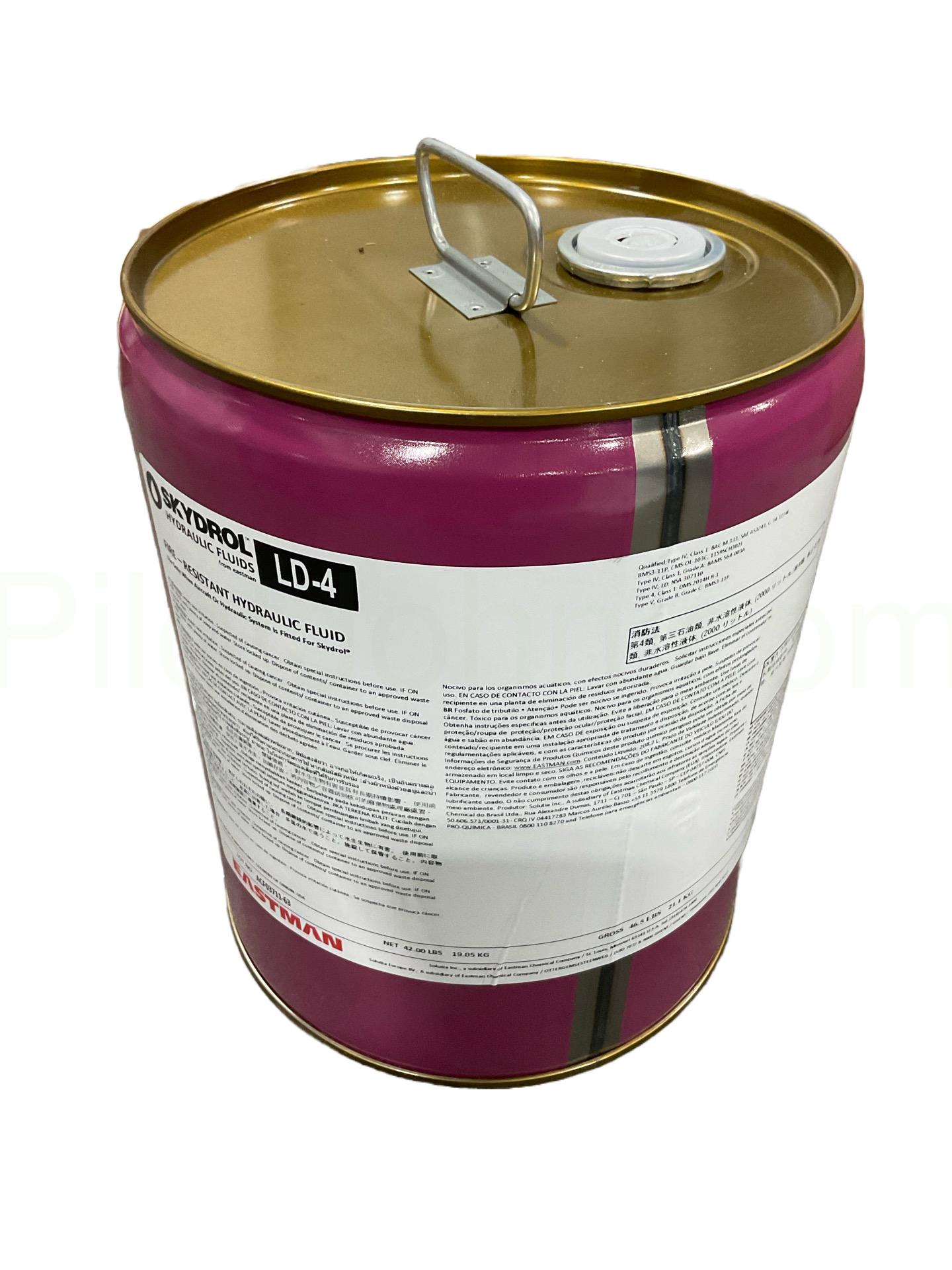
Skydrol LD-4 is a highly regarded Type IV hydraulic fluid that has set the industry standard for more than 35 years. Known for its low density and outstanding deposit control, LD-4 helps keep valves and other precision components running smoothly under demanding conditions. The formulation includes an anti-erosion additive and an acid scavenger that work together to prevent valve erosion and protect overall system integrity.
The enduring success of LD-4 in the aviation industry – with no formulation changes in decades – speaks to its consistent reliability in controlling corrosion and protecting critical hydraulic components across countless aircraft platforms.

Skydrol PE-5
Skydrol PE-5 is the newest variant in the Skydrol lineup and offers the longest service life of any phosphate ester hydraulic fluid currently available. This advanced formulation significantly extends fluid replacement intervals, delivering a more cost-effective, longer-lasting solution for modern aircraft hydraulic systems.
PE-5 maintains its effectiveness even under challenging conditions, including high-moisture environments, reducing the frequency of fluid changes and minimizing maintenance interruptions. Its stability and longevity help operators control maintenance costs while reducing the environmental impact of fluid disposal.
Skydrol Hydraulic Fluid in Aircraft Systems
Skydrol is widely used across aviation because of its performance under the high pressures and temperature swings that aircraft hydraulic systems routinely face. Its combination of fire resistance, chemical stability, and thermal resilience makes it ideal for powering hydraulic actuators throughout the airframe. Below are some of the primary applications where Skydrol keeps modern aircraft running smoothly.
Landing Gear
Skydrol plays a crucial role in operating the landing gear system, powering the hydraulic actuators that retract and extend the gear on takeoff and landing. The fluid’s fire resistance and chemical stability help maintain landing gear functionality under the extreme pressures and temperatures common during these critical phases of flight.
Skydrol’s resistance to wear and corrosion also helps extend the operational life of landing gear components – reducing the frequency of overhauls and keeping aircraft on schedule.

Flight Control Surfaces
Skydrol is essential for actuating an aircraft’s primary flight control surfaces – including elevators, ailerons, and rudders – which govern pitch, roll, and yaw. By powering the hydraulic actuators that move these surfaces, Skydrol enables the precise, responsive aircraft control pilots rely on for stability and maneuverability.
The fluid’s chemical stability keeps these hydraulic systems performing reliably between maintenance intervals, while its consistent behavior across pressure and temperature ranges supports safe, predictable handling in every flight regime.
Flaps and Slats
Skydrol also drives the hydraulic systems that extend and retract flaps and slats on an aircraft’s wings. Flaps modulate lift and drag – particularly during takeoff and landing – while slats improve airflow over the leading edge of the wing, and both are essential for optimizing performance across flight phases.
Skydrol’s fire resistance and thermal resilience are especially valuable in these systems, where reliable operation under demanding conditions directly affects aircraft efficiency and safety.
Thrust Reversers
During landing, thrust reversers redirect engine thrust forward to slow the aircraft and shorten the required stopping distance. Skydrol powers the actuators that deploy and stow these thrust reversers – a function that has to work flawlessly every time, often under intense heat and pressure from the engines.
The fluid’s durability and high-temperature performance are critical here, ensuring thrust reversers respond reliably during the most demanding moments of every landing.
Brake Systems
In smaller aircraft, hydraulic fluids like Skydrol power the brake systems, providing the force needed to engage the brakes and bring the aircraft to a controlled stop. The fluid’s fire resistance and thermal stability are especially valuable here, where braking generates significant heat during stop-and-go ground operations and aborted takeoff scenarios.
Skydrol keeps brake actuators consistently responsive under high-stress conditions, supporting reliable braking performance, while its chemical stability reduces maintenance demands and extends the life of brake system components.
Handling Skydrol Hydraulic Fluid Safely
While Skydrol delivers exceptional performance in aviation hydraulic systems, it isn’t a benign fluid – and it must be handled with care. Direct skin contact can cause irritation, redness, or chemical burns, particularly if the fluid isn’t cleaned off promptly, and Skydrol can also irritate the eyes and respiratory tract under certain conditions.
Proper precautions are essential whenever Skydrol is being handled. That means wearing appropriate personal protective equipment (PPE) – including gloves, goggles, and protective clothing – and storing and using the fluid in accordance with the manufacturer's guidance. For variant-specific handling protocols, storage requirements, and emergency procedures, refer to the Safety Data Sheet (SDS) for each product: Skydrol 500B-4, Skydrol 5, Skydrol LD-4, and Skydrol PE-5.

The Bottom Line
Skydrol hydraulic fluid remains the trusted choice for keeping aircraft hydraulic systems running safely and reliably. Its combination of fire resistance, chemical stability, and thermal resilience makes it uniquely suited to the demands of modern aviation – supporting smoother operations, longer service life, and stronger safety margins across the airframe.
Pilot John International® (PJi®) carries the full Skydrol lineup – including Skydrol 500B-4, Skydrol 5, Skydrol LD-4, and Skydrol PE-5 – alongside a broad selection of aviation hydraulic fluids and other aircraft consumables.
Have questions about which Skydrol variant is right for your aircraft? Our team of experienced aviation specialists is ready to help. Contact us today by phone, email, or live chat for personalized guidance.
Frequently Asked Questions
What is Skydrol hydraulic fluid made of?
Skydrol is a phosphate ester hydraulic fluid manufactured by Eastman Chemical Company. The phosphate ester chemistry is what gives Skydrol its defining fire-resistant properties – a sharp contrast to the mineral oil-based fluids it was developed to replace. All Skydrol variants share this phosphate ester base, with each formulation tuned for different performance and operating requirements.
Why is Skydrol used in aircraft instead of mineral oil-based hydraulic fluid?
Skydrol is used in aircraft because it’s a fire-resistant hydraulic fluid, unlike conventional mineral oil-based fluids. In the high-pressure environment of an aircraft hydraulic system, even a small leak can produce a fine, atomized spray that ignites readily under engine heat – a risk Skydrol’s phosphate ester chemistry was specifically developed to mitigate. That fire-resistant performance is why Skydrol has been the standard for commercial and military aviation for more than seven decades.
Are all Skydrol variants compatible with each other?
Skydrol variants are generally compatible with one another within the same fluid family, but compatibility should always be confirmed against the aircraft maintenance manual and Eastman Chemical Company guidance before mixing fluids in service. Different variants are formulated for different performance targets – like the lower density of Skydrol 5 or the extended service life of Skydrol PE-5 – so the right choice depends on the aircraft’s approved fluid list. When in doubt, consult the manufacturer's documentation or your PJi specialist.
How often does aviation hydraulic fluid need to be changed?
Aviation hydraulic fluid change intervals vary by aircraft type, hydraulic system design, operating conditions, and the specific Skydrol variant in use – there’s no one-size-fits-all schedule. Operators should follow the aircraft maintenance manual and the fluid manufacturer’s recommendations, including any condition-based criteria like water content, acidity, or particulate levels. Skydrol PE-5, for example, was developed specifically to offer the longest service life of any phosphate ester hydraulic fluid available today.
Can Skydrol damage aircraft paint or interior materials?
Skydrol can damage certain paints, coatings, and elastomers if it’s allowed to remain in contact with them, which is why prompt cleanup of spills is part of standard handling procedure. Aircraft systems that contact Skydrol use elastomers and seals specifically rated for phosphate ester service, so compatibility is engineered into the system design. Always reference the SDS and aircraft maintenance documentation for approved cleanup procedures and cleaning agents.
What is the difference between Skydrol LD-4 and Skydrol 500B-4?
Skydrol LD-4 is a low-density Type IV fluid known for outstanding deposit control and valve protection, while Skydrol 500B-4 is a standard-density variant with the longest service history in the Skydrol family. Both deliver fire-resistant performance and feature anti-erosion additives, but LD-4’s lighter weight makes it a common choice for newer commercial airframes, while 500B-4 remains widely used across a broad mix of aircraft. The right pick depends on the aircraft manufacturer’s approved fluid list.
What is the shelf life of Skydrol hydraulic fluid?
All four Skydrol variants – 500B-4, Skydrol 5, LD-4, and PE-5 – share the same recommended shelf life of 10 years, provided the product remains in its original, unopened, and undamaged container. To preserve fluid integrity and packaging, storage should be kept at ambient temperature conditions (32°F to 104°F / 0°C to 40°C), away from direct heat and moisture. Always consult the product's Certificate of Analysis (COA) for the specific expiration date tied to your batch.