Understanding Aircraft Fire Extinguishers & Their Operation
Key Takeaways
- Aircraft fires fall into five classes – A (ordinary combustibles), B (flammable liquids), C (electrical equipment), D (combustible metals), and K (cooking oils) – and using the wrong extinguisher type for a given fire class can make the situation significantly more dangerous.
- Clean-agent extinguishers are the preferred choice in aviation because they suppress Class A, B, and C fires without leaving residue or damaging sensitive electronics – making them safe for use around avionics, cockpit equipment, and other critical systems.
- Halon 1211 remains widely used and FAA-approved, but its ozone-depleting properties led to a global production ban in 1994, and the EU will ban its use after December 31, 2025. In the U.S., certified recycled Halon extinguishers remain legal and in active service.
- Halotron 1, Halotron BrX, and Novec 1230 are the primary Halon alternatives – each offering comparable fire suppression with lower environmental impact. Halotron BrX is accepted by both the FAA and EASA as a direct replacement for Halon 1211; Novec 1230 has an ODP of 0 and faces no global regulatory restrictions.
- FAR Part 91 mandates fire extinguishers on most civilian aircraft, with requirements for number, type, and placement determined by aircraft size and passenger capacity. Extinguishers must be inspected monthly and serviced annually by a certified professional.
- PJi carries Halon 1211, Halotron 1, Halotron BrX, and Novec 1230 extinguishers from H3R Aviation, with aviation specialists available to help identify the right extinguisher for your aircraft type and operating environment.
Aircraft fires, though rare, can pose a significant threat to crew, passengers, and the aircraft. To minimize this risk, aviation professionals rely on fire extinguishers to quickly suppress any fires that may occur during flight or on the ground. Pilot John International® (PJi®) carries high-quality aircraft fire extinguishers from trusted brands such as H3R Aviation, ensuring aviation personnel have access to reliable, effective firefighting tools.
With various types of fire extinguishers available, it’s crucial to understand how they work and choose the right one for your specific needs. In this article, we’ll examine the different classes of fires, which fire extinguishers are used in aviation, and the best practices for maintaining them to ensure they function effectively when needed.
What Are the Five Classes of Fires?

Understanding the different types of fires is vital to selecting the right fire extinguisher. Fires are typically categorized into five classes, each representing specific materials and fire behaviors. Using the wrong extinguisher for the wrong class of fire can exacerbate the problem, turning an already dangerous situation into a catastrophe. Let’s explore each of the five classes of fire in detail.
Class A Fires
Class A fires involve common combustible materials, such as wood, paper, cloth, rubber, and plastics. These materials ignite easily and can burn at various temperatures, depending on the material. Class A fires typically occur in areas like cargo holds or aircraft cabins where everyday materials are present.
Class B Fires
Class B fires are caused by flammable liquids, such as gasoline, oil, grease, or solvents. These fires are highly dangerous because they can spread rapidly and are often difficult to control. In aviation, Class B fires may occur in the engine compartment or the fuel system.
Class C Fires
Class C fires occur in live electrical equipment, such as wiring, circuit boards, or other electrical components. These fires are particularly hazardous because water or foam extinguishers can conduct electricity, posing a risk of electrocution. Class C fires can also take place in aircraft electrical systems, such as avionics or cockpit equipment.
Class D Fires
Class D fires are fueled by combustible metals like lithium, magnesium, aluminum, or titanium. They behave differently from other fires because they cannot be extinguished by water or foam and may even intensify. Although extremely rare in aviation, Class D fires could occur in specific aircraft parts that contain metal alloys, such as engines or landing gear components.
Class K Fires
Class K fires typically occur in cooking environments, such as aircraft kitchens or galley areas. They result from the combustion of liquid cooking oils, fats, or other cooking materials. Class K fires can spread rapidly and reach high temperatures, making them among the most dangerous fire types.
What Are the Different Types of Fire Extinguishers, and Which Are Used in Aviation?
While there are many different types of fire extinguishers on the market, not all are suitable for use in aviation environments. Let’s look at each type, their pros and cons, and whether they’re suitable for aviation firefighting.
Water Extinguishers
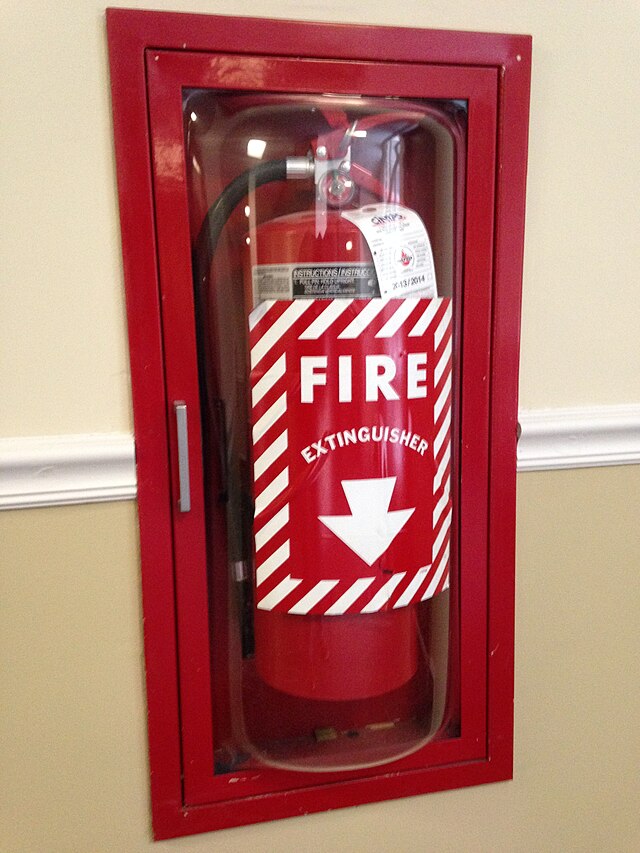
Water extinguishers are primarily used for Class A fires. They work by spraying water through a nozzle to soak the burning materials and absorb heat, effectively extinguishing the flames. While water extinguishers are the simplest, most common, and least expensive type, they are not suitable for Class B, C, or D fires, especially electrical or flammable liquid fires.
Due to the confined space and challenges of using water on an aircraft, water fire extinguishers are less common. They can pose additional hazards in aviation environments, making them less ideal for these settings.
Foam Extinguishers
Foam fire extinguishers are effective for both Class A and Class B fires. They work by forming a blanket over the fire, smothering the flames and preventing the release of flammable vapors. The foam expands upon contact with air, cooling the fire and preventing reignition. Ideal for liquid fires, foam fire extinguishers are not suitable for Class C (electrical) fires unless specifically tested for such use.
While foam extinguishers offer excellent fire suppression, they leave a residue that requires cleanup and can be more expensive than water-based extinguishers. Due to these factors, foam extinguishers are not commonly used in aviation environments. However, they can be effective when used with caution on certain types of fires.
Carbon Dioxide (CO2) Extinguishers
Carbon dioxide (CO2) extinguishers are ideal for Class B and Class C fires, particularly those involving flammable liquids and electrical equipment. They work by displacing oxygen, effectively suffocating the fire without leaving any residue, making them suitable for use around sensitive electronics. CO2 fire extinguishers are commonly used in hangars and airports, but are not suitable for confined spaces like aircraft cabins, as they can cause asphyxiation if ventilation is inadequate.
While CO2 extinguishers are highly effective for electrical and liquid fires, they should not be used on Class A fires, as they can cause materials to smolder and reignite. Due to their ability to cool and smother the fire, CO2 extinguishers are a critical tool in aviation. However, they require careful handling and proper training to ensure safe and effective use.
Dry Chemical Extinguishers
Dry chemical extinguishers are versatile and effective for Class A, B, and C fires, including those involving flammable liquids, electrical equipment, and combustibles. They work by interrupting the chemical reaction that sustains the fire, effectively smothering the flames. However, they leave a corrosive powdery residue that can damage sensitive equipment and impair visibility.
While commonly used in general aviation, dry chemical fire extinguishers are not recommended for use in most aircraft cabins due to the potential damage to electronics and the challenging cleanup. They are typically found in cargo holds and other areas of aircraft where sensitive equipment is not present.
Wet Chemical Extinguishers
Wet chemical fire extinguishers are specifically designed for Class K fires. They work by cooling the fire and forming a soapy barrier between the fuel and oxygen, preventing reignition. The fire extinguisher contains a potassium-based solution that both lowers the fire's temperature and creates a thick, protective layer.
Primarily used in areas with cooking equipment, wet chemical extinguishers are not suitable for Class A, B, or C fires. Due to their specialized function, they are not typically used in aviation environments, as cooking-related fires are uncommon in aircraft.

Clean Agent Extinguishers
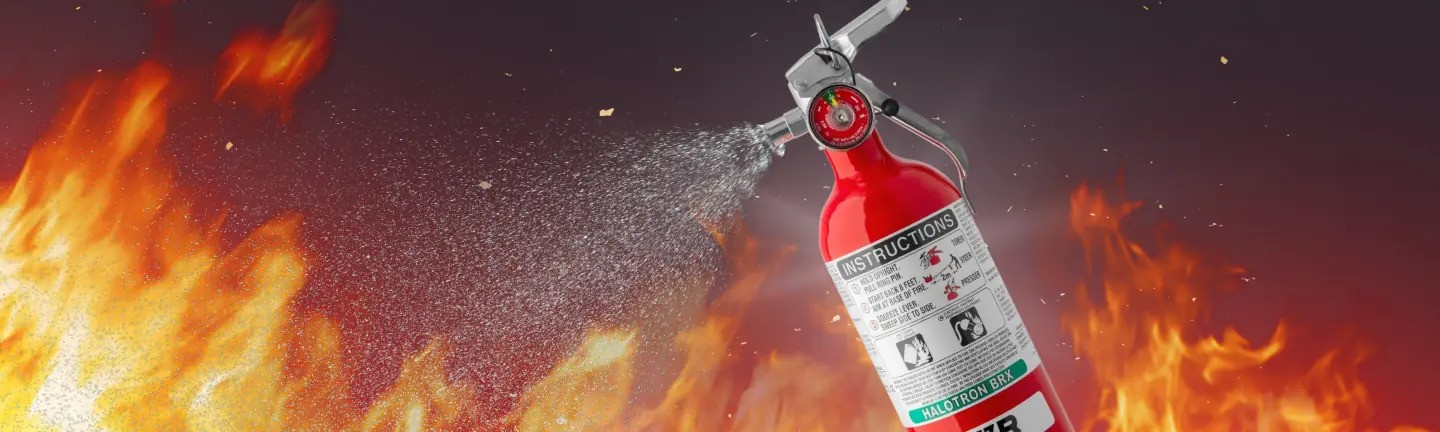
Specifically designed for aviation use, clean-agent fire extinguishers are effective on Class A, B, and C fires, especially when sensitive equipment such as computers, servers, and electrical systems is involved. They work by interrupting the chemical reaction of the fire and removing heat. Clean agents, such as Halon, convert into gas when discharged, reducing oxygen levels and suppressing the fire without leaving a residue, making them ideal for protecting sensitive electronic systems.
Clean-agent fire extinguishers are safe for humans and are commonly used in aviation for their ability to safeguard delicate equipment while effectively combating fires. While Halon has traditionally been used in aviation and remains widely used today, concerns about its environmental impact have led to a shift toward more eco-friendly alternatives, such as Halotron.
What Are the Various Clean Agents Used in Aircraft Fire Extinguishers?
Clean agents in aviation fire extinguishers provide an effective and safe way to fight fires without damaging sensitive equipment. These agents are non-toxic, non-conductive, and leave no residue. Let’s take a closer look at the various clean agents used in aircraft fire extinguishers.
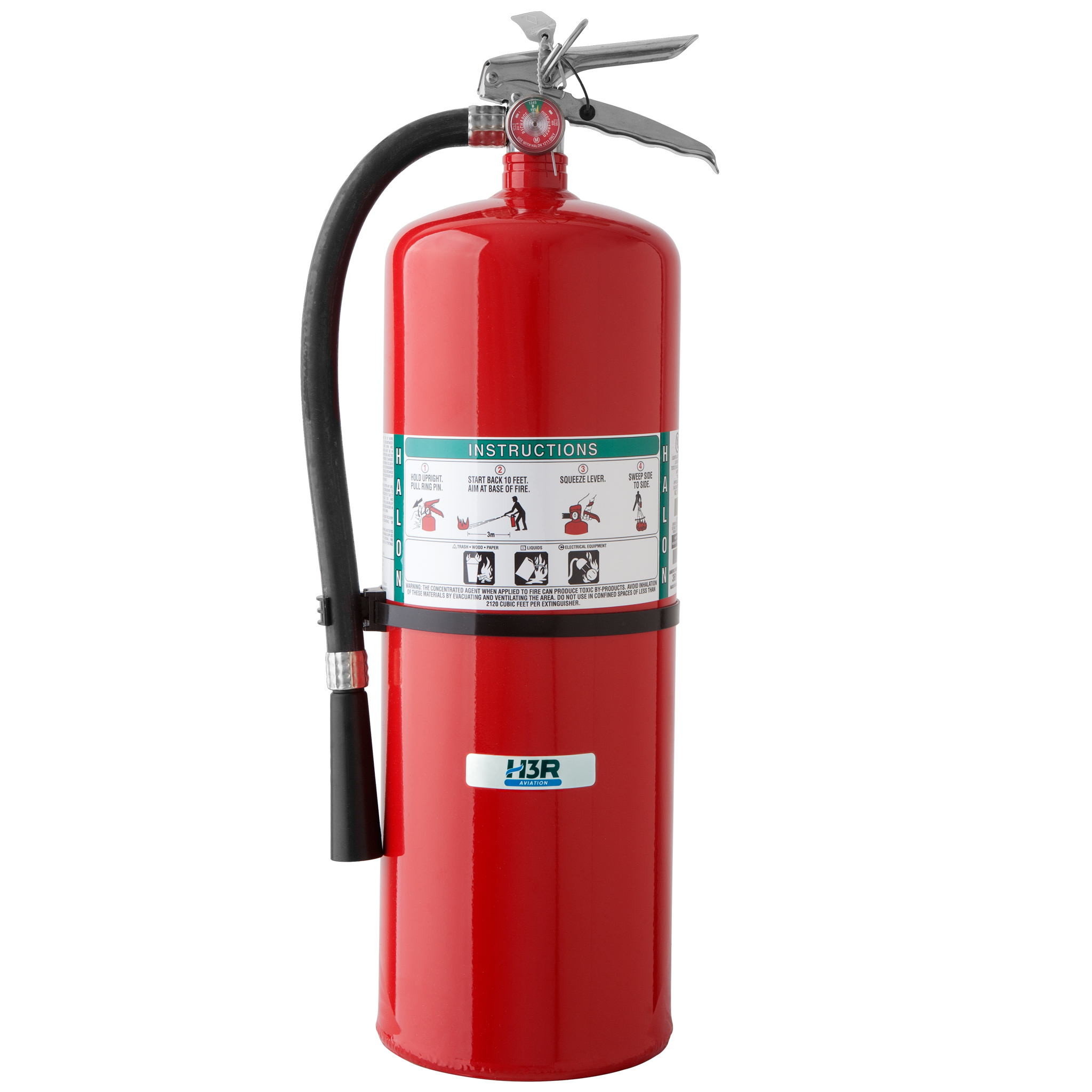
Halon 1211
Halon 1211 is one of the most widely used clean agents for fire suppression. It works by chemically interrupting combustion and is effective against Class B and C fires. Halon 1211 is non-conductive, making it ideal for electrical fires.
When discharged, this liquefied gas offers a range of 9 to 15 feet, providing significant advantages in large aircraft cabins. Halon 1211 is non-toxic, stable, and leaves no residue, which makes it suitable for use in areas with sensitive equipment.
Halotron 1
Halotron 1 is an environmentally friendly replacement for Halon 1211, offering similar fire suppression capabilities without the harmful environmental effects. It is suitable for Class B and C fires and is commonly used in aviation, particularly for electrical fires and sensitive equipment. Halotron 1 is nontoxic and noncorrosive, making it safe for the environment and aircraft.

This clean agent interrupts the chemical reaction that fuels the fire and evaporates quickly, leaving no residue. It is a widely accepted alternative for Halon 1211, especially in applications requiring a non-conductive agent, and is considered effective and environmentally safer. While Halotron 1 is restricted in Europe due to regulations on HCFC-based agents, it remains the preferred choice in regions where it is permitted.
Halotron BrX
Halotron BrX is a clean-agent fire suppressant that provides effective fire suppression while being safer for the environment than traditional options. An upgraded version of Halotron 1, it offers improved performance at lower temperatures and higher fire suppression efficiency, making it ideal for aviation. It is widely used for Class B and C fires, particularly in environments with sensitive electronics.
Accepted by both the FAA and EASA as a replacement for Halon 1211, Halotron BrX offers a low global warming potential (GWP) and very low ozone depletion potential (ODP). This makes it a highly effective and eco-friendly alternative to Halon, with the added benefit of not leaving residue behind after discharge, which is crucial in aviation settings.
Novec 1230
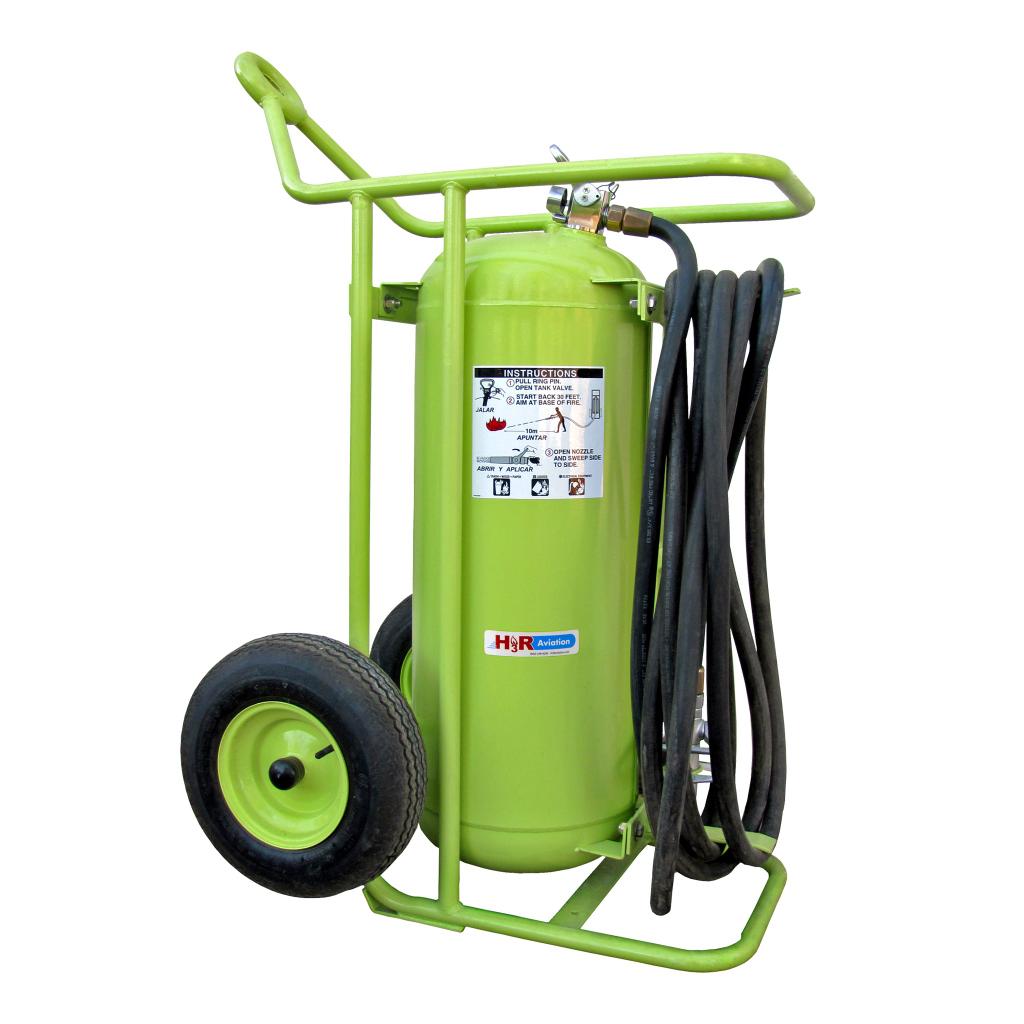
Novec 1230 is a clean agent with exceptional fire suppression capabilities for Class A, B, and C fires. It works by removing heat from the fire and preventing reignition. Novec 1230 is safe for use in aircraft, as it does not damage sensitive electronics or leave any residue. It’s also a more environmentally friendly option compared to Halon, as it has a low global warming potential (GWP).
Unlike some fire suppression agents, Novec 1230 has zero ozone-depletion potential (ODP) and is not subject to phase-down or regulatory restrictions globally. Its rapid heat absorption and interaction with fire-generated radicals disrupt the combustion process, making it an efficient and safe choice for fire suppression.
How Safe is Halon?
Halon is highly effective at extinguishing fires and has long been a staple in fire suppression systems, especially in aviation. It is a low-toxicity, chemically stable compound that leaves no residue and is remarkably safe for human exposure when used properly. Extensive toxicity evaluations have shown that Halon 1301, used in fire suppression systems, is the safest extinguishing agent available, while Halon 1211, used in portable fire extinguishers, is the second safest.
However, Halon can pose health risks when inhaled in high concentrations, particularly in confined spaces, where it can cause respiratory issues or suffocation. While it remains the most effective clean extinguishing agent, Halon’s environmental impact – especially its contribution to ozone depletion – has prompted the search for safer alternatives. As a result, Halon is gradually being phased out in favor of eco-friendly alternatives such as Halotron and Novec 1230, which offer similar fire-suppression capabilities with lower health and environmental risks.
Is Halon Still in Production?
Production of Halon ceased on January 1, 1994, due to environmental concerns, specifically its role in depleting the ozone layer. Despite this, Halon fire extinguishers are still widely used, especially in aviation, and can be legally purchased and used if they are recycled. The Federal Aviation Administration (FAA) continues to recommend Halon fire extinguishers for aircraft, recognizing their effectiveness as a fire-suppression agent.
Although Halon remains available, its eventual phase-out is anticipated, not due to a lack of supply but because of the ongoing development of alternative extinguishing agents that are both effective and more environmentally friendly. Halon use in the European Union (EU) will be banned after December 31, 2025, in accordance with new regulations, which also include UL Solutions' plans to discontinue certification of Halon fire extinguishers. However, there is no such restriction in the United States, and UL has confirmed that Halon fire extinguishers will continue to be manufactured under UL 1093.
Are Fire Extinguishers Required in All Aircraft?

In the U.S., the FAA mandates that most civilian aircraft carry fire extinguishers, as outlined in FAR Part 91. The number, type, and location of fire extinguishers are determined by the aircraft's size and passenger capacity. While fire extinguishers are required for most commercial and general aviation aircraft, some very light sport aircraft (VLSA) or experimental aircraft may be exempt from these regulations based on specific FAA guidelines.
On the international level, the International Civil Aviation Organization (ICAO) provides recommendations for fire extinguisher requirements, but individual countries are responsible for establishing their own regulations, which may vary by aircraft type. It’s important to note that while fire extinguishers are not mandatory on some light aircraft, having one on board is critical in the event of an in-flight fire. As part of best safety practices, pilots should always ensure that the appropriate fire suppression equipment is on board and easily accessible.
How Should Aircraft Fire Extinguishers Be Inspected and Maintained?
Aircraft fire extinguishers must be regularly inspected to ensure they are in proper working condition. According to FAA guidelines, extinguishers should be checked monthly for any visible damage, pressure gauge readings, and proper seals. Annual maintenance by a certified professional is required to ensure functionality. The extinguisher should be fully serviced and recharged if necessary, and any expired or damaged units should be replaced immediately to ensure optimal performance during emergencies.
For specific types of extinguishers, such as Halon, additional inspections are required. Halon fire extinguishers must be checked when first placed in service, then every 30 days, or more frequently if conditions require. Inspections should verify that the extinguisher is undamaged, the nozzle is unobstructed, and the pressure gauge remains in the operable range. Additionally, the lock pin and tamper seal should be intact, and the operating instructions must be clearly visible. These steps ensure that the fire extinguisher remains in optimal working order, ready for use when needed.
The Bottom Line

Having the right aircraft fire extinguisher is crucial to ensuring safety during flight and ground operations. Extinguishers equipped with clean agents can provide fast, effective fire suppression without damaging sensitive equipment. Ensuring proper inspection and maintenance of these tools is critical for keeping your aircraft safe and ready for any emergency.
PJi is your trusted source for premium-quality aircraft fire extinguishers, including Halon 1211, Halotron 1, Halotron BrX, and Novec 1230, from H3R Aviation. Our aviation specialists are here to help you find the right fire extinguishers for your fleet. Contact us by phone, email, or chat today!