




Create yours now for free.

Need a Quote?
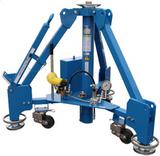
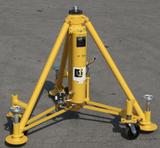
The Columbus Jack 1284-1100 is a 50-ton (100,000-lb) hydraulic aircraft tripod jack engineered to lift aircraft from the forward fuselage or main wing jacking points during maintenance, inspections, and ground operations. With a 60" (152.4 cm) closed height and 115" (292.1 cm) maximum extended height, it accommodates a range of aircraft fuselage and wing jacking point heights. CE-marked for compliance with European aviation safety standards. OEM-specified for Boeing 737-BBJ, 737-BBJ2, 717, and others. Also approved for McDonnell Douglas MD-80.
Standard Features
- Hand pump with built-in pressure relief valve
- Threaded rams with improved handwheel-style safety nut
- Quick-rising center extension for rapid initial lift
- Easy-access filler/breather cap
- Heavy-duty wheels for easy maneuverability
- Hydraulic fluid: MIL-PRF-5606
- ¾" (2 cm) spherical radius cup jack pad
- CE marked
Technical Specifications
- Rated Capacity: 100,000 lbs (45359 kg)
- Operating Temperature: -4°F to 122°F (-20°C to 50°C)
- Pressure Relief Setting: 2,500 + 250/-0 PSIG (172.4 + 17.2/-0 bar)
- Minimum Closed Height: 60" (152.4 cm)
- Maximum Height Obtainable: 115" (292.1 cm)
- Hydraulic Fluid: MIL-PRF-5606
- Jack Pad: ¾" (2 cm) spherical radius cup
Safety Features
- Ram Lock Nut: Prevents the ram from lowering. The ram lock nut must be lowered as the aircraft is being lifted. Ram lock nuts must be kept within 2" of the stop while raising the aircraft.
- Lock Nut Retention Ring: Prevents the lock nut from being unscrewed from the second stage.
- Pressure Relief Valve: Prevents overload during raising operations.
Aircraft Applications
The 1284-1100 is OEM-approved for the following aircraft types:
- Boeing: 737-BBJ, 737-BBJ2, 717, 727-100, 727-200, and 11 more
- McDonnell Douglas: MD-80
This list reflects aircraft for which the manufacturer has specifically approved this jack. Additional applications may be possible – always confirm jacking capacity, adapter requirements, and placement procedures with the aircraft maintenance manual before use.
Need your Columbus Jack 1284-1100 50-ton tripod jack serviced, repaired, or load-tested?
Pilot John is an authorized Columbus Jack (Tronair) distributor and service center – one of a select group of authorized partners in North America. Our pricing on Columbus Jack jacks is competitive: PJi prices have been verified as lower than those of other major aviation supply retailers on comparable models. Every jack ships new from our North Carolina warehouse with Certificates of Conformance (CofC) and FAA Form 8130-3 documentation available at no additional cost. Need jack service, calibration, or repair? Pilot John handles that too as an authorized service center.
| General Information | |
|---|---|
| Part # | 1284-1100 |
| Manufacturer | Columbus Jack |
| Shipping Information | |
|---|---|
| Schedule B | 8425420000 |
| ECCN | EAR99 |
Customers also viewed

AIRCRAFT COMPATIBILITY
| Compatible Aircraft* | |
|---|---|
| Boeing | 717 , 727-100 , 727-200 , 737 Max , 737-100 , 737-200 , 737-300 , 737-400 , 737-500 , 737-600 , 737-700 , 737-800 , 737-900 , 737-BBJ , 737-BBJ2 , MD-80 |
| McDonnell Douglas | MD-80 |
PRODUCT REVIEWS
This item does not have any reviews yet.
QUESTIONS & ANSWERS
The Columbus Jack 1284-1100 offers a maximum extended height of 119", making it suitable for servicing larger narrow-body aircraft and business jet platforms with high fuselage or wing jacking points. This extended reach allows maintenance crews to perform landing gear work, tire changes, and structural inspections more efficiently. The increased lift range also helps reduce the need for additional support equipment during maintenance procedures. For facilities supporting multiple aircraft types, the added height flexibility improves operational versatility.
A 50-ton aircraft tripod jack is designed to safely support heavier aircraft commonly used in commercial and executive aviation operations. Higher lifting capacity helps distribute aircraft weight more effectively during maintenance procedures, reducing stress on the jack’s hydraulic and structural components. This added strength is particularly beneficial for operators servicing Boeing 717, 727, BBJ, and MD-80 aircraft families. Properly rated lifting equipment is critical for maintaining safe aircraft support during heavy maintenance tasks.
The 37.5" base radius provides a wide tripod footprint that improves stability during lifting operations. A broader support base helps minimize movement and distributes vertical load forces more evenly across the floor surface. This is especially important when lifting larger aircraft with higher center-of-gravity loads. Increased stability can help technicians perform maintenance procedures with greater confidence and safety.
The 15" mechanical extension allows technicians to adjust the jack height before hydraulic lifting begins. This feature helps reduce hydraulic pumping requirements, improving setup efficiency and reducing operator effort. It also allows for more precise alignment beneath aircraft jacking points with varying heights. Faster positioning can help streamline maintenance workflows in busy hangar environments.
The 44" hydraulic extension provides substantial lifting travel for servicing larger aircraft platforms. This extended hydraulic movement allows technicians to raise aircraft gradually and maintain precise control throughout the lifting process. Controlled hydraulic lifting is important during landing gear servicing, wheel changes, and undercarriage inspections. Greater lift range also supports improved adaptability across different aircraft maintenance applications.
The durable powder-coat finish helps protect the aircraft tripod jack from corrosion, exposure to hydraulic fluid, and surface wear in demanding maintenance environments. Protective finishes are especially important in hangars and ramp operations where equipment may encounter moisture, chemicals, and repeated handling. Improved corrosion resistance can extend equipment lifespan while reducing maintenance requirements. The finish also helps maintain the jack's professional appearance over time.
MIL-PRF-5606 hydraulic fluid is widely used in aviation maintenance equipment because it performs reliably across varying environmental conditions. Its low-temperature performance helps maintain smooth hydraulic operation in colder climates, while its anti-wear properties protect internal hydraulic components. Using aviation-approved hydraulic fluid also helps standardize maintenance practices across ground support equipment fleets. Proper fluid selection contributes to long-term jack reliability and performance.
Heavy-duty wheels make it easier for maintenance crews to position the 1,050-lb tripod jack beneath aircraft jacking points. Improved mobility can reduce setup time and minimize operator strain when moving the jack around crowded hangars or maintenance bays. Durable wheel construction also supports repeated use on various hangar floor surfaces. Efficient maneuverability is especially important when supporting fast-paced commercial aircraft maintenance schedules.
OEM-approved aircraft tripod jacks are designed and tested for compatibility with specific aircraft models and approved lifting procedures. Using approved lifting equipment helps maintenance organizations comply with manufacturer maintenance guidelines and aviation safety practices. OEM approvals can also provide greater confidence in proper load distribution and jack point compatibility during lifting operations. For airlines and MRO providers, approved equipment helps support safe and efficient aircraft maintenance workflows.


