






Create yours now for free.
The 09-02994 is a specific part number of the series ACF-50 CB-32oz. For more generalized information on this item series or for more options, click here.

Need a Quote?
| Alternate Models | |
|---|---|
| 09-02994 | Alternative Part Number for 32 oz Container |
| 20032 | Lear Chemical Part Number for 32 oz Container |
| General Information | |
|---|---|
| Part # | 09-02994 |
| Manufacturer | ACF-50 |
| Shipping Information | |
|---|---|
| Product Weight | 0.5 lbs. |
| Product Dimensions | 9 x 6 x 4 in. |
| Schedule B | 3403191012 |
| ECCN | EAR99 |
Customers also viewed
AIRCRAFT COMPATIBILITY
| Compatible Aircraft* |
|---|
PRODUCT REVIEWS
This item does not have any reviews yet.
QUESTIONS & ANSWERS
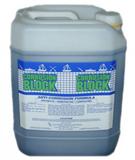
Corrosion Block Bulk Liquid is formulated to prevent and treat corrosion on ferrous and non-ferrous metals, protect electronic equipment, and lubricate mechanized parts. In aviation, it is commonly used to safeguard exposed components in high-moisture or salt-air environments. The 32-oz size is well-suited for routine maintenance programs requiring consistent application.
According to the Safety Data Sheet (SDS), the product is not regulated for land, sea, or air transport. This simplifies storage and shipping logistics for aviation maintenance facilities. However, it is classified as a Category 4 flammable liquid and should be stored properly.
The product should be stored between 40°F and 120°F in a cool area, away from oxidizing agents. Containers should be kept tightly sealed to maintain performance and reduce contamination risk. Proper storage helps preserve the product’s corrosion-prevention effectiveness over time.
The SDS states that no special personal protective equipment is normally required under typical workplace or retail conditions. Standard hygiene practices, such as washing hands after handling, are recommended. Eye protection may be used if splashing is likely during application.
If skin contact occurs, wash the affected area with soap and water. For eye exposure, rinse cautiously with water for several minutes and remove contact lenses if present. Any persistent irritation should be evaluated by medical personnel.
The SDS notes that petroleum components are biodegradable in marine and soil environments. The product does not meet REACH PBT or vPvB criteria, indicating low long-term environmental persistence concerns. This makes it suitable for aviation applications where environmental compliance is important.
The product has a kinematic viscosity of 25 cSt at 40°C. This viscosity supports controlled application while still allowing the fluid to penetrate tight areas and seams. It balances flowability with staying power on treated surfaces.
Spills should be absorbed with inert materials such as sand or silica gel, and the material should be placed in suitable closed containers for disposal. Adequate ventilation is recommended during cleanup. Prevent the product from entering drains or waterways.
According to the SDS, no component is present at a level greater than or equal to 0.1% that is identified as a carcinogen. Acute toxicity testing shows the mixture is not classified as posing acute toxicity hazards. This supports safe use when handled as directed.
Completely emptied HDPE or LDPE containers may be recycled. Non-empty containers should be disposed of in accordance with local, regional, or national regulations and treated as used oil. Landfilling is not recommended.


