






Need a Quote?
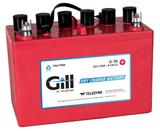
The Teledyne Gill 7025-24 Sealed Aircraft Battery embodies the latest in extreme cranking valve-regulated lead-acid (VRLA) technology. Engineered for the rigorous demands of modern aviation, this battery is not just an upgrade—it’s a pledge to safety, reliability, and enduring performance. Its sealed, non-spillable VRLA design ensures powerful, maintenance-free operation, meeting the high standards aviation maintenance professionals expect.
TSO Authorized, rigorously tested to DO-160E standards, and FAA-PMA certified, the Teledyne 7025-24 upholds the highest safety and quality benchmarks, providing dependable power for every flight. With a first capacity inspection interval of 18 months or 1,800 hours, this battery minimizes downtime and maintenance requirements, allowing you to focus on flying. Supported by a 2-year warranty, it delivers consistent power, even under the most challenging conditions.
Ideal for various aircraft, including the Beechcraft King Air, Cessna Citation, and numerous Embraer and Gulfstream models, the Teledyne 7025-24 is a perfect fit. It seamlessly replaces the Teledyne Gill G-25 Dry Charged Battery, offering enhanced energy retention and cranking power in a lighter, more efficient package. Its advanced VRLA design also ensures a non-spillable, safer handling experience, particularly in unpredictable or turbulent flight environments.
Whether for commercial, private, or military aviation, the 7025-24 provides unmatched confidence in your power source. It performs reliably across extreme temperatures, ensuring your systems stay powered from freezing altitudes to scorching tarmacs.
Equip your aircraft with the trusted power of the Teledyne Gill 7025-24 and experience the next level of performance.
Concorde Battery Cross-Reference
The Gill 7025-24 is a verified cross-reference and compatible replacement for the following Concorde aircraft battery models. If you are searching for a Concorde battery replacement, the Gill 7025-24 sealed VRLA aircraft battery is the recommended equivalent for:
- Concorde RG24-11M
Concorde and Gill batteries are cross-referenced by aviation maintenance professionals, FBOs, and aircraft operators seeking a quality alternative. If you are replacing one of the Concorde models listed above, the Gill 7025-24 offers maintenance-free sealed construction, FAA-PMA certification, and the durability required for demanding aviation applications.
Need help confirming the right cross-reference for your aircraft? Our aviation battery experts are available by phone, email, or chat to verify fitment and compatibility for your specific application.
| General Information | |
|---|---|
| Part # | 7025-24 |
| Manufacturer | Teledyne Gill |
| Spec Sheet 1 | View Spec Sheet |
| MSDS 1 | View Safety Data Sheet |
| Shipping Information | |
|---|---|
| Product Weight | 25 lbs. |
| Product Dimensions | 14 x 12 x 10 in. |
| Schedule B | 8507200090 |
| ECCN | 9A991.d |
| Specifications | |
|---|---|
| 30 Minute Emergency Rate, C/2, A | 33 |
| Model | 7025-24 |
| Nominal Voltage, V | 12 |
| One Hour Capacity, C1, Ah | 24.2 |
| Power Performance | 23°C (74°F): Ipp, A - 1100, Ipr, A - 825, -18°C (0°F): Ipp, A - 725, Ipr, A - 550, -30°C (-22°F): Ipp, A - 500, Ipr, A - 400 |
| Weight, Lb. Maximum | 23.40 |
Customers also viewed
AIRCRAFT COMPATIBILITY
PRODUCT REVIEWS
This item does not have any reviews yet.
QUESTIONS & ANSWERS
The Teledyne Gill 7025-24 uses absorbed glass mat (AGM) technology, which immobilizes the electrolyte within separators rather than allowing it to flow freely. This design improves efficiency by enabling better energy transfer between plates while reducing internal resistance. It also supports consistent performance in demanding aviation environments and helps minimize energy loss during operation.
Yes, the sealed VRLA construction allows the 7025-24 battery to be operated in various orientations without the risk of electrolyte leakage. Because the electrolyte is absorbed into glass-mat separators, there is no free liquid inside the battery. This flexibility simplifies installation and makes it suitable for a wide range of aircraft configurations.
The battery consists of multiple sealed cells connected internally, each using precisely engineered positive and negative plates separated by AGM material. This design ensures consistent electrical performance and reduces the likelihood of internal failure. Since the cells are sealed and not serviceable, they are protected from contamination and improper handling.
Temperature has a direct impact on battery efficiency and lifespan, with optimal performance typically occurring around moderate ambient conditions. Extremely high temperatures can shorten battery life, while very low temperatures may temporarily reduce available capacity. However, performance generally recovers once the battery returns to normal operating temperatures, making it reliable across varying environments.
The 7025-24 is designed for extended storage when proper voltage monitoring and maintenance practices are followed. It can maintain a charge for months, but periodic inspection is recommended to ensure voltage levels remain within acceptable limits. When stored correctly, it can achieve up to 24 months of pre-installation shelf life, making it a practical option for operators managing spare inventory.
The 7025-24 is classified as a nonspillable battery, which simplifies handling, storage, and transportation requirements. This designation allows it to be shipped without many of the restrictions associated with traditional liquid electrolyte batteries. It also enhances safety during installation and maintenance by reducing the risk of acid exposure or leaks.
Using the correct charging method – typically constant-voltage charging – helps preserve battery capacity and extend service life. Overcharging or undercharging can lead to sulfation or internal damage, reducing performance over time. Maintaining proper charge levels ensures the battery delivers reliable power and meets aviation performance standards.
Routine inspections, including checking voltage levels and terminal condition, are key to maintaining optimal performance. Keeping the battery properly charged and avoiding deep discharge cycles can significantly extend its usable life. Additionally, ensuring clean connections and following recommended capacity-testing intervals help maintain reliability in critical aviation applications.


