






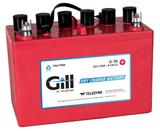
The G-641S is a specific part number of the series Teledyne Gill G-641. For more generalized information on this item series or for more options, click here.

| Alternate Models | |
|---|---|
| G-641S | Previous Gill Battery Part Number |
| General Information | |
|---|---|
| Part # | G-641S |
| Manufacturer | Teledyne Gill |
| MSDS 1 | View Safety Data Sheet |
| MSDS 2 | View Safety Data Sheet |
| Shipping Information | |
|---|---|
| Product Weight | 42 lbs. |
| Product Dimensions | 15 x 10 x 11 in. |
| Schedule B | 8507200090 |
| ECCN | 9A991.d |
Customers also viewed
Customers who bought this item also purchased
AIRCRAFT COMPATIBILITY
| Compatible Aircraft* | |
|---|---|
| Bell | 206 , 206L4 |
| MD Helicopters | 500 , 600H |
| Slingsby | T67 Firefly |
PRODUCT REVIEWS
This item does not have any reviews yet.
QUESTIONS & ANSWERS
To activate your Gill G-641 dry-charged battery, begin by removing the sealing caps from each cell. Carefully fill each cell with the appropriate sulfuric acid electrolyte. It’s crucial to use the correct electrolyte to achieve the desired battery performance.
After filling, allow the battery to sit undisturbed for approximately 15 to 30 minutes. This soaking period enables the electrolyte to fully saturate the dry-charged plates, ensuring efficient chemical reactions during charging.
Following the soaking period, charge the battery using a constant current charger set to the manufacturer’s recommended rate. Monitor the battery’s temperature during charging, ensuring it does not exceed 125°F (52°C). If the temperature approaches this limit, reduce the charging rate or temporarily halt the process to allow the battery to cool.
Once charging is complete, verify that the electrolyte levels are within the specified range, topping up if necessary. Securely replace the sealing caps and clean any spilled electrolyte from the battery’s exterior to prevent corrosion.
No, adding electrolyte after the initial conditioning is not recommended. Introducing additional electrolyte can disrupt the chemical balance within the battery cells, leading to increased voltage and reduced battery life.
Yes. Gill aircraft batteries do not have any “memory effect,” so interrupting the charge will not harm them. Just be sure to turn off your battery charger when pausing the process. For optimal performance, it’s best to finish charging your battery within the same day.
Gill does not recommend onboard battery charging. Always remove the battery from the aircraft before charging.
If properly serviced, your Gill G-641 battery can provide several years of reliable service. However, Gill recommends changing your battery every two-and-a-half to three years.
On a newly charged 24V battery like the G-641, the voltage should read 26 to 26.4 volts.
Store the battery in a cool, dry place with a stable temperature, ideally around 80°F (27°C). Avoid exposure to extreme temperatures, as this can adversely affect the battery’s condition. Ensure the storage area is well-ventilated and away from flammable materials. Additionally, store the battery upright to prevent any potential leakage.
Before storage, wipe the battery with a dry cloth to remove any dirt or moisture that could lead to terminal corrosion and ensure the battery is fully charged. A fully charged battery is less susceptible to sulfation, a condition that can diminish performance. Even during storage, it's important to check the battery's voltage periodically. If the voltage drops below 75% of its state of charge, recharge the battery to prevent deep discharge, which can shorten its lifespan.
Gill dry-charged lead-acid batteries, including the G-641, are designed to be stored for extended periods before activation. When stored under optimal conditions – specifically in a cool, dry environment with temperatures around 80°F (27°C) – these batteries can maintain their charge for several years.
However, it’s essential to monitor the open-circuit voltage periodically during storage. If the voltage drops below 75% of its state of charge, recharging is recommended to prevent sulfation and ensure optimal performance upon activation. Proper storage and maintenance practices are crucial to preserving the battery's shelf life and readiness for use.
Gill G-641 dry-charged lead-acid batteries are warranted for a period of 15 months or 900 hours of operation, whichever occurs first, after the date of installation. Teledyne Battery Products (TBP) will replace any battery manufactured by it which, within the applicable 15 months or 900-hour period, is found to the satisfaction of TBP to be defective in material or workmanship.
Proper maintenance of Gill dry-charged lead-acid aircraft batteries is essential to ensure optimal performance and longevity. Key maintenance practices include:
- Regular Inspections: Periodically inspect the battery for signs of physical damage, corrosion, or electrolyte leakage. Ensure that all connections are clean, tight, and free from corrosion.
- State of Charge Monitoring: Regularly check the battery's open-circuit voltage to assess its state of charge. Maintaining a full charge helps prevent sulfation, which can impair battery performance.
- Proper Charging: Use a charger compatible with lead-acid batteries and follow the manufacturer's recommended charging procedures. Avoid overcharging or undercharging, as both can reduce battery lifespan.
- Electrolyte Level Maintenance: For batteries with accessible cells, periodically check electrolyte levels and top up with distilled water if necessary. Do not add electrolyte after the initial filling, as this can alter the chemical balance and harm the battery.
- Storage Considerations: If storing the battery for extended periods, ensure it is fully charged and kept in a cool, dry environment. Regularly monitor the state of charge during storage and recharge as needed to prevent deep discharge.


