






Tronair A003806D Aircraft Towbar for Boeing 767/787, Lockheed L-1011, & DC-10 Aircraft


Create yours now for free.

Need a Quote?
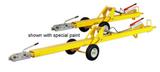
The Tronair A003806D Aircraft Towbar is a heavy-duty ground handling tool designed for safe and controlled towing of Boeing 767 and 787, as well as Lockheed L-1011 and DC-10 aircraft. Featuring a robust clamp-style towbar head, this unit provides a secure connection between the towbar and aircraft nose landing gear, supporting precise maneuvering during ramp, hangar, and maintenance operations. Built to withstand the demands of commercial aviation environments, the A003806D enables ground crews to move large aircraft efficiently while maintaining safety and protecting equipment.
Specifications
- Head Style: Clamp
- Length: 139” (353 cm)
- Weight: 456 lbs (207 kg)
| General Information | |
|---|---|
| Part # | A003806D |
| Manufacturer | Tronair |
| Shipping Information | |
|---|---|
| Freight NMFC | 186980 |
| Schedule B | 8716805010 |
| ECCN | EAR99 |
Customers also viewed

Customers who bought this item also purchased

AIRCRAFT COMPATIBILITY
| Compatible Aircraft* | |
|---|---|
| Boeing | 767 , 787 , KC-46 |
| Lockheed | L-1011 |
| McDonnell Douglas | DC-10 |
PRODUCT REVIEWS
This item does not have any reviews yet.
QUESTIONS & ANSWERS
The Tronair A003806D aircraft towbar is designed for use with wide-body commercial aircraft, including the Boeing 767 and 787, as well as the Lockheed L-1011 and McDonnell Douglas DC-10. These aircraft require heavy-duty towing equipment capable of handling substantial loads during ground handling operations. Using a towbar matched to the correct aircraft type helps prevent damage to both the landing gear and the towing equipment. Always confirm aircraft compatibility before use to ensure safe operation.
Tronair recommends attaching the towbar to the aircraft first, then connecting it to the tug, to reduce the risk of aircraft damage during hookup. This sequence helps ensure the aircraft attachment is properly aligned and locked before any towing force is applied. Improper attachment order can introduce stress on the towbar head or aircraft tow fitting. Following the correct procedure enhances safety and control during aircraft movement.
Certain tug coupler types, such as swivel hooks or standard-duty latches, can cause binding and failure at the towbar eyebolt. Binding often leads to excessive wear, indentations, or cracking at the eyebolt head, which can result in towbar failure. Tronair recommends using approved pintle hook arrangements that allow proper articulation during towing. Correct coupler selection is essential for protecting both the towbar and aircraft.
Maintaining the correct towing angle is critical to preventing damage during aircraft movement. Tronair specifies that the maximum angle between the towbar and the ground should not exceed 5°, and the angle between the tug and towbar should stay within 45°. Excessive angles can cause contact between the towbar and tug or induce excessive stress on the towbar structure. Smooth starts, stops, and wide turns further reduce risk.
Shear pins are designed to protect the aircraft and towbar by failing under excessive load conditions. Using non-approved or incorrect shear pins can compromise this safety feature, potentially leading to damage to the equipment or aircraft. Tronair specifies that only Tronair-approved shear pins should be used and replaced immediately after failure. This ensures predictable load protection during towing operations.
Towbars should be inspected before every use to identify cracks, bent components, loose fasteners, or worn parts. Key inspection areas include the towbar tube, head assembly, eyebolt, shear pin mechanism, wheels, and weldments. Any damaged or bent towbar or towbar head must be repaired or replaced before use. Routine inspections help prevent failures and ensure safe ground handling operations.
No, a damaged or bent towbar head should never be used, even temporarily. Continued use of damaged components can result in aircraft damage, towbar failure, or personal injury. Tronair clearly states that damaged heads must be repaired or replaced prior to operation. This policy supports compliance with aviation safety best practices.
When transporting the towbar without an aircraft, the lunette eye should be connected to the tug hitch. The towbar landing gear should then be adjusted so the towbar remains level and does not contact the ground. Ensuring proper transport configuration prevents unnecessary wear on the towbar head and wheels. Proper handling also enhances operator safety during repositioning.
Incorrectly sized eyebolts or pintle pins can cause binding, excessive wear, or improper load transfer during towing. Tronair recommends a visible gap of approximately 1/2" between the pintle pin diameter and the eyebolt inside diameter. Improper sizing can lead to contact with the coupler face plate and eventual failure. Verifying correct sizing helps ensure smooth articulation during towing.
Yes, aircraft weight is a critical factor when selecting and using a towbar. Tronair advises that the aircraft’s maximum gross weight should not exceed the towbar’s rated capacity. Exceeding this limit can apply excessive stress to the towbar and aircraft structure, potentially leading to failure. Always confirm towbar ratings before towing operations.
Smooth, controlled towing techniques significantly extend the service life of the towbar. Sudden starts, abrupt stops, or tight turns can introduce shock loads and unnecessary stress on the towbar assembly. Tronair recommends making large sweeping turns and gradually accelerating to reduce mechanical strain. Proper operation helps preserve both the towbar and aircraft.
Routine maintenance ensures that wear components, fasteners, and moving parts remain within acceptable limits. Regular lubrication, inspection, and timely replacement of worn parts reduce the risk of in-service failures. Following Tronair’s Operation and Service Manual recommendations helps maintain compliance and performance. Consistent maintenance is crucial to maintaining long-term towbar reliability.


