






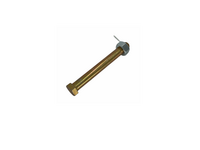
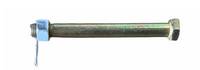
H005184 - Tronair H005184-1 Towbar Shear Bolt, 0.31 NF x 2.50


The H005184 is a specific part number of the series Tronair H005184-1. For more generalized information on this item series or for more options, click here.

| Alternate Models | |
|---|---|
| H005184 | Previous Model Number |
| General Information | |
|---|---|
| Part # | H005184 |
| Manufacturer | Tronair |
| Shipping Information | |
|---|---|
| Product Weight | 0.1 lbs. |
| Product Dimensions | 4 x 1.5 x 1.5 in. |
| Schedule B | 7318152000 |
| HTS | 7318152030 |
| ECCN | EAR99 |
Customers also viewed
Customers who bought this item also purchased
AIRCRAFT COMPATIBILITY
| Compatible Aircraft* |
|---|
PRODUCT REVIEWS
This item does not have any reviews yet.
QUESTIONS & ANSWERS
The Tronair H005184-1 is a replacement shear bolt used on select Tronair aircraft towbars. It’s designed to serve as a protective failure point, helping reduce the risk of damage if the towbar experiences excessive load during towing or ground handling. Using the correct shear bolt supports safer aircraft movement and helps protect towbar components.
Shear bolts act as a built-in safeguard, helping to protect higher-value components when an abnormal load occurs, such as binding, over-torque, or sudden stops. Instead of transferring that force to the towbar, tug, or aircraft nose gear, the shear bolt is designed to fail first. This helps reduce the chance of costly equipment damage and operational delays.
A shear bolt may break due to excessive load caused by sharp turns, improper tug speed, uneven surfaces, misalignment with the aircraft tow fitting, or towing an aircraft beyond towbar limits. Binding at the towbar head or towing uphill with sudden movement can also increase stress. When a shear bolt fails, it often indicates the system experienced a force beyond normal operating conditions.
The best method is to confirm the towbar model number and reference the manufacturer's parts list, parts diagram, or replacement parts lookup. Choosing the correct shear bolt is essential because incorrect sizing or thread type can compromise safety and performance. If you need help confirming whether the H005184-1 matches your specific towbar, our team is happy to assist.
The H005184-1 is identified as a shear bolt with specifications listed as 0.31 NF x 2.50. These values describe the bolt’s thread and length, which must match the towbar assembly it’s designed for. Matching the exact specification helps ensure proper fit, correct breakaway behavior, and secure installation.
Yes! The H005184-1 shear bolt is supplied with a matching nut, which helps simplify replacement by ensuring the correct hardware pairing for installation. If your towbar assembly requires a specific nut type, verifying the included hardware helps reduce downtime during servicing.
It’s not recommended to substitute a standard bolt because shear bolts are intended to fail at a controlled load to protect the towbar and aircraft. A stronger bolt may not shear when needed, increasing the risk of damage to the towbar head, tug connection, or aircraft nose gear. The safest approach is to use the manufacturer-specified replacement shear bolt for your towbar model.
Installing an incorrect shear bolt can result in an improper fit, loosening, premature failure, or failure to shear under overload. If the bolt is too strong, excessive forces may transfer to the towbar or aircraft. If it’s too weak or mismatched, it may break too easily and interrupt ground operations. Either way, proper part selection helps reduce risk and improve reliability.
Towbar shear bolts are typically replaced as needed, especially after a break event or when wear is noted during inspection. They are not usually replaced on a fixed schedule unless your maintenance program specifies periodic replacement. Keeping spare shear bolts in stock helps minimize downtime if a bolt fails during day-to-day towing operations.
Common indicators include visible bending, stretched threads, corrosion, damaged heads, or looseness in the towbar joint. If the bolt shows deformation or does not seat correctly, it should be replaced before towing. Regular pre-use checks help prevent towbar failures and improve ground handling safety.
Not necessarily. Towbar designs vary widely by aircraft type and towbar configuration, and hardware is often model-specific. Confirming compatibility before ordering helps ensure you receive the correct replacement part.
A towbar is a critical component of an aircraft's ground handling workflow, and the shear bolt plays a crucial role in protecting both the towbar and the aircraft from overload. Using a compatible, correctly rated shear bolt helps reduce the risk of towbar failure, unintended aircraft movement, or damage to the aircraft tow point and nose gear. That protection supports safer towing operations and more consistent ramp performance.
If a shear bolt breaks, towing operations may pause until the bolt is replaced and the towbar is confirmed safe to use. That can create delays during pushback, repositioning, hangar moves, or aircraft staging. Keeping spare towbar shear bolts on hand is a practical way to reduce disruptions and maintain ramp efficiency.
Shear bolts should be stored in a clean, dry location to reduce corrosion and thread damage. Keeping them in labeled bins by towbar model or part number helps prevent mix-ups and speeds up the replacement process. For high-use operations, stocking common replacement shear bolts supports faster turnaround when equipment needs service.


