




ACF-50 vs. WD-40: Which Is Best for Aircraft Corrosion Protection?
Key Takeaways
- Aircraft corrosion is driven by the interaction of moisture, air, and metal – with coastal environments, high humidity, and outdoor storage accelerating the process on exposed components.
- ACF-50 is a dedicated aviation-grade anti-corrosion formula that forms a long-lasting protective film on metal surfaces, remaining effective for up to 12 months and safe for use on avionics and electrical systems.
- WD-40 is a versatile multi-purpose product useful for lubrication, penetration, moisture displacement, and light rust removal – but it isn't engineered for the long-term corrosion protection that aircraft maintenance demands.
- For sustained protection in harsh operating environments, ACF-50 is the stronger choice for aircraft corrosion protection, while WD-40 is better suited to short-term maintenance tasks such as freeing stuck fasteners or displacing moisture from electrical components.
- PJi carries ACF-50 in multiple sizes along with the application tools that go with it, and can help maintenance teams select the right corrosion-prevention solution for their aircraft.
Aircraft corrosion is one of the most persistent threats to aircraft safety, performance, and long-term value. Moisture, salt, and atmospheric humidity quietly attack metal surfaces day after day. Without consistent corrosion prevention, even minor surface oxidation can escalate into structural problems that ground aircraft and drive up maintenance costs. That's why aircraft corrosion protection is a non-negotiable part of every maintenance program – and why the right anti-corrosion lubricants belong in every hangar.
Two products consistently come up in conversations about aircraft corrosion protection: ACF-50 and WD-40. Both are well-known in the aviation community, both can be applied in seconds, and both promise to keep metal surfaces protected – but they aren't interchangeable. In this article, we'll explore what each product is, how they work, the surfaces and systems they're rated for, and which one delivers the kind of long-term protection aircraft owners and maintenance teams actually need.
The Drivers of Aircraft Corrosion
Aircraft corrosion is fundamentally an electrochemical process – it occurs when moisture, oxygen, and metal interact and oxidation takes hold. Once the reaction begins, rust and other forms of corrosion can attack critical components, including wings, fuselage skins, landing gear, and engine assemblies, eroding structural integrity and degrading performance over time.
Environmental factors accelerate that process. Saltwater exposure, prolonged humidity, and dramatic temperature swings all speed up aircraft corrosion, particularly in coastal climates and tropical regions. Aircraft that live outdoors – parked on the ramp instead of in a hangar – face an even higher risk, with landing gear, wing roots, and unsealed fuselage seams especially vulnerable. That's why regular inspections paired with the right anti-corrosion products are foundational to keeping aircraft airworthy. Two of the most commonly discussed options for the job are ACF-50 and WD-40.

ACF-50: A Purpose-Built Aviation Anti-Corrosion Formula
ACF-50 – short for Anti-Corrosion Formula 50 – is a specialized lubricant compound engineered specifically for the aviation industry. Its job is to protect metal surfaces from corrosion in the toughest operating environments aircraft face, including coastal hangars, high-humidity climates, and salt-laden coastal airstrips.
ACF-50 works by forming a microscopic, ultra-thin protective film that adheres tenaciously to metal surfaces. That film penetrates seams, lap joints, and faying surfaces – the exact places where moisture loves to hide – and creates a barrier that blocks corrosive elements from reaching the underlying metal. Once applied, the anti-corrosion formula keeps working long after the carrier solvent has flashed off, actively neutralizing the electrolytes that would otherwise drive the corrosion reaction.
Where to Apply ACF-50 — and What to Do About Existing Rust
ACF-50 is rated for a wide range of aircraft surfaces, including aluminum, steel, and titanium components throughout the airframe. It's particularly effective in high-exposure areas like landing gear, wing roots, fuselage lap joints, control surface hinges, and bilge areas. Because ACF-50 is non-conductive, it can also be applied directly to electrical connectors, avionics housings, and battery boxes – critical zones where moisture intrusion can otherwise lead to expensive system failures.
One important note: ACF-50 is engineered as a corrosion preventative, not a rust remover. If surface rust or active corrosion is already present, the affected area should be cleaned and treated with an appropriate rust remover before ACF-50 is applied. Once the surface is properly prepared, ACF-50 can then halt the spread of corrosion and keep the area protected going forward – exactly what aircraft corrosion protection programs are designed to accomplish over the long haul.
ACF-50 Service Life and Reapplication Intervals
Once applied, ACF-50 provides up to 12 months of protection on properly treated surfaces, which aligns neatly with annual application schedules tied to standard aircraft maintenance cycles. In harsher operating environments – coastal airports, tropical climates, or aircraft routinely exposed to saltwater spray – more frequent reapplication is recommended to maintain consistent corrosion protection.
Because the anti-corrosion formula actively migrates into seams and crevices, it continues to protect areas that might otherwise be difficult to reach with conventional coatings. That long service life is one of the main reasons ACF-50 has become a standard part of the corrosion-prevention toolkit at FBOs, MROs, and individual operators worldwide.
WD-40: A Multi-Purpose Lubricant with Crossover Uses
WD-40 – short for “Water Displacement, 40th Formula” – was originally developed in 1953 to protect Atlas missile components from rust during construction and storage. In the decades since, it has become one of the most recognized maintenance products in the world, finding its way into garages, hangars, and tool kits across nearly every industry.
WD-40 wasn't engineered specifically for aviation, but its broad utility has made it a familiar sight on the maintenance bench and the flight line. Most of its value comes down to five core functions:
- Lubricates – WD-40 reduces friction between moving parts, allowing components like hinges, latches, and linkages to operate smoothly. Its lubricating ingredients spread evenly across metal surfaces, slowing wear on parts that see frequent movement.
- Penetrates – WD-40 works its way into rusted or seized assemblies, loosening the bond between corroded surfaces. That penetrating action makes stuck bolts, nuts, and other fasteners easier to free during disassembly or repair.
- Protects – WD-40 deposits a thin protective film on metal surfaces that resists moisture and minor environmental exposure, offering short-term corrosion protection on parts that aren't continuously subjected to aggressive operating conditions.
- Removes – WD-40 breaks down dirt, grime, grease, and adhesives, making it useful for quick cleanup of tools, equipment, and surfaces – including residue left behind by tape, decals, and labels during routine maintenance work.
- Displaces Moisture – WD-40 quickly displaces water from electrical components and wiring, helping prevent short circuits, corrosion, and connectivity problems in damp or wet environments.
WD-40, Rust Removal, and Material Compatibility
WD-40 is often used to free up rusted parts and clean light surface rust from tools and components. Its penetrating action loosens the bond between rust and the underlying metal, restoring movement to seized fasteners and making corroded parts easier to clean up. That said, WD-40 isn't engineered for long-term corrosion prevention – particularly in the demanding environments aircraft routinely face – so for sustained aircraft corrosion protection, a purpose-built anti-corrosion formula like ACF-50 is the better fit.
On the material side, WD-40 is generally safe to use on most metals, including steel, aluminum, stainless steel, galvanized steel, and unpolished copper. It's also compatible with many plastics and rubbers, including neoprene, EPDM, vinyl, Buna/Nitrile, HDPE, Viton, and ABS. The caveat is that WD-40 can leave a residue that may attract dust or interfere with sensitive components – one of several reasons it isn't the preferred choice for avionics or precision electrical assemblies.
WD-40 Service Life and Aviation Limitations
WD-40 provides short-term protection, typically lasting a few months depending on conditions. Even after the carrier solvent evaporates, some of the protective ingredients remain on the metal surface, offering modest ongoing rust resistance. However, harsh weather, high humidity, persistent moisture, and saltwater exposure all shorten its effective service life, requiring frequent reapplication to maintain any meaningful corrosion protection.
For aviation use, that short protection window is the core limitation. WD-40 is a useful, versatile tool for quick maintenance tasks – freeing a stuck fastener or displacing moisture from an electrical connector – but it isn't built for the year-round, long-haul corrosion prevention aircraft demand. That's where ACF-50 takes the lead.
ACF-50 vs. WD-40 for Long-Term Aircraft Corrosion Protection
For aircraft corrosion protection, the two products fill very different roles. WD-40 is a versatile, general-purpose maintenance product that earns its place across a wide range of bench-level tasks – lubrication, moisture displacement, and surface rust removal. What it isn't engineered to do is deliver long-term, aviation-grade corrosion prevention on the specific surfaces and in the specific environments aircraft face every day.
ACF-50, by contrast, was designed from the start as an anti-corrosion formula for aviation. The film it leaves behind is built for durability and longevity, holding up against high humidity, saltwater exposure, temperature swings, and the chemical environment found on operating aircraft. Combined with up to 12 months of protection per application and rated compatibility with avionics and electrical systems, ACF-50 fits the demands of sustained aircraft corrosion protection in a way a general-purpose product like WD-40 isn't built to match.
The Bottom Line
For sustained, long-term aircraft corrosion protection, ACF-50 is the anti-corrosion lubricant operators reach for. WD-40 still has its place in the hangar for quick maintenance tasks, but ACF-50's purpose-built, long-lasting formula is what protects airframes, electrical systems, and high-value components year-round.
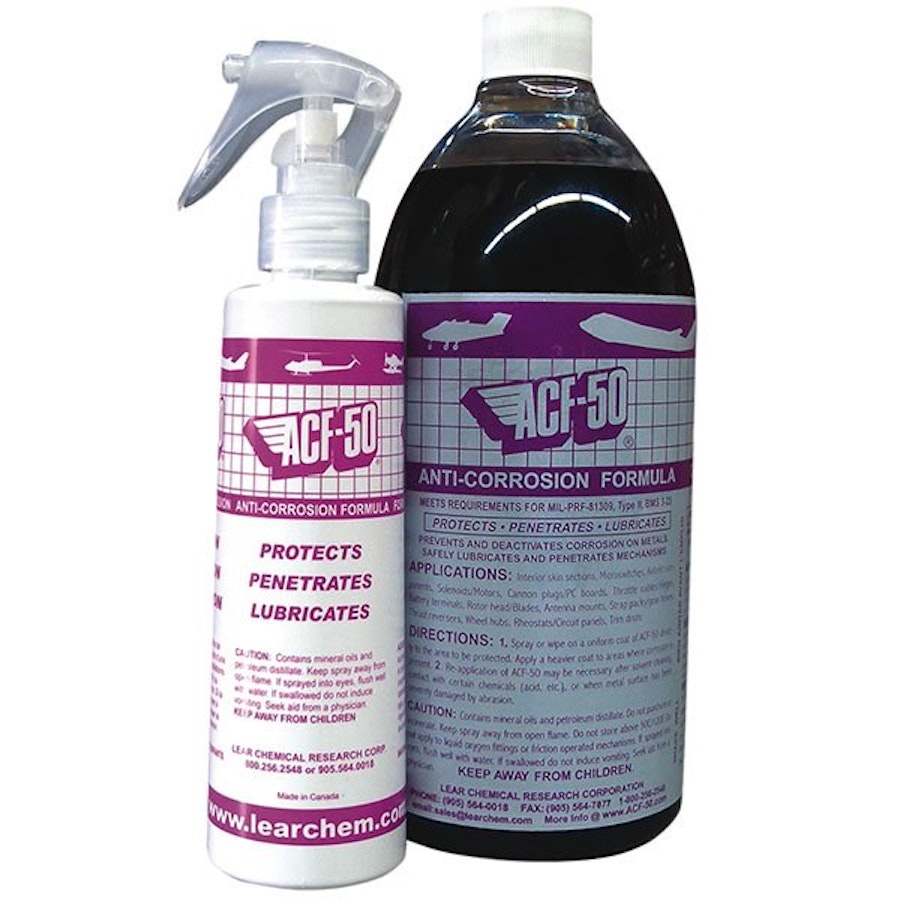
At Pilot John International® (PJi®), we offer ACF-50 Anti-Corrosion Formula in every size operators tend to need, including a ½ oz. container, 13-oz. aerosol can, and larger pails and drums for shops handling fleet-scale corrosion-prevention work. We also carry the application tools that go with them, including handheld spray systems and standard pumps for efficient, repeatable application across the aircraft.
For expert guidance on selecting the right corrosion-prevention products for your fleet, reach out to PJi's aviation specialists by phone, email, or live chat.
Frequently Asked Questions
What's the difference between corrosion prevention and corrosion protection in aviation?
In aviation maintenance, the terms corrosion prevention and corrosion protection are often used interchangeably, and both describe the overarching effort to keep moisture, oxygen, and contaminants from attacking aircraft metals. Corrosion prevention typically emphasizes the proactive side – inspections, cleanings, and barrier coatings – while corrosion protection often refers to the products and films, like ACF-50, that defend the metal once it's in service. The goal in either case is the same: stop corrosion before it starts and contain it if it's already begun.
Is ACF-50 safe to apply to aircraft avionics and electrical systems?
Yes – ACF-50 is nonconductive and rated for use on aircraft avionics, electrical connectors, battery boxes, and other sensitive electronic assemblies. Because it forms an ultra-thin film, it doesn't interfere with electrical contact in the way some heavier corrosion preventatives can. This is one of the key reasons ACF-50 has become a go-to anti-corrosion lubricant in aviation maintenance programs.
How often should aircraft corrosion protection products like ACF-50 be reapplied?
ACF-50 provides up to 12 months of aircraft corrosion protection per application under typical operating conditions, which lines up neatly with annual inspection schedules. In harsher environments – coastal climates, tropical humidity, or aircraft regularly exposed to saltwater spray – more frequent reapplication is generally recommended. Always follow the manufacturer's published guidance for the operating environment, and inspect treated areas during routine maintenance to confirm the film is still in place.
Can WD-40 replace ACF-50 in an aircraft maintenance program?
No – while WD-40 has its uses on the maintenance bench, it isn't engineered for long-term aircraft corrosion protection. WD-40's protective film typically holds up for only a few months under mild conditions, and it isn't designed to penetrate seams, lap joints, and faying surfaces the way ACF-50 is. For sustained corrosion prevention on aircraft, ACF-50 is the more appropriate choice
Which anti-corrosion lubricant is best for aircraft stored outdoors?
Aircraft stored outdoors – especially in coastal or high-humidity environments – face the highest corrosion risk and benefit most from a dedicated aviation-grade anti-corrosion lubricant like ACF-50. ACF-50's long-lasting film penetrates seams and crevices, neutralizes the electrolytes that drive corrosion, and resists the moisture and salt that attack aircraft sitting on open ramps. Pairing ACF-50 with regular inspections gives outdoor-parked aircraft the strongest defense.
Will ACF-50 or WD-40 remove existing rust?
Neither product is engineered as a dedicated rust remover. WD-40 can loosen and lift light surface rust thanks to its penetrating action, while ACF-50 is designed to stop further corrosion once a surface has been cleaned. If active rust or corrosion is already present, treat the area with an appropriate rust remover first, then apply ACF-50 to keep the surface protected going forward.
What is the shelf life of ACF-50 Anti-Corrosion Formula?
ACF-50 Anti-Corrosion Formula has a shelf life of approximately two years from the date of manufacture when stored properly. To maintain its full protective performance, ACF-50 should be kept in a cool, dry location away from direct sunlight and excessive heat. Always check the product label or manufacturer's documentation for the exact expiration date.