





A Comprehensive Guide to Aircraft Axle Jacks
Key Takeaways
- Axle jacks are purpose-built for targeted landing gear maintenance, allowing technicians to lift specific portions of an aircraft for wheel, brake, and strut servicing without raising the entire airframe.
- The four primary axle jack types serve different applications – standard jacks handle a broad range of aircraft from GA to midsize jets, alligator jacks tackle heavy commercial aircraft, fly-away jacks offer maximum portability for remote maintenance, and rhino jacks are engineered for the heaviest airliners like the A380 and Boeing 777.
- Selecting the right axle jack requires matching both load capacity and aircraft compatibility – exceeding a jack's rated capacity or using an incompatible model creates instability risks for both the aircraft and maintenance personnel.
- With proper preventative maintenance – including 90-day inspections, annual servicing, and regular lubrication – a well-maintained axle jack can deliver reliable performance for 20 to 30 years, making it a long-term investment in maintenance capability.
- Axle jack operations are often supported by complementary GSE, including tire pressure gauges, nitrogen carts, tire inflation cages, and wheel and brake shop equipment. Having these tools on hand improves the efficiency and thoroughness of landing gear maintenance events.
- Pilot John International carries a wide selection of new and used axle jacks from Tronair, Malabar, and Columbus Jack, backed by load testing, authorized service center support, and a mobile service team that brings maintenance expertise directly to your hangar.
Precision and safety are non-negotiable in aviation. Keeping aircraft flight-ready means performing rigorous inspections, repairs, and tire changes – often under tight schedules and even tighter tolerances. Axle jacks are essential to many of these procedures, particularly when servicing the intricate landing gear systems that keep aircraft connected to the ground.
In this article, we'll examine the different types of aircraft axle jacks, how they work, the key factors to weigh when selecting the right model, and the maintenance practices that keep them safe and reliable for decades of service.
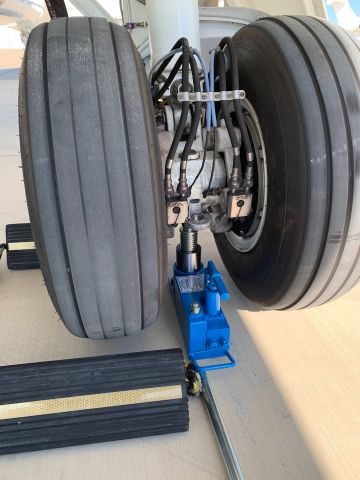
Axle Jacks vs. Tripod Jacks: Targeted Lifting for Landing Gear Work
Aircraft axle jacks are purpose-built hydraulic lifting devices that engage directly beneath an aircraft's landing gear axle, raising a single wheel assembly off the ground without lifting the entire airframe. That targeted lifting capability is what sets them apart from tripod jacks, which engage designated jacking points at the nose, wing, or tail to lift the full aircraft for broader fuselage and nose maintenance.
Because most landing gear maintenance – tire changes, brake service, shock strut inspections – only requires one gear assembly to be elevated at a time, axle jacks are the more efficient, lower-risk choice for routine line work. Lifting only the gear that needs servicing keeps the aircraft on its remaining tires, reduces setup time, and minimizes the number of jacking points engaged. For technicians, that translates into faster turnarounds and safer working conditions; for operators, it means less time spent immobilizing an aircraft for routine maintenance.
How an Aircraft Axle Jack Works
In operation, an axle jack works through a self-contained hydraulic system. A hand pump – or, on larger models, a pneumatic-assisted pump – drives fluid into a cylinder, which extends a ram that raises a saddle or adapter seated against the landing gear axle. Once the wheel assembly is clear of the ground, locking collars, safety bars, and overload relief valves hold the load in place so technicians can work safely beneath it.
Lowering is just as controlled. A release valve allows the hydraulic fluid to flow back into the reservoir at a deliberate, technician-managed pace, returning the aircraft to its wheels evenly and predictably. The result is a stable, repeatable lift that's engineered specifically for the unique loads and clearances of landing gear maintenance.
The Main Types of Aircraft Axle Jacks
Aircraft axle jacks are not one-size-fits-all. Different aircraft types, weight classes, and maintenance environments call for different jack designs – from compact, portable models for general aviation to heavy-duty units capable of lifting wide-body airliners. Understanding the four main styles below helps operators match the right tool to the right aircraft and avoid the safety risks associated with mismatched or undersized jacks.
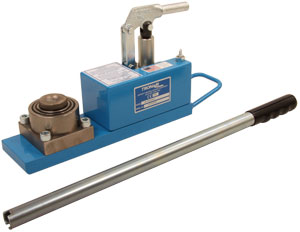
Standard Axle Jacks
Standard aircraft axle jacks are the everyday workhorse of the flight line. Built around robust hydraulic systems and offered in a wide range of capacities, they handle everything from small private aircraft to mid-sized business jets and regional turboprops. Their relatively compact footprint, manageable weight, and straightforward operation make them well-suited for both fixed maintenance bases and on-call line service work.
For general aviation operators and private aircraft owners, standard axle jacks offer the ideal balance of lifting power, portability, and storage practicality. They're the most common axle jack style across MROs, FBOs, and flight schools – and the foundation for the more specialized designs below.

Alligator Jacks
Alligator jacks – sometimes called T-shaped jacks – are the heavy-duty cousins of the standard axle jack. They're built around a wide, low-profile base with extended arms that resemble an alligator's jaws, which gives them two important advantages over standard models: significantly greater stability under load, and the ability to slide beneath aircraft with limited ground clearance. Capacities typically range from 35 tons to 100+ tons, making them the right choice for heavy commercial aircraft, regional jets, and large turboprops.
Because of their size and weight, alligator jacks usually require towing or mechanical assistance to move between positions – which is why they're most commonly found in dedicated MRO facilities and large hangar operations rather than mobile service settings.
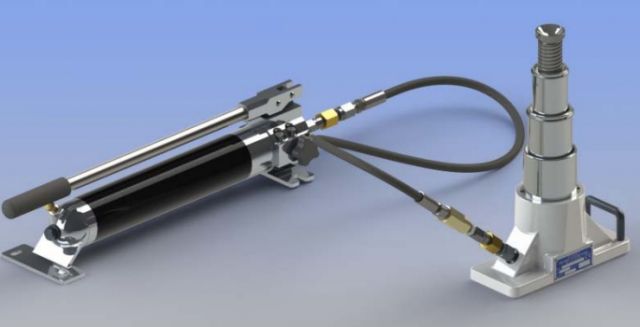
Fly-Away Jacks
Fly-away jacks take a different approach: maximum portability without sacrificing serious lifting capacity. Unlike standard axle jacks – which balance weight and capability – and unlike alligator jacks – which trade portability for heavy-load stability – fly-away jacks are engineered to be lightweight and compact enough to travel with the aircraft, often fitting in the baggage compartment. Despite their reduced footprint, they're still capable of safely lifting commercial aircraft for tire changes and brake service in the field.
That combination makes fly-away jacks a favorite of charter operators, AOG response teams, and operators flying into airfields where on-site GSE may not be available. When an aircraft goes down at a remote location, fly-away jacks make recovery and service possible without waiting for heavy equipment to be trucked in.
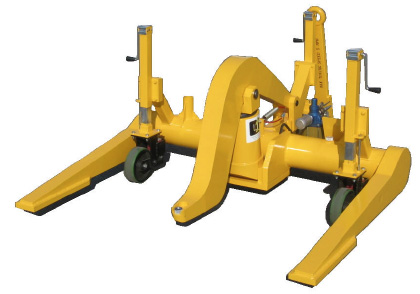
Rhino Jacks
Rhino jacks sit at the top end of the axle jack family. Engineered specifically for the heaviest commercial airliners – like the Airbus A380 and Boeing 777 – they're capable of lifting multiple flat tires at once and supporting the enormous loads those aircraft impose on a single gear assembly. Where standard jacks handle GA and midsize jets, alligator jacks handle most heavy commercial aircraft, and fly-away jacks prioritize portability, rhino jacks exist for one purpose: lifting the largest aircraft in service today, safely and predictably.
For operators that service wide-body fleets, rhino jacks are the only practical option for axle-level landing gear work. For everyone else, they're a useful example of how far the axle jack design has been pushed to meet the demands of modern aviation.
Key Factors to Consider When Selecting an Aircraft Axle Jack
Choosing the right aircraft axle jack isn't just about matching a price point to a budget – it's about matching the right tool to the right aircraft, environment, and maintenance program. The three factors below deserve careful attention before any purchase or rental decision is made.
Aircraft Compatibility
The first consideration is compatibility with the specific aircraft model you'll be servicing. Different aircraft have different dimensions, weight distributions, and jacking-point geometries – which means the same axle jack won't work universally. Choosing a jack with the right adapter configuration and lift height ensures secure, stable lifting for both safety and overall maintenance effectiveness.
Load Capacity
The jack's rated load capacity must align with the per-gear load it will be asked to lift. Exceeding the rated capacity is one of the most preventable causes of jack-related incidents – and one of the most dangerous, putting maintenance personnel and the aircraft itself at risk. Selecting an axle jack with a comfortable safety margin above the expected load is a basic but non-negotiable step.
Additional Ground Support Equipment
When servicing landing gear, technicians rarely use an axle jack in isolation. Tire pressure gauges and nitrogen carts are frequently used to check and adjust tire pressure during a wheel change. Wheel and brake shop equipment supports disassembly, inspection, and reassembly after the wheel is removed from the aircraft. And for tire replacements, both new aircraft tires and tire cages – used to safely mount or refill them – are essential additions to the workflow. While axle jacks can perform their core lifting function on their own, having this supporting ground support equipment (GSE) on hand makes landing gear maintenance faster, safer, and more thorough.
Using and Maintaining Aircraft Axle Jacks
Aircraft axle jacks are built to handle the rigorous demands of the aviation industry – but like any piece of high-performance GSE, they only stay reliable with consistent care. Regular preventative GSE maintenance can significantly extend an axle jack's operational lifespan; with proper upkeep, a well-maintained unit can deliver dependable lifting performance for 20 to 30 years.
The cornerstone of that upkeep is a 90-day inspection cycle paired with annual servicing. Routine 90-day inspections catch small issues – hydraulic leaks, ram wear, structural fatigue – before they become safety events. Annual servicing goes further, with thorough inspections, lubrication, capacity testing at 110% of rated load, and adjustments that keep the jack performing within manufacturer specifications. Together, these intervals form the foundation of any responsible aircraft jack repair and maintenance program – a structured approach that catches problems early, keeps documentation audit-ready, and extends the useful life of every jack in your fleet.
At Pilot John International® (PJi®), quality and safety are non-negotiable. As an authorized Tronair distributor and GSE service center, our certified technicians perform 90-day inspections, annual load tests, seal replacements, and full rebuilds to keep your jacks compliant, certified, and ready for the next lift.
The Bottom Line
Axle jacks are one of the most essential – and most underappreciated – pieces of ground support equipment in any aviation operation. From routine tire changes on a Cessna to wheel and brake service on a wide-body airliner, the right axle jack, sized correctly and maintained on schedule, is what makes safe landing gear work possible.
PJi is your one-stop shop for new and used aircraft axle jacks from the top manufacturers in the industry – including Tronair, Malabar, Columbus Jack, and Bogert Aviation. Whether you need a 1.5-ton hand-pump model for a flight school or a 100-ton rhino jack for a wide-body fleet, our inventory covers the full spectrum, with options to purchase, rent, or lease-to-own. We also offer comprehensive axle jack servicing, maintenance, and repair at our authorized GSE Service Center – including 90-day inspections, annual load tests, and on-site service through our Mobile Service Team.
Need help finding the right axle jacks for your operation, or ready to schedule service on your existing units? Reach out to our aviation specialists by phone, email, or live chat – and Be Ready for Takeoff®.
Frequently Asked Questions
What's the difference between an axle jack and a tripod jack?
Both are portable, self-contained hydraulic lifting devices, but they serve distinct purposes. Aircraft axle jacks engage directly beneath the landing gear axle to lift a single wheel assembly for tire, brake, or shock strut service. Tripod jacks engage designated jacking points at the nose, wing, or tail to lift the entire aircraft for broader fuselage and nose maintenance.
How much weight can an aircraft axle jack lift?
Aircraft axle jack capacities range from about 1.5 tons for general aviation aircraft up to more than 100 tons for wide-body commercial aircraft. The right capacity depends on the aircraft's per-gear load – not its gross weight – since axle jacks lift only one wheel assembly at a time. Operators should always choose an axle jack rated comfortably above the load it will lift to maintain a healthy safety margin.
How often should aircraft axle jacks be inspected and serviced?
Per manufacturer guidelines, aircraft axle jacks should undergo a 90-day inspection covering the hydraulic system, structural integrity, fluid levels, and ram operation, plus an annual load test at 110% of rated capacity. Both intervals are required to keep an axle jack certified for service. Routine inspections also help document audit-readiness and protect against unplanned downtime.
Can the same aircraft axle jack be used on multiple aircraft types?
In many cases, yes. Many aircraft axle jacks are designed with adjustable heights and interchangeable adapters that accommodate a range of landing gear configurations – making them practical for MROs, FBOs, and operators with mixed fleets. Always verify that the jack's rated capacity and adapter geometry match each aircraft model before lifting.
What's the difference between an alligator jack and a standard axle jack?
Alligator jacks are heavy-duty axle jacks built around a wide, low-profile base with extended arms for greater stability under load and easier access beneath low-clearance aircraft. Standard axle jacks are smaller, more portable, and rated for lighter aircraft – typically general aviation and midsize jets. Alligator jacks are commonly used in MRO facilities for heavy commercial aircraft, while standard axle jacks are the go-to for line maintenance, FBOs, and flight schools.
Are aircraft axle jacks safe to use outdoors?
Most aircraft axle jacks are safe for outdoor use, provided they're placed on a stable, level surface. Models with Skydrol-resistant paint and corrosion-protected components are particularly well-suited to ramp and flight-line work. Operators should still take precautions against wind, precipitation, and uneven ground that could compromise stability during a lift.
Does PJi offer rental or lease-to-own options for aircraft axle jacks?
Yes. PJi offers new, used, and refurbished aircraft axle jacks for purchase, rent, or lease-to-own – giving operators the flexibility to match equipment investments to actual workload and budget. Specialty units, such as alligator jacks, fly-away jacks, and rhino jacks, are also available for rent for one-off projects or AOG recovery scenarios.