




Aircraft Lighting 101: A Complete Guide for Aviation Professionals

Aircraft lights are visible from miles away, making them one of the most important tools in aviation for navigation, communication, and collision avoidance. From rotating beacon lights to LED landing lights, every light on an aircraft serves a specific purpose – and knowing the difference matters whether you're a pilot, an MRO technician, or an aircraft operator.
Types of Aircraft Lights
Here's a look at the most common types of aircraft lights and what they do.
1. Navigation Lights
Aircraft navigation lights – also called position lights – consist of a red light on the left wingtip and a green light on the right wingtip. Together, they indicate the aircraft's position and direction to other pilots, making them especially important during night flying and low-visibility conditions.
2. Anti-Collision Lights
Anti-collision lights increase an aircraft's visibility and help prevent midair collisions. This category includes two main types: rotating beacon lights, which emit a red or white pulsing light visible from miles away, and strobe lights, which are powerful white flashing lights typically mounted on the wingtips and tail. Strobes are also used to signal distress or indicate position during night operations.
3. Landing Lights
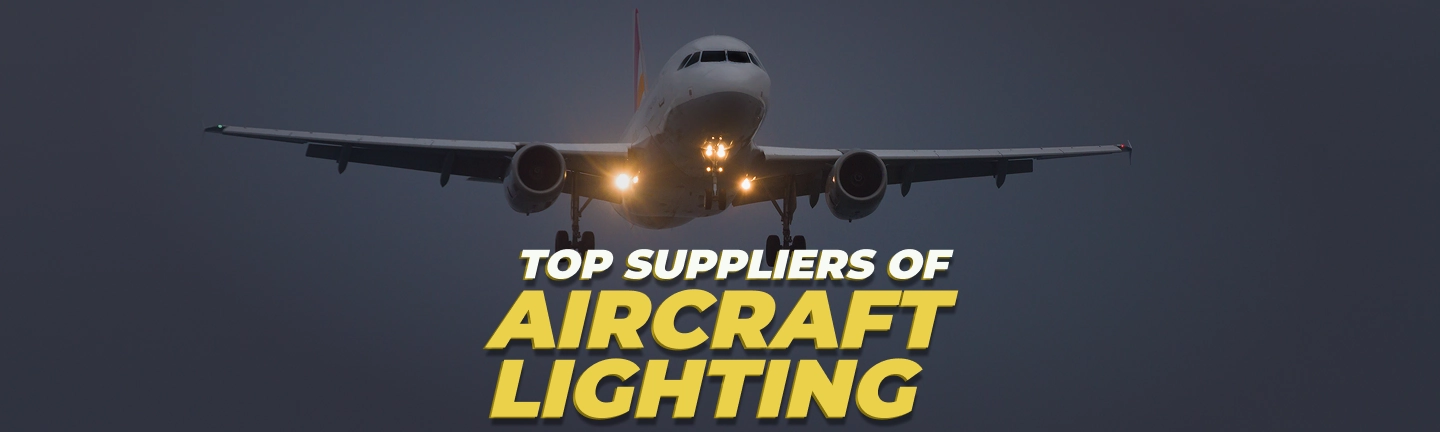
Landing lights are high-intensity lights mounted on the wings or fuselage to illuminate the runway during takeoff, landing, and taxiing. They also make the aircraft more visible to other pilots in low-light conditions, making them an essential component of aircraft safety.
4. Taxi Lights
Aircraft taxi lights help pilots navigate the airfield safely when taxiing. Typically mounted on the nose gear or forward fuselage, they emit lower-intensity light than landing lights and are designed for ground-level visibility rather than long-range detection.
5. Logo Lights
Logo lights are LED lights mounted on the tail that illuminate an airline's livery, making the aircraft easy to identify from a distance. Beyond brand visibility, they also improve situational awareness for ground crews and other pilots on the ramp.
6. Cabin and Emergency Exit Lights
Cabin and emergency exit lights illuminate the cabin interior and mark evacuation routes during an emergency. Designed to be highly visible, energy-efficient, and reliable, they are a critical part of any aircraft's safety system.
7. Wing Inspection Lights
Wing inspection lights allow pilots to visually inspect the wings for ice accumulation or damage, both on the ground and in flight. Quick, reliable access to this information helps pilots make informed decisions that reduce risk and improve flight safety.
8. Runway Turnoff Lights
Installed on the landing gear or the fuselage, runway turnoff lights are angled to improve visibility of the runway edges, giving pilots the precision they need when turning off the runway.
Where Can I Buy Aircraft Lights?
Aircraft operators have several options when sourcing aviation lighting, each with its own advantages.
1. Manufacturers
Buying directly from a manufacturer gives you access to their full product inventory and the latest lighting solutions. It typically requires working with a dedicated sales team and may involve longer lead times, but it can be a good option for large or specialized orders.
2. Distributors
Aviation lighting distributors bridge the gap between manufacturers and end users. They stock a wide range of products, often offer faster turnaround times, and provide value-added services such as inventory management, technical support, and repair services.
3. Online Retailers
Reputable online aviation retailers make it easy to browse, compare, and purchase aircraft lighting products from multiple brands in one place. Look for retailers with strong product knowledge, responsive customer service, and aviation-specific expertise – not just a general catalog
What to Look for When Buying Aircraft Lights
Finding the right aircraft lighting supplier doesn't have to be complicated. Before purchasing, identify the make and model of your aircraft, the specific lights required, and any applicable certifications or regulations. Then evaluate potential suppliers against these key factors:
- Product quality and compliance with FAA, EASA, or other relevant standards
- Competitive pricing and product availability
- Range of products and brands offered
- Warranty and after-sales support
- Knowledgeable customer service
A few additional tips: look for a supplier whose team can do more than process an order – Pilot John's aviation specialists work with customers to identify exactly the right lighting solution for their aircraft and operation. Verify that the products meet required quality standards and certifications, and give preference to suppliers who back their products with warranties and genuine post-sale support.
Aircraft lighting is a flight-critical safety system, and the products you choose need to meet strict standards. At Pilot John International, we carry aircraft lights that meet those standards – keeping pilots, crew, passengers, and aircraft safe.