Essential Cabin Environment Servicing Equipment for Modern Aircraft
Key Takeaways
- Modern aircraft like the Boeing 787 and Airbus A350 rely on closed-loop liquid cooling systems – not just bleed air – to manage thermal loads across the ECS, ICS, PECS, FCAC, and LCS circuits, each with its own servicing requirements and consequences for getting it wrong.
- BMS3-42, a 60/40 propylene glycol-water mixture, is the only approved coolant for B787 LCS operations – deviating from spec on fluid type, mixture ratio, or filtration risks accelerated corrosion, degraded thermal performance, and compliance findings.
- The scope of the maintenance event determines the right tool – C-TOUs and CTOPs are purpose-built for LRU-level top-offs and targeted ramp servicing, while fill/drain carts and coolant service carts handle full system drains, refills, and pre-flight conditioning.
- The B787 and A350 require platform-specific GSE with dedicated adapter kits – there is no cross-platform substitution, and Boeing requires adapter kits to be sourced from approved suppliers.
- Every LRU replacement creates a mandatory servicing event – the isolated circuit section must be refilled and confirmed air-free before the aircraft returns to service, making compact tools like the Malabar PF56266-01 C-TOU essential for keeping line maintenance on pace.
- Pilot John International is a Boeing-approved supplier stocking Malabar coolant servicing equipment for both B787 and A350 operations – including the K21016-129 adapter kit – with specialists available to help operators match the right unit to the task and explore rental and financing options.
Modern aircraft like the Boeing 787 and Airbus A350 don’t just use bleed air to manage cabin conditions – they rely on closed-loop liquid cooling systems to regulate thermal loads across dozens of electronic systems, from flight control actuators to high-power inverters.
Servicing those systems requires purpose-built GSE engineered to exact fluid specs, pressure tolerances, and aircraft-specific connection protocols – and using the wrong tool, fluid, or procedure can result in compliance findings, component damage, or extended AOG time.
In this article, we'll cover the aircraft systems that require liquid coolant servicing, the equipment designed to service them, how to match the right tool to the task, and how Pilot John International® can help you source what you need.
What Is Cabin Environment Servicing Equipment?
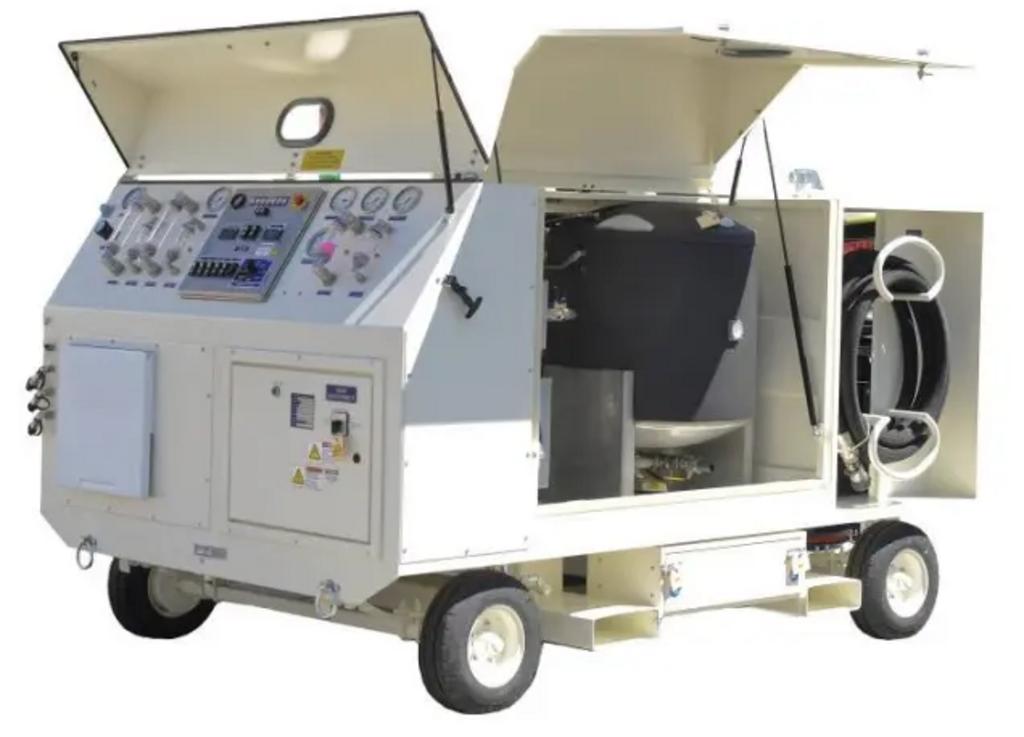
Cabin environment servicing equipment is specialized GSE purpose-built to service, fill, drain, flush, deaerate, and top off the liquid cooling circuits that regulate thermal conditions across modern aircraft cabins and electronics bays. Unlike traditional environmental control system (ECS) ground support equipment – which handles bleed air, pneumatics, or refrigerant – liquid cooling GSE uses a specific working fluid: BMS3-42, a propylene glycol-water (PGW) mixture approved for aviation use.
These systems are closed-loop by design, which means contamination, air intrusion, and incorrect fluid concentration are all servicing hazards with real consequences for aircraft availability. Standard fluid handling equipment won’t do the job – each aircraft platform requires dedicated GSE with aircraft-specific adapter connections that interface with the aircraft’s liquid cooling system (LCS) ports at precise pressure and flow parameters.
Which Aircraft Systems Require Liquid Coolant Servicing?
Next-generation aircraft don’t operate with a single liquid cooling circuit – they rely on several, each with a distinct thermal management role and its own servicing requirements. Knowing which system you’re working on is the first step in selecting the right equipment.
Environmental Control System (ECS)
The ECS is responsible for maintaining cabin pressure, temperature, humidity, and air quality throughout the flight. On advanced platforms like the B787 and A350, liquid-cooled heat exchangers help reject heat generated within the system. Proper coolant servicing ensures the ECS maintains consistent performance across the full range of altitude and temperature conditions the aircraft encounters.
Integrated Cooling System (ICS)
The ICS serves as the aircraft's centralized liquid-based thermal backbone, circulating coolant across multiple subsystems through a shared loop rather than through isolated circuits. Because it feeds so many downstream systems, fluid level accuracy, mixture ratio integrity, and loop cleanliness are all critical – a deficiency in the ICS doesn’t stay isolated. It ripples.
Power Electronics Cooling System (PECS)
Converters, inverters, and motor controllers generate heat loads that air cooling simply can’t dissipate at the required rates. The PECS addresses this with a dedicated liquid-cooled circuit for high-power electrical components. Incorrect fluid levels or contaminated coolant in the PECS can trigger thermal shutdowns – and a thermal event in the power electronics often cascades into broader avionics maintenance.
Flight Control Air Cooling (FCAC)
The FCAC keeps flight control electronics and actuators within their operating temperature envelopes, supplying conditioned cooling to some of the most safety-critical systems on board. Maintenance on this circuit requires heightened care around contamination and air introduction – the proximity to flight control systems means the tolerance for servicing errors is exceptionally low.
Liquid Cooling System (LCS)
The LCS is the primary closed-loop circuit most directly served by the GSE discussed in this article. It circulates BMS3-42 coolant – a 60/40 propylene glycol-water mixture – through cold plates, heat exchangers, and line-replaceable units (LRUs) throughout the airframe. The Boeing 787 and Airbus A350 are the two primary LCS-equipped commercial platforms, and each requires aircraft-specific servicing equipment tailored to its unique system architecture, fluid specifications, and interface connections.
Line-Replaceable Units (LRUs)
LRUs – such as pumps, heat exchangers, valves, and cold plates – are the modular building blocks of the LCS, engineered for rapid swap-out on the line to minimize AOG time. But every LRU replacement creates a mandatory servicing event: the isolated portion of the circuit must be bled, filled, and confirmed air-free before the aircraft can return to service. That last step is where coolant top-off units and packs become indispensable.
What Types of Equipment Are Used to Service These Systems?
There is no single piece of GSE that covers every coolant servicing scenario. The scope of the maintenance event and the aircraft type together determine the right tool – and deploying a full service cart for a routine LRU top-off wastes resources, while relying on a portable unit for a full system drain-and-refill invites errors. Here’s how the four primary equipment categories break down.
Coolant Service Carts (CSCs)
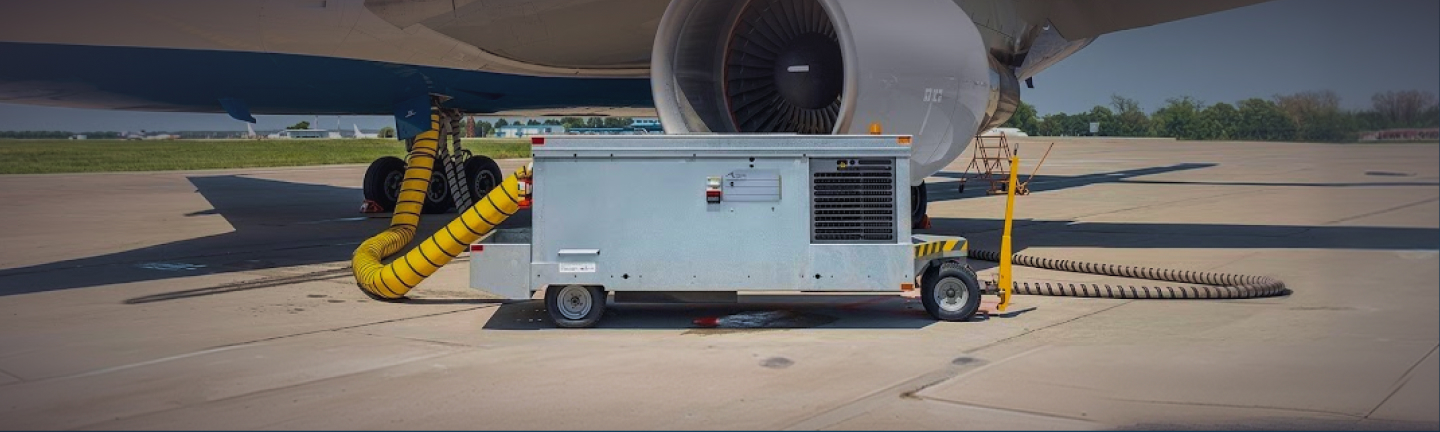
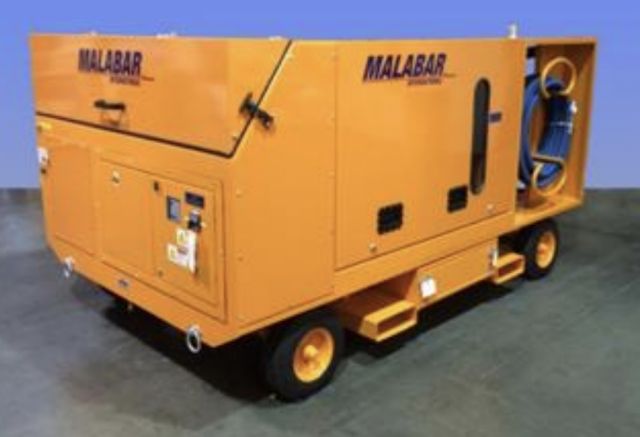
For maintenance events that go beyond a simple top-off – full system servicing, pre-flight conditioning, or thorough system cleaning between overhauls – a coolant service cart is the tool for the job. CSCs are the heavy hitters of liquid cooling GSE, capable of handling the complete range of ground servicing operations a modern aircraft LCS might require, from preheating coolant before cold-weather operations to purging lines with nitrogen ahead of major maintenance.
For Boeing 787 operators, the Malabar 1010A and 1011A are the platform-specific answer, available in electric and diesel-electric configurations to suit different ramp environments. Both are purpose-built for the 787's system architecture – not generic fluid handling equipment pressed into service.
Supplemental Coolant System Fill/Drain Carts
When a maintenance event calls for pulling the full fluid charge – not just topping off – fill/drain carts are the right tool. These units are engineered for the complete drain-and-refill workflow: systematically evacuating the LCS, flushing contaminants, and recharging the system precisely to spec without trapping air or introducing debris. They’re the standard choice for scheduled coolant replacements, post-repair system restores, and any procedure requiring a full system-level fluid exchange rather than targeted servicing.
For A350 operators, the Malabar 1016 fills this role with dedicated modes purpose-built to drain and fill the aircraft's supplemental cooling system from start to finish.
Coolant Top-Off Units (C-TOUs)
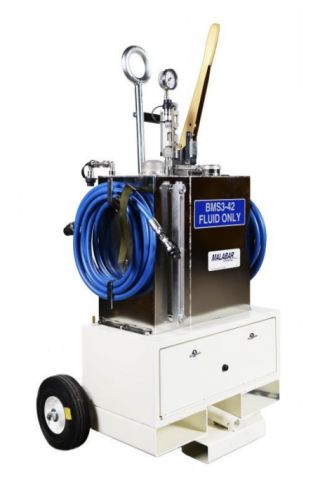
Line maintenance moves fast, and a C-TOU is built for that pace. When a technician swaps out an LRU – a pump, a valve, a cold plate – the isolated section of the cooling circuit needs to be refilled and bled before the aircraft goes anywhere. A coolant top-off unit handles exactly that: precise, LRU-level fluid management without the time and setup required to roll out a full service cart.
The Malabar PF56266-01 is the B787-specific solution – lightweight, hand-pump operated, and compact enough that it comes to the aircraft rather than the other way around. It's the kind of tool that prevents a line swap from becoming an extended maintenance event.
Coolant Top-Off Packs (CTOPs)
A coolant top-off pack covers the space between a compact C-TOU and a full motorized service cart – more fluid capacity and reach than a technician can carry, without the complexity of a large powered unit. CTOPs are particularly useful when servicing tasks span more of the aircraft's cooling system or when multiple LRUs need attention in a single session.
The Malabar PF56180 is a towable, two-wheel unit designed for B787 operations, with a larger fluid reservoir and longer hoses than the C-TOU to support broader ramp-side servicing. It's the right call when the job is bigger than a single LRU swap but doesn't warrant a full CSC deployment.
How Do You Select the Right Coolant Servicing Equipment for Your Operation?
Choosing the correct coolant servicing equipment comes down to three primary variables. First, aircraft type: the Boeing 787 and Airbus A350 require different GSE models, different adapter kits, and different operational procedures – there is no cross-platform substitution.
Second, scope of the maintenance event: an LRU swap calls for a coolant top-off unit or coolant top-off pack; a full-system coolant change requires a fill/drain cart or a coolant service cart. Third, adapter kit compatibility: each platform uses a specific liquid cooling system interface, so confirming you have the right kit before the job starts prevents costly delays on the ramp.
Operational factors layer on top of those core variables. The choice between electric and diesel-electric power affects deployment flexibility across hangars and remote ramp locations. Ramp mobility needs – whether equipment moves short distances or gets towed across a large MRO floor – influence which unit makes practical sense. For MROs and FBOs maintaining mixed B787 and A350 fleets, storage footprint and multi-platform versatility are procurement considerations worth factoring in from the start.
What Are the Fluid and Maintenance Requirements for These Systems?
Using the correct fluid is non-negotiable. BMS3-42 – a 60/40 propylene glycol-water mixture – is the approved coolant for B787 LCS operations, and deviating from spec on fluid type, mixture ratio, or filtration creates real risk: accelerated corrosion, degraded thermal performance, and exposure in any subsequent maintenance audit. All approved coolant servicing equipment uses 3-micron absolute filters, keeping the LCS fluid clean throughout every service cycle.
On the maintenance side, filter changes are a routine but critical task. The C-TOU manual recommends replacing the filter element every 3 to 4 months under normal use – or sooner if increased resistance is felt during pumping strokes. Relief valve settings on both the PF56266-01 and PF56180 should be verified periodically, with adjustments made under deadhead conditions for accurate readings.
When it comes to adapter kits, sourcing matters: Boeing requires them to be purchased from approved sources, and PJi is one of them. As a Boeing-approved supplier, PJi stocks the K21016-129 adapter kit alongside the Malabar servicing equipment it interfaces with – so operators can source everything they need in one place.
The Bottom Line
Modern aircraft liquid cooling systems are engineered to tight tolerances – and the GSE used to service them must meet that standard. From the full-system capability of the Malabar 1010A/1011A Coolant Service Cart and 1016 Fill/Drain Cart to the targeted precision of the PF56266-01 Coolant Top-Off Unit and PF56180 Coolant Top-Off Pack, the right equipment keeps maintenance events efficient, compliant, and aircraft back on schedule.
Pilot John International stocks Malabar coolant servicing equipment for both Boeing 787 and Airbus A350 operations, with the product knowledge to help your team match the right unit to the task. Whether you’re sourcing a coolant service cart for a major MRO facility, looking for portable top-off solutions for line maintenance, or need clarity on adapter kit compatibility, PJi’s aviation specialists are ready to help.
Browse our GSE and coolant servicing equipment at PilotJohn.com, or contact our team directly to discuss availability, financing options, and rental programs.