Everything You Need to Know About Fuel Quantity Testing for Your Aircraft
Key Takeaways
- Accurate fuel quantity data is foundational to flight safety – NTSB data links fuel management issues to more than 50 general aviation accidents per year, and documented FQIS failures – including a design flaw in the Boeing 777's center wing tank indication system that contributed to at least 10 flight diversions – underscore the real-world stakes of inaccurate fuel readings.
- Most modern aircraft use capacitance-based fuel quantity measurement, in which probes throughout each tank act as variable capacitors, whose capacitance changes with the fuel-to-air ratio. Regular testing and calibration are essential to maintaining this system's accuracy across the full range of operating conditions.
- Testing frequency is not one-size-fits-all: operators must follow the Airworthiness Limitations and Instructions for Continued Airworthiness specific to their aircraft type, with additional testing required after any fuel system repair, component replacement, or reported indication discrepancy.
- The most common issues caught during testing – faulty or contaminated probes, wiring faults, calibration drift, and degraded insulation resistance – are all identifiable and correctable early, before they affect flight operations or trigger unscheduled maintenance.
- Modern fuel quantity test sets handle AC and DC capacitive systems, LOX installations, and engine oil systems, with key diagnostic capabilities including capacitance simulation, insulation resistance testing, and Distance to Fault (DTF) detection to pinpoint wiring issues without unnecessary disassembly.
- PJi offers a curated lineup of fuel quantity test sets from VIAVI and Barfield, backed by the expertise to help operators select the right unit for their fleet and maintenance environment.
Fuel quantity testing is an essential part of maintaining the safety, reliability, and efficiency of aircraft operations. From verifying accurate fuel readings to catching system issues before they become operational problems, it's a discipline that touches every type of aviation maintenance program. Whether you're an aircraft service technician, maintenance manager, or aviation professional, understanding how fuel quantity testing works and why it matters is fundamental to keeping flights safe.
In this article, we'll cover everything you need to know about aircraft fuel quantity testing, including its importance, common issues encountered during testing, and key features to consider when selecting fuel quantity test sets.
What Is Fuel Quantity Testing?

Fuel quantity testing is the process of verifying the accuracy of an aircraft's fuel quantity measurement system – a network of fuel sensors, gauges, and electronic components that delivers real-time fuel level data to the flight deck.
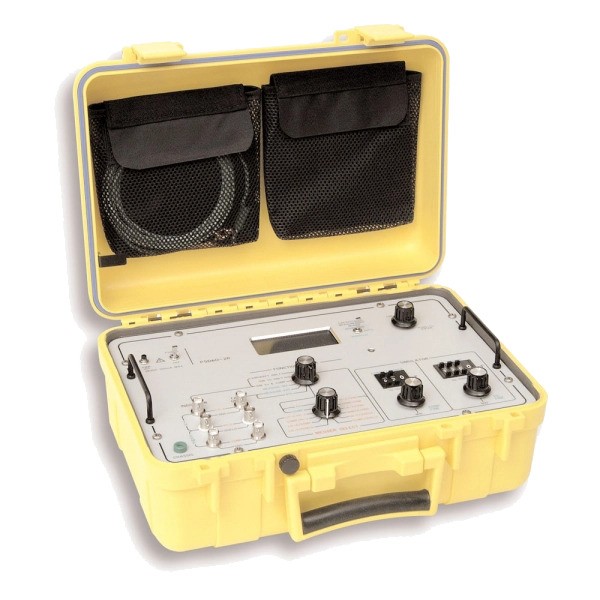
Fuel quantity test sets simulate different fuel levels in the aircraft's tanks and calibrate the system to confirm accurate readings. These tests can identify issues with fuel probes, wiring, and other components that may cause inaccurate readings or system malfunctions. Regular fuel quantity testing is critical for ensuring that fuel levels are properly monitored, which is vital for safe and efficient flight operations.
Why Is Fuel Quantity Testing Important?
Fuel quantity testing plays a key role in maintaining the safety, reliability, and operational efficiency of an aircraft. Here are some of the primary reasons why it's important:
1. Flight Safety
Inaccurate fuel quantity readings can have serious consequences. According to NTSB Safety Alert SA-067, fuel management issues – including fuel exhaustion and fuel starvation – account for more than 50 general aviation accidents per year in the United States. While many of those involve errors in fuel planning, FQIS failures compound the risk: a 2022 FAA airworthiness directive on the Boeing 777 cited a design flaw in the fuel quantity indicating system that caused the center wing tank to display more fuel than was actually on board, contributing to at least 10 in-flight diversions. Reliable fuel quantity data isn't just about accurate gauges – it's the foundation of sound fuel management from preflight through landing.
2. Operational Efficiency
Accurate fuel quantity readings enable airlines and operators to plan the correct fuel load for each flight, optimizing payload capacity, reducing unnecessary fuel uplift, and supporting better cost management. Inaccurate readings – whether over- or under-reporting – can lead to delays, unplanned fuel stops, or unscheduled maintenance events that disrupt operations.
3. Preventing System Failures
Regular testing helps identify developing issues before they escalate into grounding events. Whether it's a probe showing early signs of contamination, degraded wiring insulation, or a calibration drift that's been widening over time, early detection enables targeted repairs rather than emergency responses.
How Often Should Fuel Quantity Testing Be Performed?
Fuel quantity testing frequency is not governed by a single universal rule. Under FAA requirements, operators must follow the Airworthiness Limitations and Instructions for Continued Airworthiness (ICA) specific to their aircraft type, which define mandatory inspection and test intervals for critical systems, including the FQIS. In practice, this means full fuel quantity system checks are performed during scheduled heavy maintenance visits and whenever a fuel system component has been replaced, repaired, or modified.
Additional testing is warranted after a fuel system repair, following the installation of new probes or sensors, or whenever the flight crew reports quantity discrepancies. Addressing a suspected discrepancy through ground testing is far less costly than the alternatives.
What Are Some Common Issues Detected During Fuel Quantity Testing?
During fuel quantity testing, several common issues can be detected that affect fuel reading accuracy and pose a risk to safe flight operations if left unaddressed:
1. Faulty Fuel Probes
Fuel probes are the capacitive sensors that measure fuel level in each tank. Over time, probes can be damaged by physical wear, contamination, or – as documented in aviation maintenance literature – microbial growth that fouls the sensing elements and interferes with accurate capacitance readings. Fuel quantity testing pinpoints which probes need replacement or repair before readings drift outside acceptable limits.
2. Wiring Problems
Electrical wiring in the aircraft's fuel system can degrade or become damaged, leading to signal transmission issues between fuel probes and cockpit indicators. Testing can detect short circuits, open circuits, loose connections, and damaged wiring – enabling technicians to make targeted repairs before a subtle wiring fault cascades into an unreliable fuel indication in flight.
3. Calibration Errors
Fuel quantity systems require accurate calibration to correctly translate capacitance readings into reliable fuel quantity data. Calibration can drift following repairs, after probe replacements, or simply over time and service cycles. Fuel quantity testing confirms that the system is reporting within the tolerances specified in the aircraft's AMM.
4. Insulation Resistance Issues
Wiring insulation within fuel systems can degrade with age, thermal cycling, and exposure to fuel vapors, increasing electrical resistance and reducing signal reliability. Testing measures insulation resistance and flags any wiring that no longer meets specification – an important safeguard given the FQIS wiring integrity requirements outlined in FAA guidance for fuel tank safety.

How Do Fuel Quantity Test Sets Work?
Fuel quantity test sets are specialized instruments that simulate different fuel levels in an aircraft's tanks by replicating the capacitance values the FQIS would see under actual fuel conditions. Most modern aircraft use capacitance-based fuel quantity measurement, in which probes installed throughout each tank act as variable capacitors – their electrical values shift depending on the ratio of fuel to air between the probe's concentric elements. As the fuel level rises, more of the probe is submerged, increasing capacitance; as the fuel depletes, capacitance decreases. A fuel quantity test set applies precise, known capacitance signals to verify that the system responds accurately across the full measurement range, from empty to full.
The test set sends controlled signals through the aircraft fuel system, allowing technicians to compare the system's response against published performance data and identify any discrepancies requiring calibration or repair. Some test sets also measure insulation resistance, detect wiring faults, and offer Distance to Fault (DTF) testing – isolating wiring issues to a specific location in the harness and significantly reducing troubleshooting time.
What Types of Aircraft Fuel Systems Can Be Tested with Fuel Quantity Test Sets?
Fuel quantity test sets are designed to work with a variety of aircraft systems. These can include:
1. AC Capacitive Systems
The majority of commercial and military aircraft use AC capacitive fuel quantity measurement. Multiple probes are distributed throughout each tank to improve accuracy across different fuel depths and aircraft attitudes, with a compensator unit – submerged at the bottom of the tank – accounting for the effects of fuel temperature on the dielectric constant and fuel density. Fuel quantity test sets replicate these capacitance values to verify accuracy across the full measurement range.
2. DC Capacitive Systems
Some aircraft – particularly older or smaller platforms – use DC capacitive measurement. While the underlying capacitance principle remains the same, DC systems use direct current rather than alternating current. Compatible fuel quantity test sets apply the appropriate signal types to test and calibrate these configurations.
3. Liquid Oxygen (LOX) Systems
Some fuel quantity test sets can be used to test and calibrate the quantity measurement systems on liquid oxygen (LOX) installations found on certain military and high-altitude aircraft.
4. Engine Oil Systems
In addition to fuel, compatible test sets can verify the accuracy of engine oil quantity measurement systems, making them useful across a broader range of servicing applications.
What Features Should You Look for in a Fuel Quantity Test Set?
When selecting an aircraft fuel quantity test set, there are several key features to consider:

1. Portability
A lightweight, portable form factor matters whenever the test set will be used on the flight line or across multiple hangars. Compact units reduce setup time and enable testing wherever the aircraft is located, without requiring a dedicated maintenance bay.
2. Power Options
Dual power capability – rechargeable battery and external AC or DC power – gives technicians the flexibility to test in environments where line power isn't readily available, including remote ramp locations or field deployments.
3. Measurement Capabilities
Look for a test set that measures capacitance, tests insulation resistance, and offers Distance to Fault (DTF) detection. These three capabilities, together, provide a comprehensive diagnostic picture of the fuel system – from probe accuracy to wiring integrity – without requiring multiple instruments.
4. Aircraft-Specific Interface Cables
Fuel system connectors and harness configurations vary across aircraft types. Confirm that the test set is compatible with, or comes equipped with, the correct interface cables for the aircraft in your fleet – this is essential for accurate, reliable testing across different platforms.
The Bottom Line
Fuel quantity testing is a critical aspect of aviation maintenance, ensuring that aircraft fuel systems operate safely and efficiently. Regular testing helps detect and address issues such as faulty fuel probes, wiring problems, and calibration errors before they lead to more serious problems.
Pilot John International® (PJi®) offers a range of premium-quality fuel quantity test sets from industry-leading manufacturers, including VIAVI and Barfield. With expert support, fast shipping, and an unwavering commitment to quality, PJi ensures your aircraft remains safe, and you Stay Flight-Ready® at all times. Contact us today to learn more about our fuel quantity testing equipment and how we can support your maintenance program.