




How Jet Engines Work and Why Maintenance Matters
Key Takeaways
- Jet engines generate thrust by compressing air, mixing it with fuel, igniting the mixture, and accelerating exhaust gases through the Brayton Cycle.
- The four primary jet engine types – turbojet, turbofan, turboprop, and ramjet – are designed for different aircraft applications, speeds, and operating environments.
- Modern jet engines are engineered for exceptional reliability, but performance, fuel efficiency, and service life depend heavily on proper maintenance.
- Routine inspections, borescope examinations, performance monitoring, and component replacement help prevent costly failures and unplanned downtime.
- PJi offers a comprehensive range of jet engine maintenance tooling, ground support equipment, consumables, and replacement parts from many of aviation's most trusted manufacturers.
Jet engines are among the most sophisticated machines used in modern aviation. From commercial airliners and business jets to military aircraft, these engines generate the thrust needed to move aircraft efficiently across vast distances while operating in some of the most demanding environments imaginable.
Although today's turbine engines are remarkably reliable, their performance depends on a carefully controlled sequence of airflow, compression, combustion, and exhaust. Understanding how this process works provides valuable insight into both aircraft operation and the maintenance practices required to keep turbine-powered aircraft flying safely and efficiently.
In this article, we'll explore how jet engines work, the different types of jet engines used in aviation, and the maintenance practices that help keep them operating at peak performance.
Jet Engine Fundamentals
A jet engine is a turbine-powered propulsion system that converts fuel energy into thrust. Unlike piston engines, which use reciprocating motion to turn a crankshaft and propeller, jet engines generate forward motion by accelerating large volumes of air and exhaust gases rearward.
Although engine designs vary, all jet engines operate on the same fundamental principle: air enters the engine, is compressed to a higher pressure, mixed with fuel and ignited, and then expelled at high velocity. The resulting reaction force produces the thrust that propels the aircraft forward.
Modern jet engines have evolved significantly since their introduction during the Second World War, becoming more fuel-efficient, more reliable, quieter, and capable of producing far greater power than their early predecessors.

The Development of the Jet Engine
The modern jet engine emerged during the late 1930s and early 1940s through the independent work of British engineer Sir Frank Whittle and German engineer Hans von Ohain. Whittle patented the turbojet concept in 1930, while von Ohain successfully powered the Heinkel He 178, the first jet-powered aircraft to fly, in 1939.
These early developments transformed aviation by eliminating many of the speed and altitude limitations associated with piston-powered aircraft. Over the following decades, advances in materials, aerodynamics, and turbine technology enabled the development of the highly efficient turbofan engines that power most commercial aircraft today.
How Jet Engines Generate Thrust
Jet engines operate according to the Brayton Cycle, a thermodynamic process that converts fuel into usable propulsion through four primary stages: intake, compression, combustion, and exhaust.
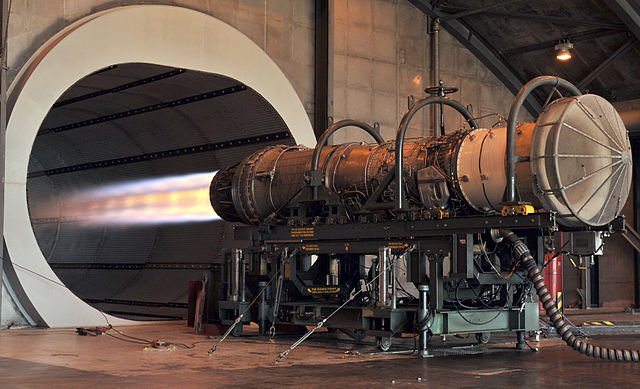
Air enters the engine through the inlet and passes through a series of compressor stages that significantly increase its pressure. The compressed air then enters the combustion chamber, where fuel is introduced and ignited, producing a continuous flow of high-temperature, high-pressure gases.
As these gases move through the turbine section, part of their energy is extracted to drive the compressor system. The remaining energy exits through the exhaust nozzle at extremely high velocity, creating the thrust required to move the aircraft forward.
This continuous cycle occurs thousands of times per minute and allows modern turbine engines to produce tremendous amounts of thrust while maintaining exceptional reliability and efficiency.

Common Types of Jet Engines
Although all jet engines operate using the same fundamental principles, different designs are optimized for specific aircraft types and mission requirements.
Turbojet Engines
Turbojets are the earliest form of jet engine and consist primarily of an intake, compressor, combustion chamber, turbine, and exhaust nozzle. Nearly all of the engine's thrust is generated directly by the high-speed exhaust stream, making turbojets particularly effective at high speeds and high altitudes.
While turbojets offer excellent performance in supersonic applications, they are generally less fuel-efficient and noisier than modern turbofan designs. Historically, turbojets powered aircraft such as the North American F-86 Sabre, Lockheed F-104 Starfighter, and early variants of the McDonnell Douglas F-4 Phantom II. Although largely replaced by turbofans in modern aviation, turbojets played a critical role in the development of high-performance military and commercial jet aircraft.

Turbofan Engines
Turbofan engines are the dominant propulsion system in modern commercial aviation. A large fan mounted at the front of the engine directs a significant portion of incoming air around the engine core, creating additional thrust while improving fuel efficiency.
This bypass airflow reduces fuel consumption and noise while delivering excellent performance across a broad range of operating conditions. Most modern airliners, including the Boeing 737 MAX, Boeing 787, Airbus A320, and Airbus A350 families, rely on turbofan engines.
Turboprop Engines
Turboprop engines combine gas turbine technology with a propeller-driven propulsion system. Rather than using exhaust gases as the primary source of thrust, the turbine drives a reduction gearbox that turns a propeller.
Turboprops are highly efficient at lower speeds and altitudes, making them ideal for regional airlines, cargo operations, and special-mission aircraft. Their ability to operate efficiently from shorter runways also makes them popular in remote and rugged operating environments. Aircraft such as the ATR 72, De Havilland Canada Dash 8 (Q400), and Beechcraft King Air 350 are powered by turboprop engines and are widely used for passenger transport, cargo operations, and business aviation.
Ramjet Engines
Ramjets are specialized high-speed propulsion systems that contain few or no moving parts. Instead of using compressors, ramjets rely on the aircraft's forward speed to compress incoming air before combustion.
Because they require significant forward velocity before becoming effective, ramjets are generally used only in supersonic and hypersonic military or experimental applications. Their simplicity and efficiency at very high speeds make them valuable for specialized missions where conventional turbine engines become less effective. Ramjet technology has been employed on aircraft and experimental vehicles such as the Lockheed SR-71 Blackbird (which utilized turbo-ramjet operating principles at high speeds), the Lockheed D-21 reconnaissance drone, and the Boeing X-51A Waverider hypersonic demonstrator.

Jet Engine Maintenance and Service Requirements
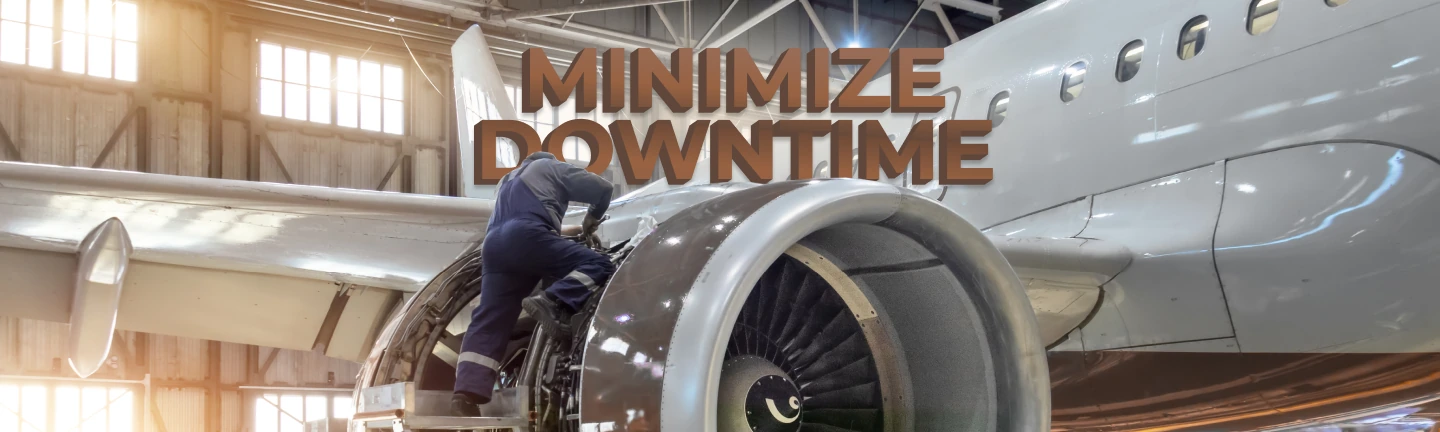
Jet engines are designed for long service lives, but achieving that reliability requires disciplined inspection, testing, and maintenance programs. Airlines, corporate flight departments, military organizations, and maintenance providers follow detailed maintenance schedules developed by engine manufacturers and regulatory authorities.
Routine maintenance activities include borescope inspections, oil analysis, filter replacement, igniter inspections, performance trend monitoring, vibration analysis, and periodic component replacement. Advanced onboard monitoring systems continuously collect operational data that helps maintenance teams identify developing issues before they affect reliability or safety.
Borescope inspections are particularly important because they allow technicians to evaluate internal engine components without extensive disassembly. Compressor blades, turbine blades, combustion chambers, and other critical areas can be inspected for wear, cracking, corrosion, foreign object damage (FOD), and other conditions that may require corrective action.
Through a combination of scheduled maintenance, predictive monitoring, and component overhauls, operators can maximize engine life while maintaining safety, performance, and regulatory compliance.
The Bottom Line
Jet engines are among the most remarkable achievements in aviation engineering, converting fuel into reliable thrust through a highly refined process of compression, combustion, and exhaust. Whether powering a regional turboprop, a business jet, or a wide-body airliner, turbine engines depend on proper maintenance to deliver the performance, reliability, and safety expected throughout their service lives.
Pilot John International® (PJi®) offers a broad selection of aircraft tooling and ground support equipment used in turbine engine maintenance. Our product offerings include borescopes and videoscopes from USA Borescopes; engine stands, hoists, and slings from NextGen and Tronair; turbine temperature test units from Barfield; engine compressor washers from Tronair and Kell-Strom; engine shields and exhaust barriers from Sesame Technologies; and specialized Pratt & Whitney engine tooling from Kell-Strom.
We also provide a comprehensive range of aircraft engine parts and consumables, including engine mounts and vibration isolators from Barry Mounts (Hutchinson Aerospace); turbine engine igniters and exciters, spark plugs, and related products from Champion Aerospace; engine intake and exhaust components from Brackett Aero Filter; engine gaskets and seals from Real Gaskets; engine oil filters from Tempest and Champion; engine magnetos from Bogert Aviation and Champion; jet fuel additives from Biobor, Hammonds, and PRIST; and turbine engine oils from AeroShell, Castrol, Eastman, and Exxon Mobil.
Reach out to our aviation specialists by phone, email, or live chat for assistance finding the right ground support equipment, tooling, consumables, and replacement parts for maintaining your aircraft engines.
Frequently Asked Questions
How do jet engines differ from traditional piston engines?
Jet engines differ from traditional piston engines in how they generate power. Piston engines use internal combustion to drive pistons, which turn a crankshaft that typically powers a propeller.
In contrast, jet engines generate thrust through a continuous process of air compression, combustion, and exhaust acceleration. By expelling high-speed exhaust gases, jet engines can operate far more efficiently at higher speeds and altitudes than piston engines, which are most commonly found in smaller general aviation aircraft.
How loud is a jet engine?
Jet engines can be extremely loud, with noise levels reaching up to 140 decibels during takeoff. This noise is generated by a combination of high-velocity exhaust gases and the movement of engine components such as fans, compressors, and turbines.
Modern engine manufacturers have made significant advances in noise reduction through high-bypass turbofan designs, improved nacelle construction, and other sound-suppression technologies. As a result, today's commercial aircraft are considerably quieter than earlier generations of jet-powered aircraft.
How much horsepower does a jet engine produce?
Jet engines are incredibly powerful, with many commercial aircraft engines producing between 20,000 and 100,000 pounds of thrust. In horsepower terms, larger turbine engines can generate the equivalent of well over 100,000 horsepower.
However, jet engines are typically rated by thrust rather than horsepower because they generate forward force rather than rotational shaft power. Actual power output varies significantly depending on engine size, design, and intended application.
How much does a jet engine weigh?
The weight of a jet engine depends on its size, configuration, and intended aircraft application. Many commercial jet engines weigh between 3,000 and 7,000 lbs (1,360 to 3,175 kg), while larger engines used on wide-body airliners can weigh considerably more.
Despite their substantial weight, modern turbine engines are engineered to deliver exceptional thrust-to-weight ratios. This allows them to efficiently propel large aircraft while maintaining fuel efficiency and overall performance.
How long can a jet engine run continuously?
A jet engine can operate continuously for many hours at a time, with commercial flights routinely lasting anywhere from one hour to more than 16 hours. Actual continuous operating time depends on factors such as engine design, fuel capacity, maintenance condition, and mission requirements.
Modern turbine engines are specifically engineered for prolonged operation under demanding conditions. Regular inspections, servicing, and performance monitoring help ensure they continue operating safely and reliably throughout their service lives.
What is the typical lifespan of a jet engine?
The life expectancy of a jet engine varies depending on operating conditions, maintenance practices, and engine design. Many commercial turbine engines remain in service for approximately 20,000 to 30,000 flight hours before requiring major overhauls or life-limited component replacement.
Routine inspections, repairs, and scheduled maintenance play a critical role in extending engine life. Proper maintenance not only improves reliability but also helps operators maximize the return on their engine investment.
Who manufactures aircraft jet engines?
Several major aerospace manufacturers design and produce jet engines for commercial, military, and business aviation applications. Leading manufacturers include Pratt & Whitney, General Electric, Rolls-Royce, and CFM International.
These companies develop engines for a wide range of aircraft, from regional turboprops and business jets to wide-body commercial airliners and advanced military aircraft. Each engine family is engineered to meet specific performance, efficiency, and operational requirements.
Are jet engines used outside of aviation?
Jet engine technology is used in a variety of applications beyond aviation. Gas turbine engines are commonly found in electrical power generation facilities, industrial plants, marine propulsion systems, and certain locomotive applications.
Jet engines have also been adapted for specialized land vehicles, including jet-powered cars used in speed-record attempts and drag racing exhibitions. In some cases, retired military jet engines have even been repurposed for stationary power generation and industrial testing applications.