






Create yours now for free.
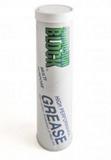
The 09-02990 is a specific part number of the series ACF-50 CB-Grease-16oz. For more generalized information on this item series or for more options, click here.

Need a Quote?
| Alternate Models | |
|---|---|
| 09-02990 | Alternative Part Number for 16 oz Tub |
| 25016 | Lear Chemical Part Number for 16 oz Tub |
| General Information | |
|---|---|
| Part # | 09-02990 |
| Manufacturer | ACF-50 |
| Shipping Information | |
|---|---|
| Product Weight | 0.3 lbs. |
| Product Dimensions | 3.5 x 3.5 x 4 in. |
| Schedule B | 3403191018 |
| ECCN | EAR99 |
Customers also viewed
Customers who bought this item also purchased
AIRCRAFT COMPATIBILITY
This item is for use on all aircraft.
PRODUCT REVIEWS
This item does not have any reviews yet.
QUESTIONS & ANSWERS
Corrosion Block Grease is engineered to outperform many conventional lithium and synthetic greases, particularly in high-moisture and corrosive environments. According to the manufacturer’s technical data sheet, it meets or exceeds the NLGI GC-LB service classifications for automotive wheel bearings and chassis lubricants. Its enhanced rust protection and extreme pressure (EP) properties make it especially well-suited for aviation and marine applications where corrosion resistance is critical.
Yes. The technical specifications list a high drop point of 536°F (280°C), indicating strong resistance to melting at elevated temperatures. This thermal stability helps prevent separation, caking, or bleeding during demanding operations. For aviation maintenance, this reliability supports consistent lubrication in wheel bearings, control linkages, and other high-heat areas.
Corrosion Block Grease is formulated to be waterproof and highly resistant to water washout. Technical data indicates only 1.5% water washout at 175°F (ASTM D-1264). This low washout rate helps maintain lubrication and corrosion protection even in wet ramp conditions, coastal environments, or during frequent washdowns.
The 4-Ball EP test results show a weld point of 500 kg and a load wear index of 100. These EP characteristics demonstrate the grease’s ability to handle heavy loads without metal-to-metal contact. For aircraft components subject to shock loading or high bearing pressures, this added protection can reduce wear and extend service life.
Yes, it is described as multi-grease compatible. This means it can generally be used alongside or in systems previously lubricated with other common grease types, though standard best practice is to clean fittings when possible. Compatibility reduces maintenance complexity when transitioning from older lubricant technologies.
Corrosion Block Grease is identified as suitable for sealed-for-life applications. Its thermal and oxidative stability help maintain consistency over extended periods. This makes it a strong candidate for long-term lubrication in components with limited relubrication intervals.
Low-temperature torque testing at -40°F (-40°C) shows favorable mobility characteristics. This indicates the grease maintains workable consistency in cold climates. For aircraft operating in winter environments or at high altitudes, reliable low-temperature performance ensures consistent mechanical performance.
No. The product is identified as dielectric and non-conductive. This makes it suitable for use around electrical components and connections that require corrosion protection without risking electrical shorting. It adds a layer of protection in avionics bays and other sensitive areas.
Corrosion Block Grease is classified as NLGI Grade #2. This is a common multipurpose grease consistency suitable for wheel bearings, chassis points, and many aviation ground support applications. The #2 grade provides a balance between pumpability and staying power.
Rust protection testing (ASTM D-1743) shows a passing result, demonstrating its ability to resist corrosion under controlled conditions. Combined with strong EP and water-resistant properties, this grease helps protect metal components from moisture-related degradation. For aircraft, ground support equipment, and other high-exposure environments, this added corrosion barrier supports longer service intervals and reduced maintenance costs.


