






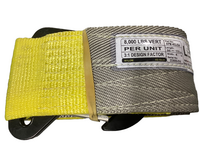
Apm452ia - LEKTRO APM452IDA 4" x 158" Winch Strap Assembly


The Apm452ia is a specific part number of the series Lektro APM452IDA. For more generalized information on this item series or for more options, click here.

| Alternate Models | |
|---|---|
| Apm452ia | Previous Part Number |
| General Information | |
|---|---|
| Part # | Apm452ia |
| Manufacturer | Lektro |
| Shipping Information | |
|---|---|
| Product Weight | 5.8 lbs. |
| Product Dimensions | 10 x 4 x 4 in. |
| Schedule B | 8431200000 |
| ECCN | EAR99 |
Customers also viewed
Customers who bought this item also purchased
AIRCRAFT COMPATIBILITY
| Compatible Aircraft* |
|---|
PRODUCT REVIEWS
This item does not have any reviews yet.
QUESTIONS & ANSWERS
The LEKTRO APM452IDA winch strap assembly is used to pull an aircraft’s nose landing gear securely onto the tug’s cradle during loading. It functions as a controlled, winch-assisted positioning component rather than the primary towing load device. Once tensioned, the strap helps stabilize the nose gear within the tug basket for safe maneuvering. Proper strap use ensures smooth aircraft loading and unloading during ground handling operations.
LEKTRO specifies that replacement winch strap assemblies must match original factory specifications, including material composition, width, elasticity, strength, and the Red Core Warning Yarn feature. Substituting non-approved straps can compromise aircraft security and introduce safety risks during towbarless towing. OEM straps are engineered specifically for the contact surface of the tug’s winch drum and aircraft nose gear. Using the correct assembly protects both the aircraft and the ground support equipment.
LEKTRO recommends replacing operational winch straps every 250 hours of tug operation, as indicated by the hourmeter. Additionally, mandatory replacement is required at least every three months, even if no visible damage is present. This proactive replacement schedule reduces the risk of in-service failure. Keeping spare winch strap assemblies on hand helps prevent downtime.
The strap should be replaced immediately if it shows torn or frayed edges, fiber breaks, deformation, UV bleaching, chemical exposure, or visible Red Core Warning Yarn. The red yarn indicates that the woven surface fibers have worn through, compromising structural integrity. Any sign of weakening or hardening due to environmental exposure warrants removal from service. Early replacement is critical for safe aircraft handling.
The Red Core Warning Yarn is a built-in visual safety indicator woven into the strap. When red fibers become visible on the surface, it signals that the strap’s load-bearing fibers have deteriorated. This early warning system helps tug operators identify wear before catastrophic failure occurs. It adds an extra layer of safety to aircraft ground support operations.
Operators should perform a visual inspection during pre-use safety checks and conduct a more detailed technical inspection monthly. Inspection should focus on edge wear, fiber integrity, discoloration, stiffness, and hardware attachment points. Any irregularities should be documented and monitored closely. Maintaining strict inspection protocols supports safe towbarless aircraft towing.
Failure to replace a degraded winch strap assembly can lead to improper aircraft securement during loading or unloading. This may result in nose gear instability or unintended release from the tug cradle. In severe cases, it could cause aircraft damage or injury to ground personnel. Adhering to replacement intervals protects both equipment and operators.
No, the LEKTRO APM452IDA winch strap assembly is not the primary towing load mechanism. Its primary function is to assist in pulling the aircraft's nose landing gear into position and securing it during loading. The tug’s structural cradle and mechanical design carry the primary towing load. The strap acts as a positioning and retention device during ground handling.
Exposure to ultraviolet (UV) radiation, moisture, battery acid, or chemicals can degrade polyester fibers over time. UV bleaching and hardening reduce flexibility and overall strength. Chemical exposure may weaken fibers and compromise load integrity. Storing straps properly and replacing them at recommended intervals helps mitigate environmental damage.
LEKTRO recommends maintaining spare winch and strut strap assemblies to accommodate mandatory replacement schedules and unexpected wear. Having replacements readily available minimizes operational downtime and ensures continued compliance with safety standards. Ground support teams that proactively manage strap inventory reduce the risk of last-minute disruptions. Keeping spare assemblies on hand supports efficient aircraft ramp operations.


