






Create yours now for free.

Need a Quote?
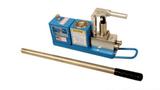
The Tronair 02-7900C0100 is a 5-Ton (10,000 lb) hydraulic aircraft tripod jack engineered to lift aircraft from the forward fuselage or main wing jacking points during maintenance, inspections, and ground operations. CE-marked for compliance with European aviation safety standards.
Standard Features
- Hand pump with built-in pressure relief valve
- Threaded rams with improved handwheel-style safety nut
- Quick-rising center extension for rapid initial lift
- Easy-access filler/breather cap
- Heavy-duty wheels for easy maneuverability
- Hydraulic fluid: MIL-PRF-5606
- ¾" (2 cm) spherical radius cup jack pad
- CE marked
- Durable powder-coat finish (Tronair Blue)
Technical Specifications
- Rated Capacity: 10,000 lbs (4536 kg)
- Operating Temperature: −4°F to 122°F (−20°C to 50°C)
- Pressure Relief Setting: 2,500 + 250/−0 PSIG (172.4 + 17.2/−0 bar)
- Hydraulic Fluid: MIL-PRF-5606
- Jack Pad: ¾" (2 cm) spherical radius cup
- Finish: Durable powder coat (Tronair Blue)
Safety Features
- Ram Lock Nut: Prevents the lowering of the ram. The ram lock nut must be lowered as the aircraft is being lifted. Ram lock nuts must be kept within 2" of the stop while raising the aircraft.
- Lock Nut Retention Ring: Prevents the lock nut from being unscrewed from the second stage.
- Pressure Relief Valve: Prevents overload during raising operations.
Aircraft Applications
The Tronair 02-7900C0100 is designed for use with a range of commercial, regional, and business aviation aircraft requiring 5-Ton tripod jack support. Specific aircraft model compatibility is defined in the Tronair Aircraft Application Guide. Always confirm jacking capacity, adapter requirements, and placement procedures with your aircraft maintenance manual before use.
Need your Tronair 02-7900C0100 5-ton tripod jack serviced, repaired, or load tested?
Pilot John is an authorized Tronair distributor and factory-authorized Tronair service center. Every jack ships new from our warehouse with Certificates of Conformance (CofC) and FAA Form 8130-3 documentation available at no additional cost. Need jack service, load-testing, or repair? Pilot John handles that too as an OEM-trained GSE service center. For more information or to request service, see our Service Center page, and see our article on why jack load testing matters. Pilot John also operates an ISO-17025 calibration center for all of your tooling and equipment calibration needs — learn more here.
| General Information | |
|---|---|
| Part # | 02-7900C0100 |
| Manufacturer | Tronair |
| Shipping Information | |
|---|---|
| Shipping Weight | 168 lbs. |
| Shipping Dimensions | 38 x 36 x 31 in. |
| Schedule B | 8425420000 |
| ECCN | EAR99 |
| Spare Parts | |
|---|---|
| K-1001 | Pump Seal Kit |
| K-1685 | Repair Fluid Seal Kit (Air Option only) |
| K-1686 | Repair Air Seal Kit (Air Option only) |
| K-4588 | Ram Seal Kit |
Customers also viewed
AIRCRAFT COMPATIBILITY
| Compatible Aircraft* |
|---|
PRODUCT REVIEWS
This item does not have any reviews yet.
QUESTIONS & ANSWERS
The Tronair 02-7900C0100 5-ton tripod jack is commonly used for aircraft lifting procedures involving fuselage and wing support during inspections, landing gear servicing, and structural maintenance. Its two-stage design allows technicians to achieve substantial lift height while maintaining stability throughout the operation. Because the aircraft tripod jack is intended to work in conjunction with additional jacks, it is especially useful during balanced multi-point lifting procedures. This makes it a strong fit for general aviation, regional aircraft, and certain business jet maintenance applications.
The two-stage configuration allows the hydraulic tripod jack to achieve a higher lifting range while maintaining a relatively compact closed height for easier positioning beneath the aircraft. The hydraulic rams are designed to extend sequentially from the largest to the smallest in diameter for controlled lifting performance. This staged extension helps improve lifting stability and reduces the risk of uneven load transfer during aircraft jacking operations. It also allows technicians to safely accommodate varying aircraft ground clearances.
All aircraft jacks should be raised and lowered simultaneously to keep the aircraft level throughout the procedure. Uneven lifting can place unnecessary stress on the airframe and create instability during maintenance operations. Coordinated lifting helps distribute loads properly across the designated jacking points and improves overall safety for technicians working around the aircraft. This is particularly important during full-aircraft lifting events involving multiple tripod jacks.
At approximately 113 lbs, the Tronair 02-7900C0100 is lighter than many higher-capacity aircraft tripod jacks, making it easier to position and maneuver in crowded maintenance areas. The lighter overall weight can help reduce setup time while improving handling for technicians performing routine maintenance operations. Combined with the caster-equipped configurations available on select models, the jack offers greater mobility throughout hangars and maintenance ramps. Improved maneuverability can enhance efficiency during aircraft servicing.
The CE marking indicates that the aircraft tripod jack complies with applicable European Community safety and manufacturing requirements. The included Declaration of Conformity notes compliance with standards such as EN ISO 12100-1 and Machinery Directive 2006/42/EC. For international operators and MRO facilities, this certification can help simplify equipment acceptance and support regulatory compliance across global operations. It also reflects adherence to recognized safety and engineering standards.
The ram protection ring helps protect the mechanical extension and locking components during operation while supporting proper locking pin engagement. The operation manual specifically warns against using the aircraft jack if the ram protection ring is damaged or missing. This component helps maintain safe staging during lifting procedures and reduces the risk of improper pin placement. Proper use of the protection ring contributes to both operator safety and the jack's long-term reliability.
Routine maintenance helps preserve lifting performance, prevent hydraulic leaks, and extend the operational life of the hydraulic tripod jack. Tronair recommends checking fluid levels before each use, lubricating casters every three months, and performing annual capacity testing at 105% to 110% of rated load. Regular inspections can help identify worn seals, hydraulic issues, or structural damage before they create operational safety concerns. Preventative maintenance also supports regulatory compliance within aviation maintenance programs.
With a minimum closed height of 23”, the Tronair 02-7900C0100 can fit beneath aircraft with relatively limited ground clearance. This lower profile helps technicians position the tripod jack more easily beneath designated fuselage or wing jacking points before lifting begins. Improved access beneath the aircraft can streamline maintenance preparation and reduce repositioning time. The combination of a low closed height and a wide extension range makes the jack adaptable to multiple maintenance scenarios.
The jack is designed to operate over a temperature range of -4°F to 122°F (-20°C to 50°C). This broad operating range supports use in a variety of climates and maintenance environments, including outdoor ramp operations when necessary. Tronair also notes that the jack can be stored outdoors if protected with a full waterproof covering. Proper environmental handling helps preserve hydraulic system performance and prevent corrosion-related wear.


