






Create yours now for free.

Need a Quote?
The Tronair 02-7902C0100 is a 12-Ton (24,000 lb) hydraulic aircraft axle jack engineered to lift and support one wheel/tire assembly of an aircraft at the axle during maintenance, tire changes, and landing gear servicing. With a 3" (7.6 cm) closed height and 12" (30.5 cm) maximum extended height, it accommodates a range of aircraft axle clearance requirements. CE-marked for compliance with European aviation safety standards. OEM-specified for Cessna Mustang 510.
Standard Features
- Hand pump with built-in pressure relief valve
- Easy-access filler/breather cap that can be sealed to prevent spills
- Low-profile cylinder designed for minimal axle clearance requirements
- Hydraulic fluid: MIL-PRF-5606
- CE marked
- Durable powder-coat finish (Tronair Blue)
Technical Specifications
- Rated Capacity: 24,000 lbs (10886 kg)
- Operating Temperature: −4°F to 122°F (−20°C to 50°C)
- Pressure Relief Setting: 2,500 + 250/−0 PSIG (172.4 + 17.2/−0 bar)
- Minimum Closed Height: 3" (7.6 cm)
- Maximum Height Obtainable: 12" (30.5 cm)
- Hydraulic Fluid: MIL-PRF-5606
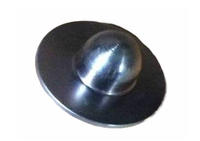
- Jack Pad: ¾" (2 cm) spherical radius cup
- Finish: Durable powder coat (Tronair Blue)
Safety Features
- Safety Lock Valve: Prevents the jack from lowering unintentionally during lifting operations. The jack must be manually released before descending.
- Pressure Relief Valve: Prevents overload during raising operations.
- Filler Cap Seal: Easy-access filler/breather cap can be sealed to prevent hydraulic fluid spills during transport and storage.
Aircraft Applications
The 02-7902C0100 is OEM-approved for the following aircraft types:
- Cessna: Mustang 510
This list reflects aircraft for which the manufacturer has specifically approved this jack. Additional applications may be possible — always confirm jacking capacity, adapter requirements, and placement procedures with the aircraft maintenance manual before use.
Need your Tronair 02-7902C0100 12-ton axle jack serviced, repaired, or load tested?
Pilot John is an authorized Tronair distributor and factory-authorized Tronair service center. Every jack ships new from our warehouse with Certificates of Conformance (CofC) and FAA Form 8130-3 documentation available at no additional cost. Need jack service, load-testing, or repair? Pilot John handles that too as an OEM-trained GSE service center. For more information or to request service, see our Service Center page, and see our article on why jack load testing matters. Pilot John also operates an ISO-17025 calibration center for all of your tooling and equipment calibration needs — learn more here.
| General Information | |
|---|---|
| Part # | 02-7902C0100 |
| Manufacturer | Tronair |
| Shipping Information | |
|---|---|
| Schedule B | 8425420000 |
| ECCN | EAR99 |
Customers also viewed
Customers who bought this item also purchased
AIRCRAFT COMPATIBILITY
| Compatible Aircraft* | |
|---|---|
| Cessna | Mustang 510 |
PRODUCT REVIEWS
This item does not have any reviews yet.
QUESTIONS & ANSWERS
The four-stage ram design allows the axle jack to achieve a greater lifting range while maintaining a low closed height for easy positioning under aircraft landing gear. This multi-stage extension improves lifting efficiency by reducing the need for excessive spacer stacking. It also provides more controlled elevation changes, which is especially important when working with sensitive aircraft structures. This design is a core feature of Tronair axle jacks and contributes to their versatility.
The hi/low manual pump allows technicians to quickly raise the jack under low load conditions and then switch to a slower, higher-pressure mode as resistance increases. This dual-speed functionality improves both efficiency and precision during lifting operations. It reduces operator fatigue while maintaining control as the jack approaches full load. This is particularly beneficial for repeated maintenance tasks on aircraft such as the Citation Mustang.
The axle jack must always be placed on a hard, level surface to ensure stability during operation. The manual emphasizes carefully aligning the jack pad with the aircraft’s designated lifting point before applying the load. Improper positioning can lead to uneven load distribution or potential damage to the aircraft structure. Following correct placement procedures enhances both safety and lifting accuracy.
Spacer blocks allow technicians to fine-tune the axle jack's starting height, minimizing the hydraulic extension required. This helps maintain optimal ram engagement and reduces stress on the hydraulic system. The included spacer options can be arranged to match various landing gear geometries.
Operators should always chock the aircraft wheels that are not being lifted to prevent unintended movement. The manual also warns against placing hands between the jack pad and the aircraft during operation. Additionally, opening the reservoir vent screw before pumping is required to ensure proper hydraulic function. These precautions help reduce the risk of injury and equipment damage.
Regular maintenance is essential to ensure consistent lifting performance and prevent hydraulic failures. This includes checking fluid levels, inspecting seals, and replacing worn O-rings or backup rings as needed. The maintenance section highlights the importance of keeping the system clean and free of debris to prevent seal damage. Proper upkeep extends the life of the aircraft axle jack and ensures reliable operation.
If the jack fails to lift or hold a load, common causes include low hydraulic fluid levels, improperly closed release valves, or worn seals. The troubleshooting table in the manual outlines specific corrective actions, such as tightening valves or replacing damaged components. Addressing these issues promptly helps restore proper function and prevents further damage. Regular inspection can also catch these problems early.
Annual load testing is recommended to verify that the axle jack can safely handle its rated capacity. The manual advises applying a test load slightly above the rated capacity, without exceeding safe limits, to confirm performance. This process helps identify wear or internal issues that may not be visible during normal use. Consistent testing ensures long-term safety and compliance with maintenance standards.
Proper training ensures that personnel understand safe operating procedures, load limits, and correct setup techniques. The manual specifies that employers are responsible for providing adequate training programs for operators. Well-trained technicians are less likely to misuse equipment or overlook critical safety steps. This ultimately improves both workplace safety and maintenance efficiency.


