






Tronair H-3033 Manifold Regulator for Select Engine Compressor Washers


Create yours now for free.

Need a Quote?
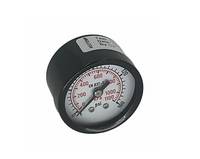
The Tronair H-3033 is a replacement manifold regulator designed for use on select Tronair engine compressor washers.
| General Information | |
|---|---|
| Part # | H-3033 |
| Manufacturer | Tronair |
| NSN | 4820016874062 |
| Shipping Information | |
|---|---|
| Product Weight | 1 lbs. |
| Product Dimensions | 3 x 1 x 1 in. |
| Schedule B | 8431200000 |
| ECCN | EAR99 |
Customers also viewed

Customers who bought this item also purchased
AIRCRAFT COMPATIBILITY
| Compatible Aircraft* |
|---|
PRODUCT REVIEWS
This item does not have any reviews yet.
QUESTIONS & ANSWERS
The H-3033 manifold regulator is compatible with several Tronair engine compressor washer models, including 08-4048-0013, 08-4049-0013, 08T4049-0013, 08-4052-0013, 08-4053-0013, 08-4057C0013, 08-4058-0013, and 08-4059-0013.
This compatibility list ensures that the H-3033 can be used as a direct replacement part for users of these specific washer models. Always verify your washer’s model and serial number before ordering to confirm fit.
The H-3033 regulates and distributes pressure from the washer’s supply to multiple spray headers or nozzles. It ensures that each nozzle sees consistent fluid pressure, which is essential for uniform spray coverage and effective compressor cleaning. Without a properly functioning manifold, pressure imbalances can lead to incomplete cleaning or localized damage.
Regular maintenance should include checking for leaks at all joints, inspecting internal orifices or passages for clogging, and verifying that seals or O-rings remain in serviceable condition. The manifold should be cleaned periodically to remove buildup or scale that might obstruct flow. If inspection shows corrosion, cracks, or flow irregularities, replacement is recommended.
The H-3033 is designed as a direct replacement part, matching the original mounting configuration, bolt pattern, and port spacing. This minimizes downtime during installation – users typically remove the old manifold regulator and install the H-3033 with minimal adjustment. It helps if technicians keep torque specifications and alignment tolerances from the washer’s service manual.
While the H-3033 itself is not a filter, it is downstream from the washer’s supply and should only receive clean, filtered fluid. Any contaminants or particulates in the fluid can damage internal seats or clog flow passages in the manifold. It’s recommended to maintain proper filtration upstream to preserve the manifold’s integrity and performance.
The Tronair H-3033 is constructed from corrosion-resistant materials, such as stainless steel and plated alloys, to withstand exposure to cleaning fluids and frequent ramp use. Its ports and internal passages are precision-machined to ensure consistent flow and pressure distribution during compressor washing. With its rugged build and high-quality finish, the H-3033 is designed to deliver consistent performance and extended service life under demanding operational cycles.
When the manifold is degraded – due to leaks, corrosion, or internal obstruction – pressure may drop or become inconsistent across nozzles, resulting in an uneven spray pattern. This reduces cleaning effectiveness and may leave residue on compressor blades. In worst-case scenarios, one or more nozzles may fail to spray, compromising the entire cleaning run.
Replacement intervals depend on usage frequency, operating environment, and fluid quality. For high-cycle compressor washers, the manifold regulator might be inspected or overhauled during major maintenance checks. If signs of leak, corrosion, or performance degradation are observed, proactive replacement is advised to avoid unexpected failures mid-operation.
Yes, the manifold regulator is designed to manage flows for both the cleaning solution and subsequent rinse cycles, distributing fluid to respective headers or nozzle banks. Its passages must be clean and free from cross-contamination to ensure that rinse fluid does not mix prematurely with cleaning agents. Proper operation of the manifold regulator ensures each nozzle set receives the correct fluid at the intended time.


