






Create yours now for free.

Need a Quote?
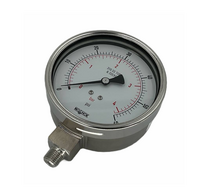
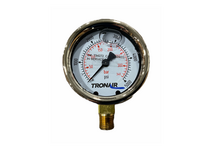
The Tronair HC-2289 is a replacement oxygen-cleaned pressure gauge for use on select Tronair GSE.
To confirm that this component works with your specific unit, please contact our aviation specialists for assistance.
| General Information | |
|---|---|
| Part # | HC-2289 |
| Manufacturer | Tronair |
| Shipping Information | |
|---|---|
| Product Weight | 0.2 lbs. |
| Product Dimensions | 4 x 4 x 4 in. |
| Schedule B | 9026200000 |
| ECCN | EAR99 |
Customers also viewed
Customers who bought this item also purchased

AIRCRAFT COMPATIBILITY
| Compatible Aircraft* |
|---|
PRODUCT REVIEWS
QUESTIONS & ANSWERS
The term “oxygen-cleaned” indicates that the HC-2289 has been manufactured, cleaned, and packaged to meet aviation oxygen service standards, thereby removing hydrocarbon contaminants and reducing fire risk when used in high-purity O₂ systems. This cleaning process is essential for safe operation with ground support oxygen systems and aligns with aerospace quality expectations. The oxygen-cleaned designation ensures proper compatibility in aircraft oxygen refilling and monitoring applications.
The HC-2289 is rated for a 0 to 5,000 PSI (≈344 bar) range when used as a replacement part in oxygen service systems. This range accommodates high-pressure aviation and ground-support oxygen systems, providing accurate pressure monitoring across demanding use cases. Always verify the gauge range aligns with your system’s operating specifications before installation.
This gauge features a 1/4" NPT dry connection thread, a standard thread commonly used in many aviation and ground-support oxygen service systems. The dry gauge design (without liquid fill) is suitable for high-pressure applications where liquid fill might freeze or degrade. Confirm that your system’s connection type and thread match the gauge before installation.
The HC-2289 is listed for use with various light- and midsize business aircraft (e.g., Citation III, IV, Latitude 680A, Mustang 510) and for ground-support applications where oxygen pressure monitoring is required. Its oxygen-cleaned certification makes it suitable for both hangar-based oxygen carts and service stations.
When installing the HC-2289, ensure your system is depressurized and isolated first. Use a thread sealant rated for oxygen service (such as fluoropolymer tape or oxygen-compatible paste) and torque to the manufacturer’s specification. Mount the gauge where it’s visible and protected from impact or vibration; allow at least one complete system cycle before relying on readings.
Inspect the gauge periodically for damage to the dial face, cracks in the crystal, or signs of corrosion at the connection thread. Check that the pointer returns to zero when relieved and that the transparent window is clean for accurate reading. If readings are unstable or the dial glass is damaged, replace the gauge immediately to ensure the safety of the oxygen system.
Standard gauges may contain traces of hydrocarbons or have seals incompatible with oxygen service, introducing contamination or fire risk when used in high-pressure oxygen systems. An oxygen-cleaned gauge, such as the HC-2289, eliminates these hazards by adhering to specific cleaning and packaging protocols, thereby enhancing safety in oxygen-handling operations.
Indicators that the HC-2289 may need replacement include an erratic or stuck pointer, a missing or damaged dial window, corrosion at the connection, inaccurate readings during a calibration check, or visible damage from impact. Any of these conditions can impair accuracy and compromise pressure monitoring in oxygen systems, so prompt replacement is advised.
Yes. Although the gauge is provided as a replacement unit, it can be verified against a calibrated master gauge or pressure standard during system maintenance to ensure accuracy. If the reading deviates beyond acceptable tolerance (often ±2% of full scale for high-pressure aviation gauges), maintenance protocol requires replacement rather than adjustment.
While physically possible, the HC-2289 is specifically rated and cleaned for oxygen service only, and its certification may not extend to other gases, such as nitrogen or argon, without re-cleaning. Using it for other gases may compromise its oxygen-clean status or violate system certification. Always confirm gas compatibility before re-purifying the system.


