






Create yours now for free.

Need a Quote?
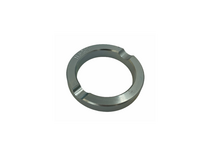
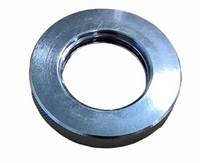
The Tronair HJ-532-02 is a small-cup aircraft jack pad designed for use on select Tronair 5-ton, single-stage tripod jacks.
| General Information | |
|---|---|
| Part # | HJ-532-02 |
| Manufacturer | Tronair |
| NSN | 2810016646711 |
| Shipping Information | |
|---|---|
| Product Weight | 1 lbs. |
| Product Dimensions | 2 x 1 x 1 in. |
| Schedule B | 8431100090 |
| ECCN | EAR99 |
Customers also viewed

Customers who bought this item also purchased
AIRCRAFT COMPATIBILITY
| Compatible Aircraft* |
|---|
PRODUCT REVIEWS
QUESTIONS & ANSWERS
This jack pad is designed to interface securely with the lift point on an aircraft when using compatible Tronair 5-ton, single-stage tripod jacks. The small-cup design helps stabilize the airframe during jacking procedures by maintaining proper alignment between the jack ram and the aircraft jack point. It promotes safe lifting and supports accurate maintenance of landing gear, brakes, tires, and suspension.
The HJ-532-02 jack pad is compatible with several Tronair 5-ton tripod jack models, including the 02-0520C0111, 02A0526C0110, 02-0536C0110, 02-0544C0110, 02-0566C0110, 02-7804C0110, 02-7838C0110, and 027855C0100. Additional applications may exist in the Tronair product line, depending on model generation and ram diameter. Contact our aviation specialists to verify compatibility with your exact jack model.
Although designed for Tronair tripod jacks, the pad may also fit certain non-Tronair jacks if they share similar ram dimensions and attachment methods. Because jack interfaces vary widely among manufacturers, technicians must confirm measurements before use. Using an incompatible pad can result in unstable lifting or damage to the aircraft.
The jack pad is the contact point transferring force from the jack to the aircraft’s jack point, so a proper fit is essential for stability. An incorrect or poorly sized pad increases the risk of slippage, shifting, or structural damage during lifting. Choosing the correct pad ensures safe load distribution and compliance with aircraft maintenance manual (AMM) procedures.
Aircraft manufacturers define specific jack point cup sizes, shapes, and load-bearing surfaces in their AMM. By comparing your aircraft’s jack point measurements with the pad’s internal cup dimensions, you can verify the correct fit. If the jack point does not seat fully within the pad, a different pad style or size may be required.
Yes. Jack pads should be inspected before each use for wear, deformation, cracking, or corrosion. Any damage to the cup surface or attachment interface reduces stability and should be addressed immediately. Keeping the pad clean and dry also extends its service life.
The HJ-532-02 can be used outdoors, provided the tripod jack is positioned on a solid, level surface, following standard jacking procedures. Aircraft should never be jacked on slopes, soft surfaces, or areas with debris. The jack pad itself does not compensate for uneven ground, so surface preparation remains critical for safe lifting.
No. The HJ-532-02 is intended specifically for Tronair 5-ton single-stage tripod jacks. While the pad is robust, it should only be used within the load ratings specified by the jack and the aircraft manufacturer. Exceeding these limits can compromise both equipment and airframe safety.
The small-cup design helps secure aircraft jack points that are narrow or rounded, providing a snug interface that reduces lateral movement. This shape improves vertical load alignment and helps prevent shifting as the aircraft is raised. It is particularly useful on aircraft with compact or sharply defined jack points.
Yes. The correct pad ensures that the jack point is supported evenly, preventing point loading or metal-to-metal contact, which could cause scratches or deformations to the structure. Using the recommended pad minimizes stress and protects the integrity of the aircraft skin and frame. Always follow the AMM for approved pad types.
Generally, no lubrication is required. However, technicians should ensure the ram end and pad connection are clean and free of corrosion before assembly. A clean interface ensures proper seating and reduces the chance of slipping or binding during operation.
Store the pad in a dry environment, preferably in a toolbox or jack accessory kit, to prevent damage or contamination. Keeping it off the floor helps avoid dents and foreign-object interference. Regular storage care maintains the surface integrity needed for safe aircraft lifting.
Often, yes, as long as each aircraft type uses jack points compatible with the pad’s dimensions. Many fleet operators standardize their jacking equipment to reduce tool variation. Still, AMM verification is essential, since jack point sizes can vary even among similar aircraft models.
A worn pad may fail to seat correctly, causing the aircraft to shift during lifting or preventing the jack from aligning correctly. This can lead to unsafe jacking conditions or structural damage. Replacing damaged pads promptly ensures safe, predictable lifting performance.
Most Tronair tripod jacks utilize a slip-fit or securely retained interface that does not require the use of torquing hardware for installation. However, technicians must ensure the pad is fully seated and locked according to the jack’s design. Improper seating can affect lift stability or increase wear on the connection point.


