




Choosing Aircraft Tripod Jacks for Safe Maintenance
Key Takeaways
- Aircraft tripod jacks are hydraulic lifting devices used to raise major aircraft sections, including the nose, wings, fuselage, or tail, during inspections, repairs, and scheduled maintenance.
- Tripod jacks are commonly used for landing gear inspections, gear retraction tests, engine maintenance, structural repairs, and other procedures that require stable aircraft lifting.
- Selecting the right aircraft tripod jack requires careful attention to weight capacity, lift range, aircraft compatibility, stability, portability, durability, and built-in safety features.
- Facility layout, hangar space, floor condition, ceiling height, and storage requirements should all factor into tripod jack selection.
- Properly maintained tripod jacks support safer maintenance operations, reduce downtime, and help protect both aircraft structures and maintenance personnel.
- PJi offers aircraft tripod jacks from trusted manufacturers, including Tronair, Malabar, and Columbus Jack, with aviation specialists available to help match the right equipment to your operation.
Precision and safety are essential in aircraft maintenance. Whether technicians are performing landing gear inspections, structural repairs, engine work, or scheduled service, the aircraft must be lifted with equipment designed for stability, strength, and controlled operation.
Aircraft tripod jacks play a critical role in these procedures. Unlike smaller jacks designed for targeted wheel or brake work, tripod jacks are built to lift and support larger sections of an aircraft from approved jacking points. In this article, we’ll explain what aircraft tripod jacks are, how they support maintenance operations, which features matter most, and how to choose the right tripod jack for your aircraft and facility.
Aircraft Tripod Jacks and Their Role in Maintenance
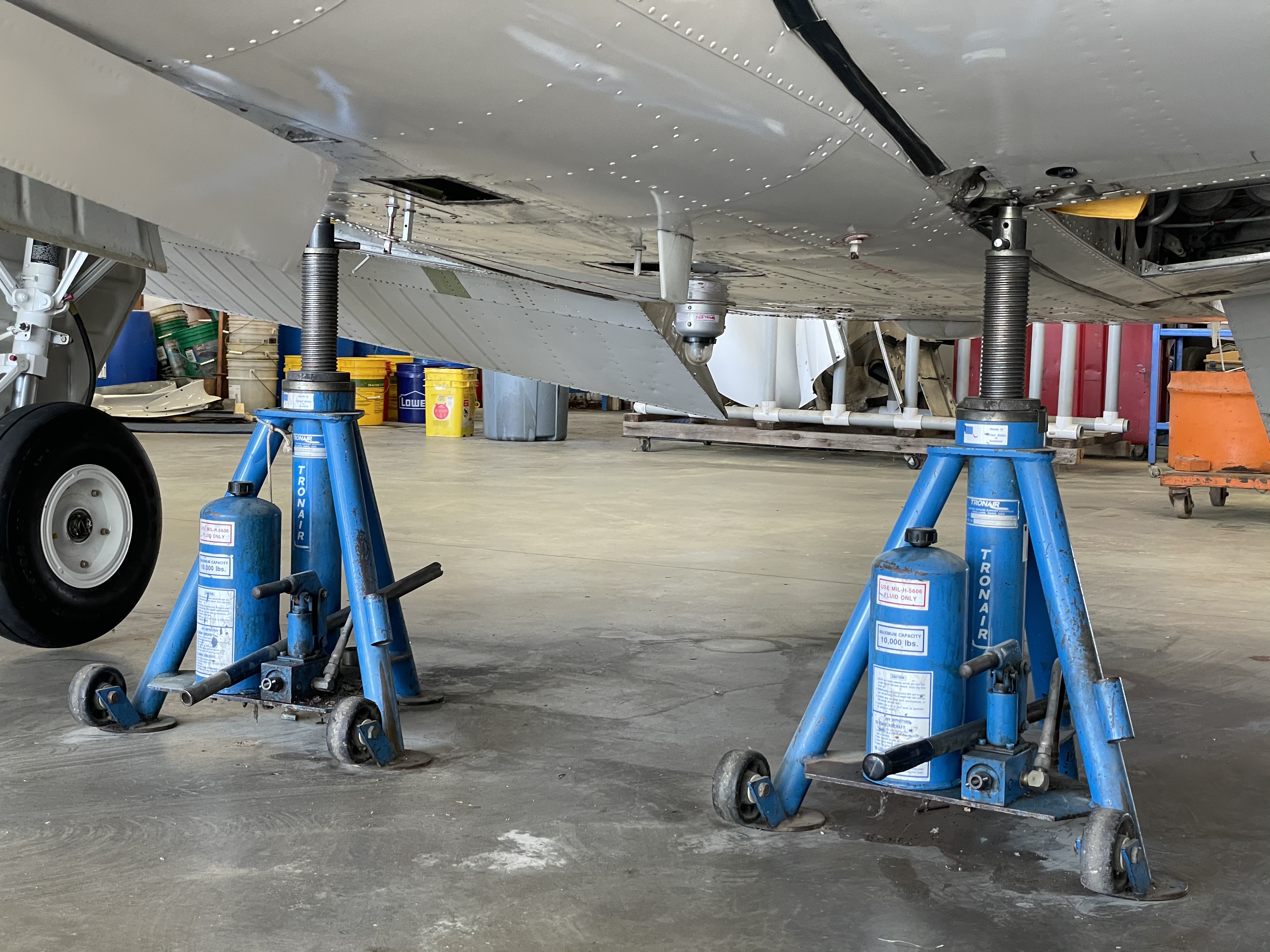
An aircraft tripod jack is a hydraulic lifting device with a three-legged base, a central cylinder, and a lifting ram, designed to raise major aircraft sections safely and vertically. The tripod design provides a wide, stable footprint, while the hydraulic system allows technicians to lift heavy loads with controlled force and minimal manual effort.
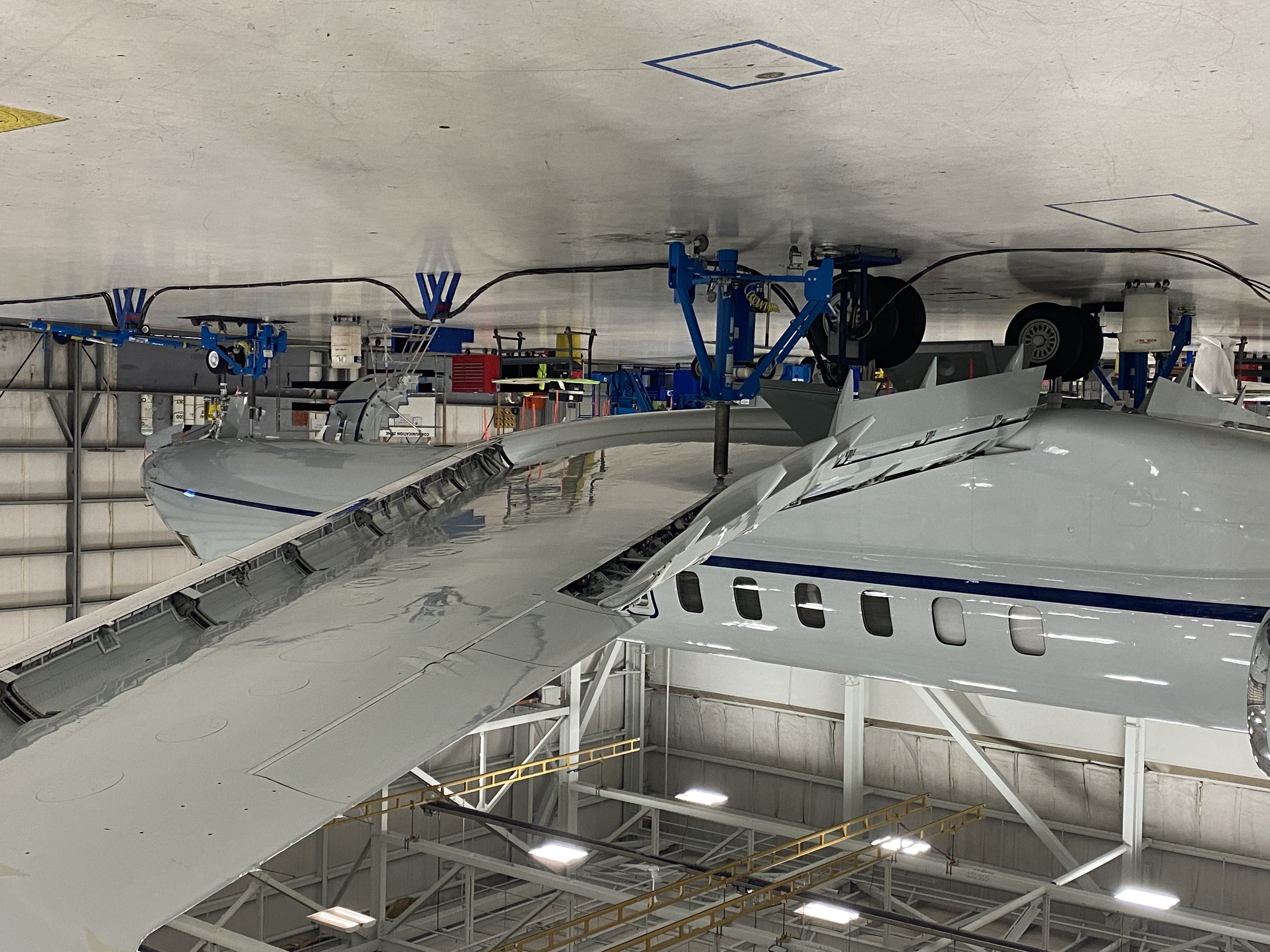
Tripod jacks are commonly positioned at approved jacking points beneath the nose, wings, fuselage, or tail, depending on the aircraft and maintenance procedure. They are frequently used for landing gear servicing, gear swing checks, engine inspections, structural repairs, and other maintenance tasks that require the aircraft to be elevated and stabilized.
Because tripod jacks may support significant aircraft loads, they must be used on level, stable surfaces and matched carefully to the aircraft’s weight, lift height, and jacking requirements. Proper jack selection helps prevent instability, structural stress, and unsafe lifting conditions.

Key Features to Consider When Choosing Aircraft Tripod Jacks
Selecting the right aircraft tripod jack is critical for safe, efficient maintenance operations. The correct jack should align with the aircraft’s jacking points, weight requirements, maintenance tasks, and facility conditions. A tripod jack that is too small, too short, or poorly matched to the aircraft can create safety risks, while a properly selected model helps technicians work with greater confidence and control.
Weight Capacity
Weight capacity is one of the most important factors when choosing a tripod jack. The jack’s rated capacity must meet or exceed the load it will support at the aircraft’s approved jacking point. Light aircraft may require lower-capacity tripod jacks, while business jets, regional aircraft, and large commercial aircraft require higher-capacity models designed for heavier maintenance operations.
Lift Range
Lift range determines whether the tripod jack can reach the aircraft’s jacking point and provide enough height for the required maintenance procedure. Closed height is especially important for positioning the jack beneath the aircraft, while extended height determines the amount of clearance technicians can achieve during lifting. Always compare the jack’s lift range with the aircraft maintenance manual and the specific task being performed.
Stability
A wide, well-engineered tripod base helps maintain stability during aircraft lifting operations. Tripod jacks should be used on flat, level surfaces to reduce side loading and prevent unnecessary stress on the hydraulic cylinder. Stability is especially important when multiple jacks are used together to raise the aircraft evenly.
Portability
Portability matters for facilities that move jacks between hangars, bays, or ramp areas. Some aircraft tripod jacks include casters, tow handles, or lighter-weight construction to improve maneuverability. Larger high-capacity tripod jacks may be less portable, but they provide the strength and durability required for heavy aircraft maintenance.
Durability
Tripod jacks should be built from high-quality materials that can withstand frequent use in demanding aviation environments. Steel models are often preferred for high-capacity applications, while corrosion-resistant finishes help protect the jack from wear, fluid exposure, and environmental damage. Durable construction supports long-term reliability and helps reduce maintenance-related downtime.
Safety Features
Safety features are non-negotiable when selecting aircraft tripod jacks. Look for overload protection, safety valves, mechanical lock nuts, locking pins, and stable base construction. These features help protect the aircraft and maintenance personnel if hydraulic pressure changes, unexpected movement occurs, or the jack experiences excessive load.
Selecting the Right Tripod Jack for Your Operation
Choosing the right tripod jack requires more than matching a capacity number. Maintenance teams should evaluate the aircraft being serviced, the type of work performed, and the conditions inside the maintenance facility. The goal is to select a tripod jack that supports safe lifting, efficient operation, and long-term equipment reliability.
Assess Aircraft Specifications
Start by reviewing the aircraft’s weight, dimensions, jacking points, and manufacturer-approved lifting procedures. The aircraft maintenance manual will typically identify the required jack type, capacity, lift range, and jacking configuration. Matching the tripod jack to these requirements helps protect the aircraft structure and maintain safe lifting conditions.
Evaluate Maintenance Tasks
Consider the procedures your team performs most often. Tripod jacks are commonly used for gear retraction tests, landing gear inspections, structural repairs, engine access, and major scheduled maintenance. If your operation frequently performs full-aircraft lifts or heavy maintenance events, investing in durable, properly sized tripod jacks is essential.
Consider Facility Constraints
Your hangar layout can affect tripod jack selection. Ceiling height, floor space, storage areas, floor levelness, and equipment mobility should all be considered before purchasing. For larger facilities, tripod jacks with casters or transport features may improve workflow, while smaller shops may prioritize compact storage and manageable positioning.
Consult Manufacturer's Guidelines
Always follow the aircraft manufacturer’s guidance when selecting and using tripod jacks. OEM documentation helps confirm the correct jack capacity, jacking points, lift height, and supporting equipment required for each aircraft. Following these guidelines reduces the risk of improper lifting and helps maintain compliance with approved maintenance procedures.
Prioritize Safety and Compliance
Aircraft tripod jacks should meet applicable aviation maintenance standards and include the safety features required for reliable operation. Regular inspection, preventative maintenance, and load testing help ensure each tripod jack remains safe and compliant over time. Choosing high-quality equipment from trusted aviation manufacturers also supports long-term performance and reliability.

The Bottom Line
Aircraft tripod jacks are essential tools for safe, stable, and efficient aircraft maintenance. By choosing the right tripod jack for your aircraft, maintenance tasks, and facility requirements, technicians can perform lifting procedures with greater confidence while protecting both personnel and aircraft structures.
Pilot John International® (PJi®) offers a comprehensive selection of premium-quality aircraft tripod jacks from trusted manufacturers, including Tronair, Malabar, and Columbus Jack. Whether you need support selecting the right tripod jack capacity, lift range, or configuration, our aviation specialists are ready to help.
Contact us today by phone, email, or live chat for expert guidance and dependable aircraft tripod jack solutions that help your operation Stay Flight-Ready®.
Frequently Asked Questions
What are aircraft tripod jacks used for?
Aircraft tripod jacks are used to lift major aircraft sections during maintenance procedures such as landing gear inspections, gear retraction tests, engine access, and structural repairs. They are designed to provide stable vertical lifting from approved aircraft jacking points.
How does a hydraulic tripod jack work?
A hydraulic tripod jack uses fluid pressure to raise a central ram that lifts the aircraft from an approved jacking point. The three-legged base provides stability, while safety locks and valves help control the load during lifting and maintenance.
What is the difference between an aircraft tripod jack and an axle jack?
A tripod jack is used to lift larger aircraft sections or the entire aircraft from designated jacking points. An axle jack is used for targeted landing gear work, such as tire and brake servicing, by lifting at the wheel axle or strut.
How do I choose the right aircraft tripod jack?
Start by checking your Aircraft Maintenance Manual for required jack capacity, lift range, and jacking point specifications. Then consider your maintenance tasks, hangar layout, portability needs, and required safety features.
What safety features should a tripod jack include?
A quality tripod jack should include overload protection, safety valves, mechanical lock nuts, locking pins, and a stable base design. These features help reduce risk during lifting and protect both technicians and aircraft.
How often should tripod jacks be inspected?
Tripod jacks should be inspected before each use for leaks, corrosion, damage, and proper safety lock operation. More detailed inspections, preventative maintenance, and load testing should be performed in accordance with manufacturer recommendations and facility procedures.
Can one tripod jack be used on multiple aircraft?
Some tripod jacks may be suitable for multiple aircraft, but only if the capacity, lift range, and jacking interface match each aircraft’s requirements. Always verify compatibility using the Aircraft Maintenance Manual and the jack manufacturer's specifications.
Why is lift range important when selecting tripod jacks?
The lift range determines whether the jack can reach the aircraft’s approved jacking point and provide sufficient clearance for maintenance. Both closed height and extended height should be checked before selecting a tripod jack.