




How to Use the KUNZ Wheel Assembly Stand
Key Takeaways
- The KUNZ Wheel Assembly Stand is a stationary, one-person hydraulic system for assembling and disassembling aircraft wheels – handling wheel half alignment, clamping, tire mounting, and bolt torquing in accordance with the applicable CMM.
- Unlike the handheld RimPull, which typically requires two technicians, the WAS uses a foot-pump-driven clamping cylinder and precision adapter rings, reducing manpower requirements and operator fatigue while improving repeatability.
- Custom wheel adapter rings – machined to 0.01 mm precision – make the WAS adaptable to a wide range of commercial, business, and military aircraft wheel types. Each ring is matched to a specific wheel part number.
- The Lock-Ring Adapter extends the WAS's capability to wheels that use locking rings instead of torqued bolts – common on small business jets, turboprops, and some military aircraft – using polyethylene press tools that apply force without damaging the wheel structure.
- PJi carries the full KUNZ wheel and brake shop equipment lineup, including the Wheel Assembly Stand and Lock-Ring Adapter, with specialists available to help configure the right setup for your maintenance operation.
Proper wheel assembly and disassembly are critical to maintaining the performance, safety, and serviceability of aircraft landing gear systems. The process requires precision tools capable of handling the complexity and physical demands of modern aircraft wheels, especially in high-throughput MRO environments. That’s where the KUNZ Wheel Assembly Stand excels.
A stationary alternative to handheld tools like the RimPull, the Wheel Assembly Stand enables a single technician to safely and efficiently complete wheel maintenance tasks without assistance. Its fully hydraulic clamping system, powered by a foot pump, and custom adapter rings make it one of the most reliable and operator-friendly systems available today.
In this article, we’ll explain the key functions of the KUNZ Wheel Assembly Stand, how it differs from the RimPull, and how to operate this unit safely and effectively.
What Is the KUNZ Wheel Assembly Stand Used For?
The KUNZ Wheel Assembly Stand (WAS) is designed to facilitate the safe and efficient assembly and disassembly of aircraft wheels. This includes aligning and clamping the inboard and outboard wheel halves, mounting or removing tires, and torquing or loosening bolts and nuts in accordance with the applicable Component Maintenance Manual (CMM).
Unlike manual clamping tools, the WAS supports these tasks with a foot-pump-powered hydraulic system that securely holds the wheel in place. The unit’s custom wheel adapter rings ensure precise alignment and stability throughout the process, making it easier to meet torque specifications and avoid damage during maintenance.
How Does the Wheel Assembly Stand Differ from the KUNZ RimPull?
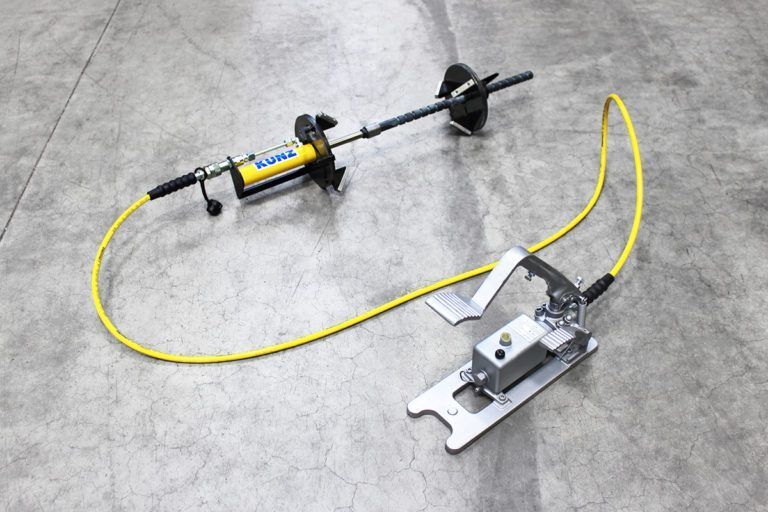
Both the KUNZ Wheel Assembly Stand and the RimPull are engineered to clamp aircraft wheels during maintenance, but their designs, applications, and ease of use vary significantly.
The RimPull is a handheld hydraulic tool that pulls wheel and tire assemblies together via a retractable extension shaft and two clamping discs. While it's portable and effective, this unit typically requires two technicians to operate – one on either side of the wheel – and manual adjustments to align the discs.
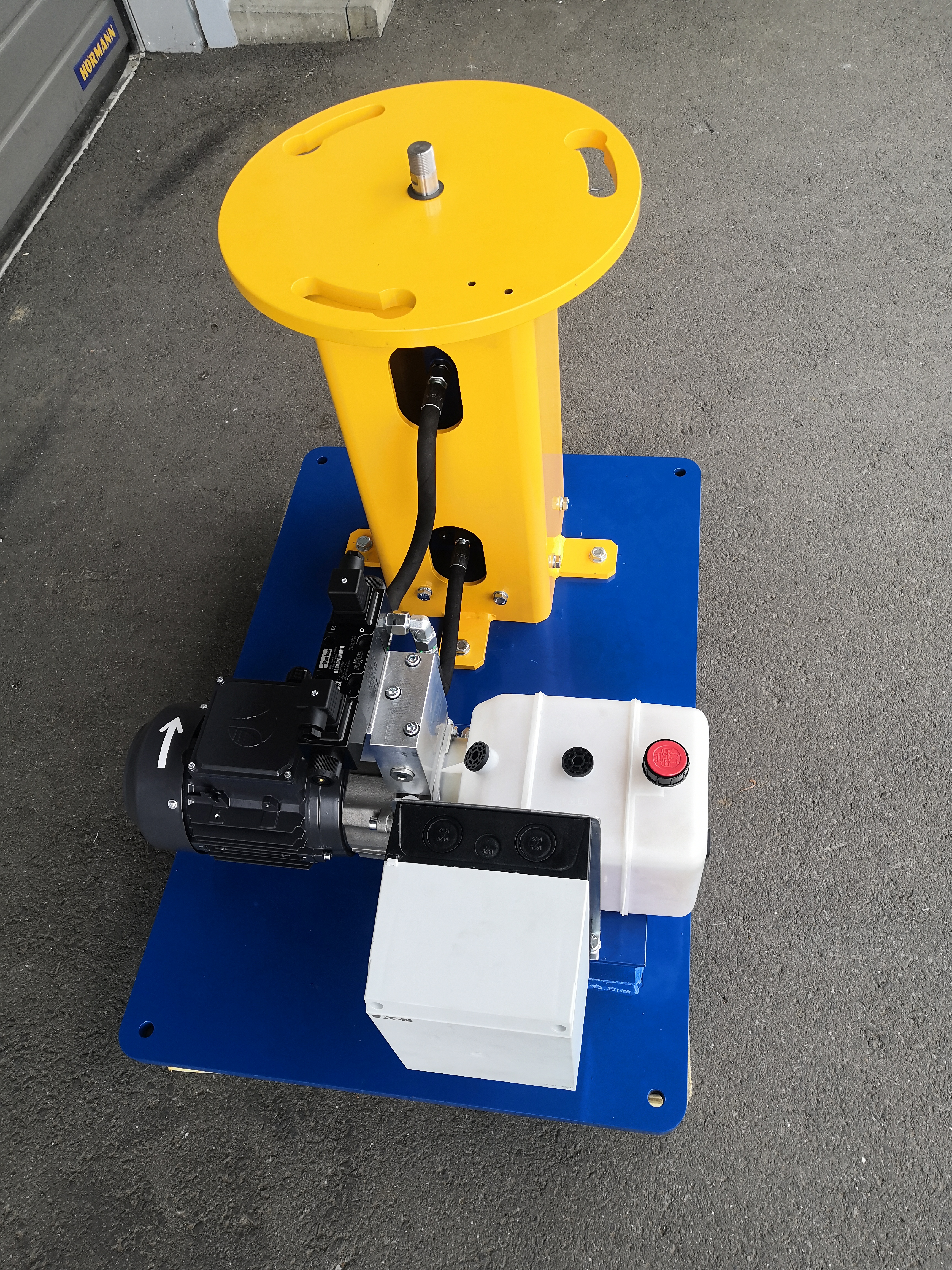
In contrast, the Wheel Assembly Stand is a stationary, one-person system. It uses a foot pump-driven clamping cylinder and machined adapter rings that match specific wheel part numbers. The WAS not only reduces operator fatigue and manpower requirements but also increases safety and repeatability in wheel servicing.
Is the KUNZ Wheel Assembly Stand Suitable for Different Aircraft Wheel Types?
The KUNZ Wheel Assembly Stand is highly adaptable and suitable for a wide variety of commercial, business, and military aircraft wheels, including models with torqued wheel halves or locking ring assemblies.
This adaptability is made possible by custom-made wheel adapter rings, each machined to a precision of 0.01 mm. These rings fit securely into the base of the stand and allow maintenance personnel to safely position and clamp wheels of different sizes and specifications.
When used in conjunction with the Lock-Ring Adapter, the Wheel Assembly Stand can accommodate flange-mounted wheels often found on aircraft such as the Gulfstream G450, G550, and G650 and the Bombardier Challenger 300, Learjet 40, and Learjet 45.
What Role Does the Lock-Ring Adapter Play in the Wheel Assembly Process?
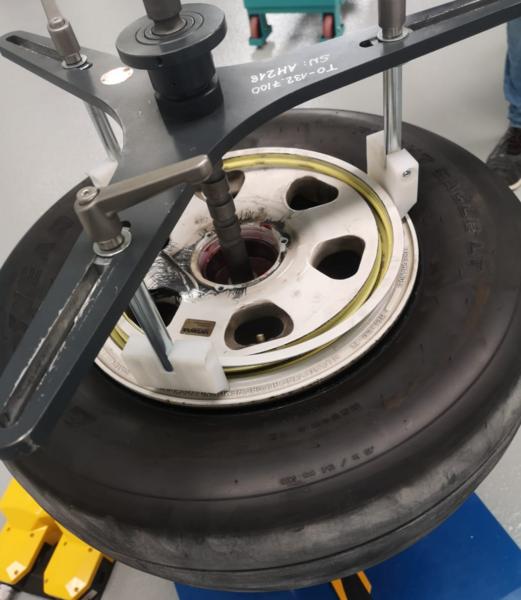
The KUNZ Lock-Ring Adapter is essential when working with aircraft wheels that use locking rings instead of torqued bolts – a configuration commonly found on small business jets, turboprops, and some military aircraft.
This specialized tool attaches to the Wheel Assembly Stand and uses polyethylene press tools to apply force to the wheel half's outer rim. The pressure safely ejects or seats the locking ring without damaging the wheel structure. The press tools are adjustable to accommodate different wheel diameters, and their rounded, non-marring surfaces help preserve the wheel's integrity during disassembly or reassembly.
How Do I Operate the KUNZ Wheel Assembly Stand?
Follow these steps to assemble an aircraft wheel using the Wheel Assembly Stand:
- Attach the wheel adapter ring to the base of the Wheel Assembly Stand. Place the single bolts into the adapter ring sockets – each ring is matched to a specific wheel part number.
- Extend the center cylinder of the WAS to raise the ejection plate into position.
- Place the inboard wheel half onto the ejection plate. Rotate the wheel to align its bolt holes with the bolts in the adapter ring, then slowly lower the wheel half until it rests securely on the ring.
- Manually position the tire on top of the inboard wheel half.
- Add the outboard wheel half to complete the assembly stack.
- Attach the clamping plate to the clamping rod. Activate the hydraulic system to clamp the wheel halves together according to the CMM torque specifications.
- Install washers and nuts onto the bolts and complete the torqueing process.
- Detach the clamping plate from the clamping rod after the wheel halves are secured.
- Raise the cylinder to lift the fully assembled wheel off the adapter ring. It will now rest on the ejection plate.
- Remove the assembled wheel from the stand for inspection, balancing, or installation.
NOTE – Tire placement must be done manually using a suitable lifting device. Wheel adapter rings are specific to each wheel type and must be selected accordingly.
See the KUNZ Wheel Assembly Stand in action!
The Bottom Line
Safe and precise wheel assembly is a foundational task in any aircraft maintenance program. Using the KUNZ Wheel Assembly Stand streamlines this process, reduces the risk of error, improves technician safety, and ensures consistent results – whether servicing business jets or commercial aircraft.
Pilot John International® (PJi®) is proud to offer a full range of KUNZ aircraft wheel and brake shop equipment, including the Wheel Assembly Stand and the Lock-Ring Adapter. Our aviation specialists are here to help you find the right tools and equipment for your aircraft maintenance operations. Contact us by phone, email, or chat today to learn more about outfitting your wheel and brake shop with trusted, high-quality solutions from PJi.