






KUNZ 150.0000 Aircraft Wheel Assembly Stand (WAS)


Create yours now for free.

Need a Quote?
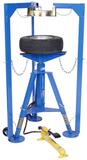
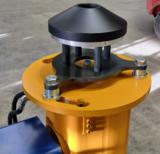
The KUNZ 150.0000 Aircraft Wheel Assembly Stand (WAS) is a stationary tool designed to securely clamp aircraft wheel and tire assemblies for installing mounting bolts and nuts. Built for reliability and ease of use, it provides a stable alternative to the KUNZ RimPull, ensuring safe, precise, and efficient wheel assembly operations in aviation maintenance environments.
| General Information | |
|---|---|
| Part # | 150.0000 |
| Manufacturer | KUNZ |
Customers also viewed
AIRCRAFT COMPATIBILITY
| Compatible Aircraft* |
|---|
PRODUCT REVIEWS
This item does not have any reviews yet.
QUESTIONS & ANSWERS
The Wheel Assembly Stand uses a fully hydraulic clamping mechanism that is powered by a foot pump. This hands-free design allows technicians to safely and evenly clamp the wheel while keeping both hands free to install or remove fasteners. The hydraulic operation reduces operator fatigue and ensures consistent force during wheel assembly and disassembly.
Yes, the unit is specifically designed to allow one person to perform wheel assembly and disassembly tasks. Its ergonomic design, combined with hydraulic clamping, makes it efficient and easy to use without requiring a second operator. This improves workflow efficiency and reduces labor costs in busy wheel and brake shops.
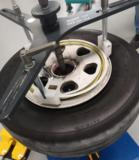
The stand is equipped with specially designed wheel adapter rings that secure the wheel in place during torqueing or loosening procedures. These adapters ensure that the wheel remains stable and properly aligned, reducing the risk of slippage or uneven clamping. Their robust construction enhances both safety and precision during servicing.
The Wheel Assembly Stand measures approximately 35.4” L x 23.6” W x 48.4” H (90 x 60 x 123 cm). The unit weighs around 187 lbs (85 kg), making it a stable yet manageable piece of shop equipment. These dimensions allow the stand to fit comfortably in standard wheel and brake shops without taking up excessive floor space.
The KUNZ 150.0000 requires a 0.75 kW, 3-phase electrical power supply at 230V to 400V and 50 Hz. Alternative voltage and frequency configurations can be provided upon request to meet regional requirements. This flexibility ensures the unit can be adapted to different shop environments worldwide.
By hydraulically clamping the wheel and securing it with adapter rings, the Wheel Assembly Stand eliminates many of the risks associated with manual handling and makeshift solutions. The design prevents the wheel from shifting during torqueing or loosening, protecting technicians from sudden movements. This reduces the likelihood of accidents and ensures a safer work environment.
Yes, like other KUNZ aircraft maintenance equipment, the WAS is CE marked. This certification confirms compliance with European safety, health, and environmental protection standards, so operators can be confident that the stand meets rigorous industry requirements.
The KUNZ Wheel Assembly Stand is a stationary, shop-based solution, whereas the RimPull is a portable, handheld tool. While the RimPull is useful for flexibility and smaller operations, the WAS offers more stability, consistency, and ease of use in high-volume maintenance environments. Many operators choose to use both tools, depending on the size of their operation and the specific maintenance task.
The WAS is compatible with a wide range of commercial and military aircraft wheels. Its adapter rings and hydraulic clamping system can easily handle different hub diameters and configurations, making it a versatile tool for operators servicing mixed fleets.
The Wheel Assembly Stand helps lower labor costs by reducing the need for additional operators and speeding up the assembly/disassembly process. Its stable design also minimizes errors, rework, and potential wheel damage, which saves money over time. The equipment's durability ensures long service life, making it a cost-effective investment for MROs and airlines.
The WAS is built for long-term durability and requires minimal maintenance. Regular inspections should include checking the hydraulic system, adapter rings, and foot pump for proper function. Keeping the unit clean and stored in a dry environment will help ensure reliable performance over many years of use.


