What Is Non-Destructive Testing in Aircraft Maintenance?
Key Takeaways
- Non-destructive testing (NDT) enables aviation technicians to inspect aircraft components for cracks, corrosion, delamination, and other structural defects without damaging or disassembling the components.
- Under 14 CFR Part 43, all aircraft maintenance must be performed using FAA-accepted methods, with specific NDT procedures typically specified in the aircraft manufacturer's maintenance manual, Airworthiness Directives, or Supplemental Structural Inspection Documents.
- The six most widely used aircraft inspection methods are visual inspection, eddy current testing, ultrasonic testing, liquid penetrant testing, magnetic particle testing, and radiographic testing – each suited to different materials, component geometries, and defect types.
- Aviation technicians performing nondestructive inspection are certified at Levels I, II, and III based on training, practical examinations, and experience, with the appropriate qualification level tied to the method's sensitivity and the criticality of the component being inspected.
- NDT is applied throughout an aircraft's entire service life – from manufacturing quality control through routine maintenance checks and major overhauls – making it a continuous pillar of aviation airworthiness.
What Non-Destructive Testing Reveals About Aircraft Components
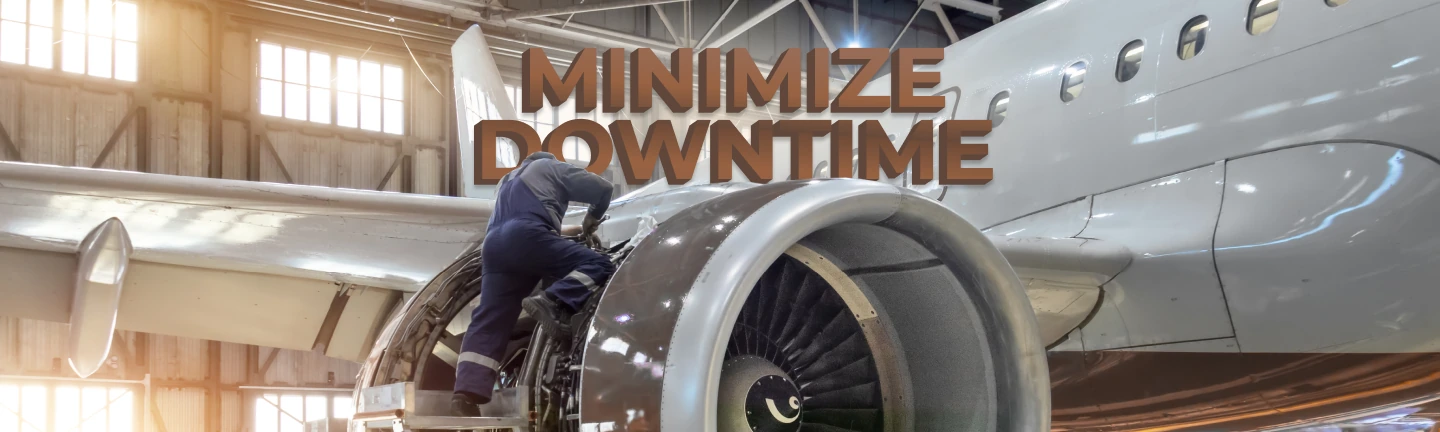
Non-destructive testing is a collection of inspection techniques used to examine aircraft components for internal and surface defects without impairing their structural integrity or function. The term "nondestructive" defines the core distinction: unlike methods that require a component to be cut, fractured, or consumed to evaluate its condition, NDT allows the same part to be returned to service – or rejected – based solely on the inspection findings.
In aviation, this matters for reasons that go far beyond cost. Aircraft components are engineered to precise tolerances and subjected to extreme mechanical loads, pressure cycles, and corrosive environments throughout their operational lives. Cracks, corrosion, fatigue damage, and manufacturing flaws that are invisible to the naked eye can compromise structural integrity long before they manifest as visible failures. NDT enables maintenance teams to identify these conditions early – before they reach a critical threshold that endangers aircraft and crew.
The FAA's Advisory Circular 43.13-1B – which establishes acceptable methods, techniques, and practices for aircraft inspection and repair – formally refers to this discipline as Nondestructive Inspection (NDI). The methods covered by that guidance – and the procedures governing their application – are specified in aircraft manufacturer documentation, Airworthiness Directives (ADs), Supplemental Structural Inspection Documents (SSIDs), and manufacturer service bulletins. Where no specific method is prescribed, alternate procedures developed under FAA-certificated repair station authority may be used.
Six Core Inspection Methods Used in Aviation
No single method works for every application. Aviation maintenance programs draw on a range of flaw detection techniques, each suited to different materials, component geometries, and defect types.
Visual Inspection (VT) is the oldest and most frequently used form of aircraft structural inspection, accounting for approximately 80% of all NDI procedures in aviation. It ranges from a direct surface examination to enhanced inspection using borescopes and videoscopes – flexible optical instruments with built-in illumination that allow technicians to reach internal engine compartments, turbine sections, and structural cavities without disassembly. Visual inspection is inexpensive and produces immediate results, but is limited to surface-accessible discontinuities.
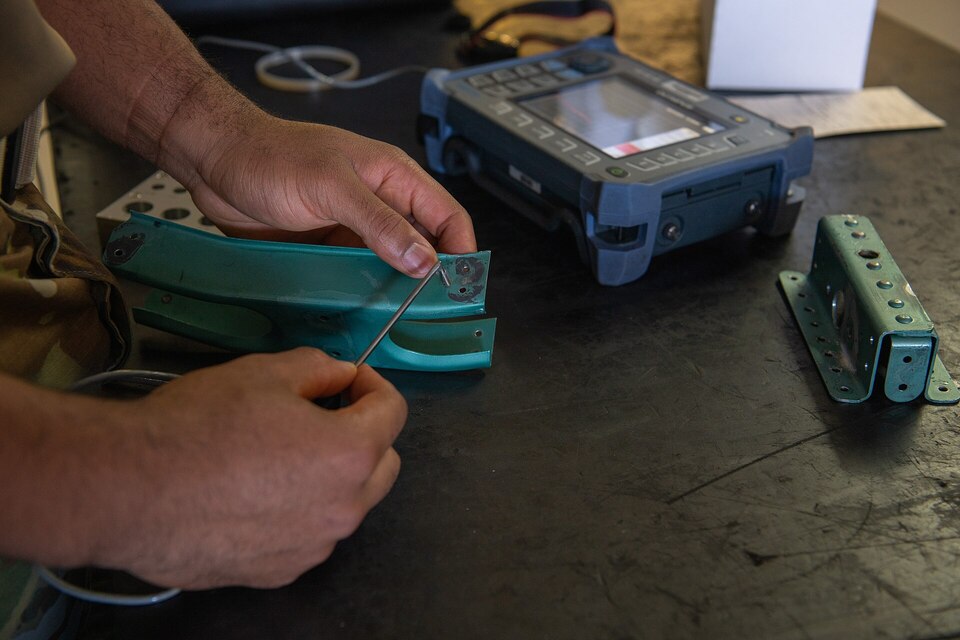
Eddy Current Testing (ET) applies an alternating magnetic field to electrically conductive components, detecting disruptions in the resulting eddy currents caused by cracks, corrosion, or changes in material thickness. Eddy current test units are portable, produce immediate results, and require no surface preparation or component removal – making them widely applied to fastener holes, fuselage skin panels, and engine components.
Ultrasonic Testing (UT) transmits high-frequency sound waves into a material and analyzes reflections from internal boundaries, cracks, delamination, or thickness changes. Ultrasonic inspection is particularly effective for composite structures and adhesive-bonded assemblies, where internal disbonds or delamination would not be detectable by surface methods. It covers a wide range of material thicknesses and is sensitive to very small discontinuities.
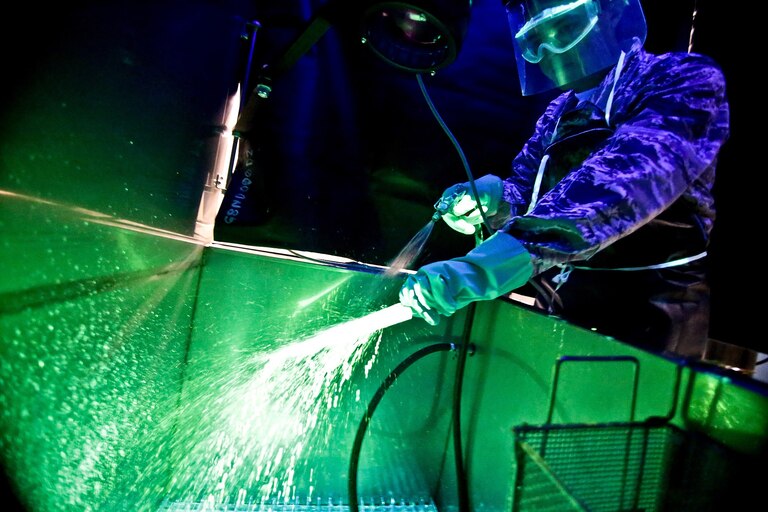
Liquid Penetrant Testing (PT) – also called fluorescent penetrant inspection (FPI) or dye penetrant inspection (DPI) – draws a liquid dye into surface-breaking cracks through capillary action. After a developer is applied, the dye bleeds back and becomes visible under UV or white light. This method is portable, inexpensive, and sensitive to very small surface cracks, but it is limited to surface-breaking defects in nonporous materials.
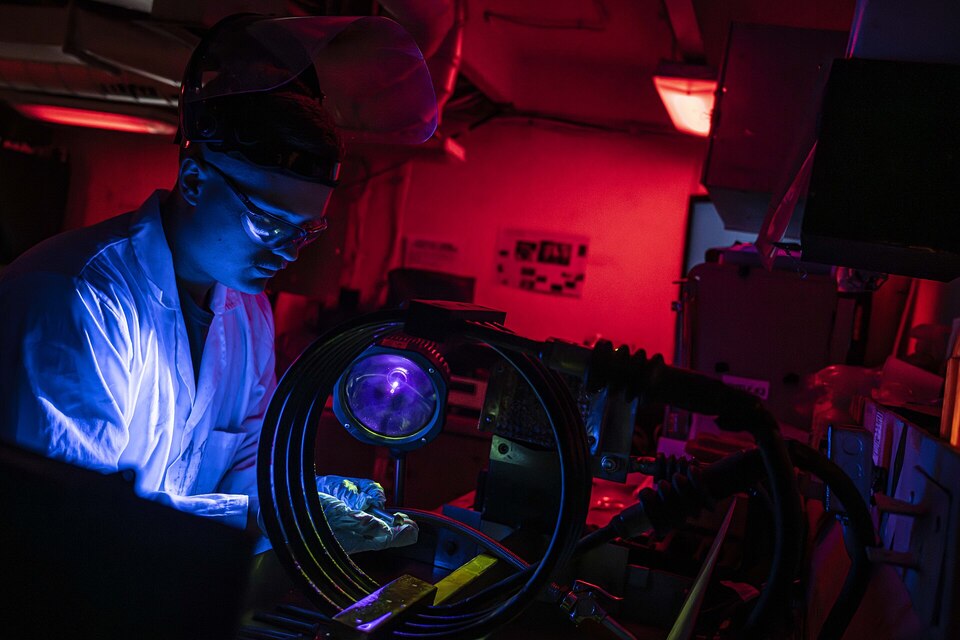
Magnetic Particle Testing (MT) detects surface and shallow subsurface discontinuities in ferromagnetic materials by inducing a magnetic field and applying iron particles to the surface. Where a defect interrupts the field, particles cluster visibly at the flaw. Magnetic particle inspection produces immediate, easy-to-read results and is commonly applied to landing gear components, structural welds, and engine parts.
Radiographic Testing (RT) uses X-rays or gamma rays to penetrate a component and expose a film or digital sensor on the opposite side. Internal flaws, casting defects, and hidden structural issues appear as density variations in the resulting image. Radiography produces a permanent test record and can inspect hidden areas inaccessible to other methods, but it requires radiation safety controls, specialized operator skill, and a higher cost than most other methods.
Flaw Types That NDT Is Designed to Find
Understanding what kinds of defects occur in aircraft components is essential context for appreciating why aviation inspection methods are so varied. FAA Advisory Circular 43.13-1B categorizes aircraft flaws across several groups.
Inherent flaws originate during metal solidification – including porosity, inclusions, and segregation – and may not become structurally significant until stress cycles expose them. Primary and secondary processing flaws arise during forging, casting, welding, heat treating, and grinding: seams, shrinkage cracks, grinding cracks, and incomplete weld fusion are among them. These flaws can be present from the day a part enters service.
In-service flaws develop during operational use and are the primary focus of ongoing maintenance inspection programs. Fatigue cracks form at stress concentration points – such as fastener holes, fillets, sharp radii, and surface seams – and propagate through structural members during repeated load cycles. Stress-corrosion cracks develop in parts subjected to sustained tension in corrosive environments, such as wing skin interiors and sump areas. Delamination and disbonds affect composite and adhesive-bonded structures by separating material layers, significantly reducing load-bearing capacity.
Each flaw type demands a different inspection approach. A fatigue crack in an aluminum fuselage skin requires eddy current or penetrant inspection. Delamination in a carbon fiber control surface requires ultrasonic testing. An internal casting defect in a turbine housing calls for radiography. Method selection depends on the material, the component's criticality, the expected defect type, and the required detection sensitivity.
Regulatory Requirements and Technician Qualification
NDT method selection in aircraft maintenance is not discretionary. Title 14 CFR Part 43 requires that all maintenance be performed using methods and practices acceptable to the FAA – which means following the applicable manufacturer's maintenance manual, overhaul manual, or instructions for continued airworthiness. NDT requirements for specific components are also formalized in Airworthiness Directives, which carry the force of regulation.
NDT technician certification follows a tiered structure defined by ATA Specification 105 – Guidelines for Training and Qualifying Personnel in Nondestructive Testing Methods. Level I Special certifies technicians for specific, limited tasks following classroom and on-the-job training. Level I/II requires an FAA Airframe and Powerplant Certificate, formal classroom training, and a written examination. Level III requires either a four-year engineering or science degree with one year of NDT experience, or four years of experience as a Level II, along with a comprehensive examination.
The FAA is explicit on one point: the effectiveness of any nondestructive evaluation method is entirely dependent on the skill, training, and experience of the personnel performing it. Misinterpretation of test results – or improper execution of the inspection procedure – can result in serviceable parts being rejected and defective parts being accepted. The human element in NDT is not incidental; it is the variable that determines whether the inspection produces actionable, reliable data.
The Bottom Line
Non-destructive testing is one of the most technically demanding and safety-critical disciplines in aviation maintenance. From detecting fatigue cracks in fuselage structure to verifying composite bond integrity, NDT methods provide the diagnostic foundation that keeps aircraft airworthy through thousands of flight cycles and decades of service.
Having the right inspection equipment matters as much as having qualified personnel to operate it. Pilot John International® (PJi®) offers a comprehensive selection of aircraft maintenance tools and inspection equipment – including aviation borescopes and videoscopes from USA Borescopes and guide tubes from Kell-Strom for visual inspection, and eddy current test units from Zetec for surface and subsurface flaw detection in metallic components.
For expert guidance on selecting the right equipment for your aircraft maintenance program, contact PJi's aviation specialists today by phone, email, or live chat. We're here to help you Stay Flight-Ready®!
Frequently Asked Questions
What is non-destructive testing in aviation?
Non-destructive testing (NDT) is a set of inspection techniques used to evaluate aircraft components for cracks, corrosion, delamination, and other structural defects without damaging or disassembling the parts being examined. It is applied across an aircraft's entire service life – from manufacturing quality control through routine maintenance and major overhauls – to verify structural integrity and confirm airworthiness. The FAA formally refers to this discipline as Nondestructive Inspection (NDI), and the methods used must conform to manufacturer maintenance documentation and applicable regulatory requirements under 14 CFR Part 43.
What are the most common NDT methods used in aircraft inspection?
The six most widely used aircraft NDT methods are visual inspection, eddy current testing, ultrasonic testing, liquid penetrant testing, magnetic particle testing, and radiographic testing. Visual inspection accounts for approximately 80% of all NDI procedures in aviation and is the starting point for most maintenance checks. Each method has distinct capabilities and limitations: eddy current excels at detecting surface and near-surface cracks in conductive metals, ultrasonic testing is essential for composite structures and bond integrity, and radiography is used when internal flaws or hidden structural areas must be evaluated.
How is an NDT method selected for a specific aircraft component?
The appropriate method for a given component is generally specified in the aircraft or engine manufacturer's maintenance manual, overhaul manual, Airworthiness Directive, or Supplemental Structural Inspection Document. When no specific method is prescribed, selection depends on the component's material and geometry, the expected defect type and location, the required detection sensitivity, component accessibility, and cost. Critical components that cannot tolerate small defects without risk of catastrophic failure require the most sensitive inspection methods available.
What certifications are required for aviation NDT technicians?
Aviation NDT technicians are certified at Levels I, II, and III based on training, experience, and examination requirements defined by ATA Specification 105 and, where applicable, military standard MIL-STD-410. Level I/II technicians must hold an FAA Airframe and Powerplant Certificate, complete formal classroom training in the applicable method, and pass a written examination. Level III certification requires either a four-year engineering or science degree with one year of relevant NDT experience, or four years of Level II experience, along with successful completion of a comprehensive examination.
What types of defects can non-destructive inspection detect?
Nondestructive inspection can detect surface and subsurface cracks, corrosion, fatigue damage, manufacturing flaws such as porosity and inclusions, weld discontinuities, and delamination or disbonding in composite and adhesive-bonded structures. The specific defects detectable depend on the method: magnetic particle inspection finds surface and near-surface cracks in ferromagnetic materials, while ultrasonic testing can locate internal voids and composite delamination that surface methods cannot reach. Selecting the correct method for the anticipated defect type is essential to obtaining reliable, actionable results.
Is NDT required by the FAA for aircraft maintenance?
Yes – Title 14 CFR Part 43 requires that all aircraft maintenance be performed using methods and practices acceptable to the FAA, which includes following manufacturer-specified NDT procedures. Many Airworthiness Directives also mandate specific NDT inspections at defined intervals to detect known failure modes in particular aircraft or engine models. Failure to perform required inspections or using non-approved methods can result in aircraft grounding, civil penalties, and – most critically – undetected defects that compromise flight safety.
Can NDT be used on composite aircraft structures?
Yes, but composite materials require different inspection methods than metallic structures. Ultrasonic testing is the primary method for detecting delamination – the separation of composite material layers within a monolithic structure – as well as disbonds and voids in adhesive-bonded composite assemblies. Visual inspection can identify surface damage but cannot detect internal disbonds or delamination, making ultrasonic methods essential for validating composite structural integrity on modern aircraft. Thermography and shearography are also used in specialized composite inspection applications.