Why Electric Towbarless Aircraft Tugs Are the Future of Ground Handling
Key Takeaways
- Towbarless tugs eliminate the towbar entirely by lifting and cradling the nose wheel in a hydraulically controlled yoke – creating a single pivot point that delivers a dramatically tighter turning radius, faster coupling, and finer low-speed control compared to conventional towbar setups.
- Electric drivetrains reduce moving parts, eliminate oil changes and fuel costs, produce zero tailpipe emissions, and operate quietly enough for enclosed hangars – adding up to meaningful long-term cost and sustainability advantages over combustion-powered alternatives.
- The reduced setup steps – no towbar to stage, align, or pin – lower injury risk for ground crews, shorten training time, and reduce nose-gear damage risk during hook-up, while many models support single-person or remote operation.
- Eagle's eJP electric towbarless series scales across aircraft weight classes: the eJP-3 handles up to 30,000 lbs for turboprops and light jets, the eJP-10 up to 100,000 lbs for midsize business jets and regional aircraft, and the eJP-12 up to 125,000 lbs for heavier corporate and regional platforms.
- PJi supplies the full Eagle eJP lineup with expert sizing guidance, financing solutions, and ongoing service support – making it a single source for transitioning from conventional towbar equipment to electric towbarless operations.
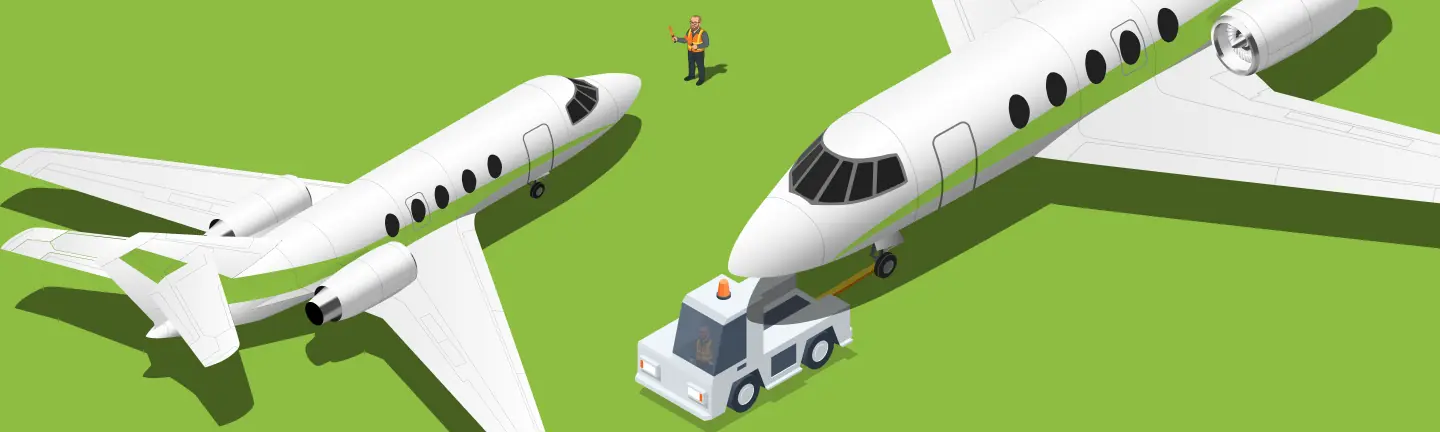
Aircraft tugs keep airports moving. They push aircraft back from gates, reposition airframes between hangars and stands, and help operators manage tight ramp schedules without having to light engines. Traditionally, conventional towbar tractors have handled these tasks with a dedicated towbar that links the tug to the nose gear.
Towbarless designs remove the towbar entirely, lifting and cradling the nose wheel for a direct, highly controllable connection. When that towbarless platform is electric, operators gain even more: quiet, zero-emission power, smooth control, and far less maintenance. In this article, we’ll explore why electric towbarless aircraft tugs are rapidly becoming the default choice for safe, efficient, and sustainable ground handling.
Why Do Aircraft Need to Be Towed?
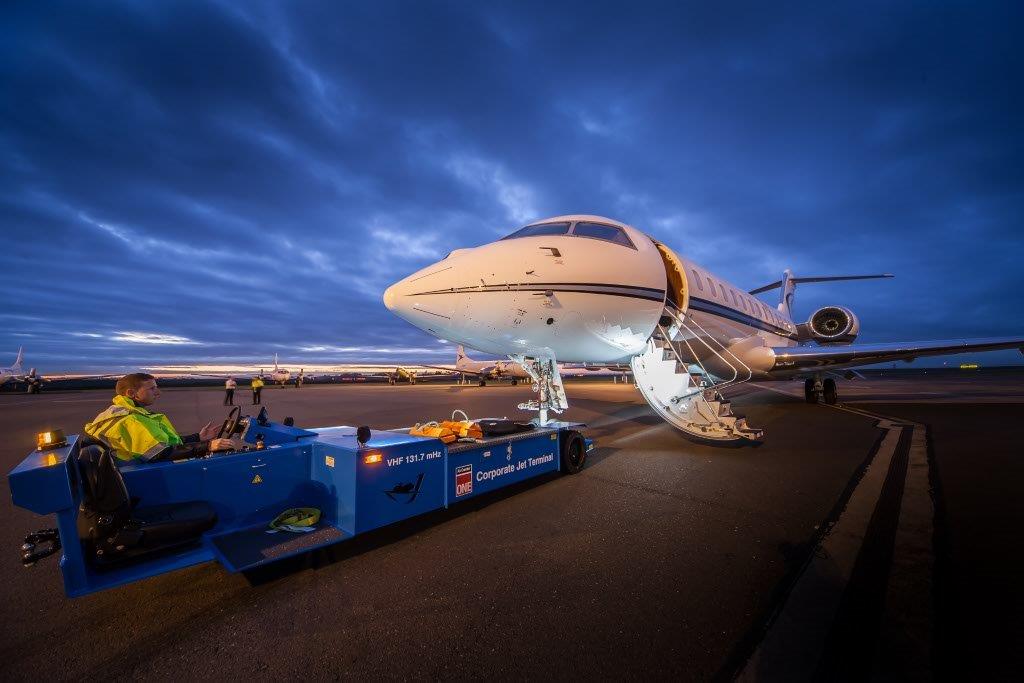
Modern airports are carefully choreographed environments, and towing is central to the routine. Pushbacks free an aircraft from the gate safely and on schedule, while tows between gates, hangars, and maintenance bays keep utilization high and stands clear. Towing also reduces fuel consumption by limiting low-efficiency taxi time on engines, saving money and cutting emissions. Just as importantly, towing allows precise control in tight ramp spaces, where wingtip and engine clearance must be measured in inches.
Ground support equipment (GSE) makes all of that possible. The right tug enables predictable, low-speed maneuvering under strict SOPs – with wing walkers, tail walkers, radios, and checklists ensuring the aircraft, crew, and equipment stay in sync. As airfields get busier, the efficiency gains from faster hook-ups, tighter turns, and reduced manpower compound into measurable on-time performance improvements.
How Do Towbarless Tugs Differ from Conventional Towbar Tugs?
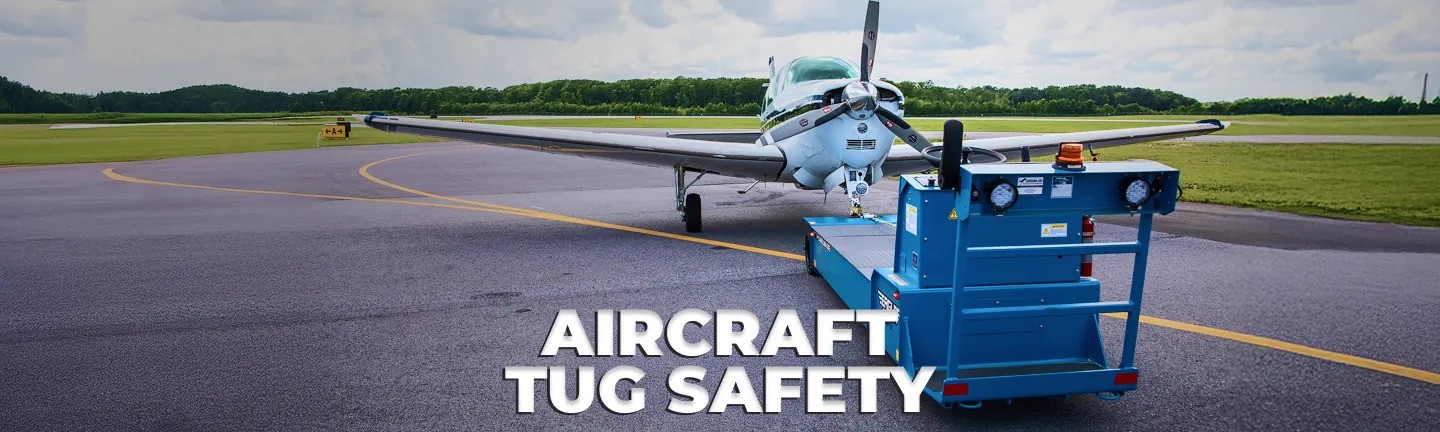
Conventional towbar tugs rely on a long, pivoting bar matched to the aircraft’s nose gear fitting. Crews align the tug, attach the towbar head, pin and lock it, then proceed – a process that takes time, adds a second pivot point, and requires an inventory of different towbars for mixed fleets. Each added connection introduces play that can cause “shunting” and puts more demand on wing and tail walkers to mitigate jack-knife risks in tight turns.
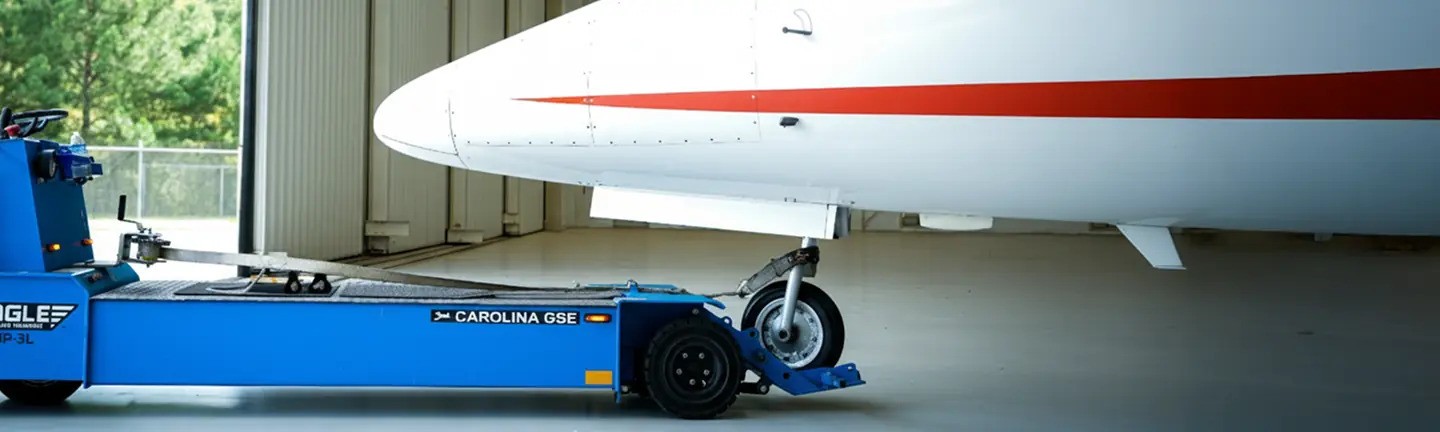
Towbarless tugs lift and cradle the nose wheels directly in a hydraulically controlled yoke. There’s no separate bar to stage or maintain, and coupling happens in seconds. With a single pivot point at the gear, operators gain a dramatically tighter turning radius and finer low-speed control, resulting in smoother pushbacks, simplified training, and less stress on the nose gear. Many towbarless units can even rotate an aircraft nearly in place, unlocking hangar density improvements that conventional rigs simply can’t match.
What Are the Advantages of Electric Towbarless Aircraft Tugs?
Electric towbarless platforms combine the handling advantages of towbarless design with the simplicity and sustainability of battery power. The result is a safer, faster, and more economical way to move aircraft across the ramp and inside the hangar.
Operator Visibility and Safety
With the nose gear secured in a cradle, oversteer risk is reduced, and the tug’s shorter overall length improves sightlines. Electric drive adds precise throttle response with no gear shifts or lag, helping operators maintain smooth, predictable motion. Fewer manual steps – no towbar to muscle, fewer pinch points – lower injury risk for ground crews while reducing the chance of nose-gear damage during hook-up.

Maneuverability and Control
A single pivot point around the nose gear yields a much tighter turning radius than towbar setups. Electric torque delivers strong, linear acceleration and confident braking, especially because a portion of the aircraft’s weight transfers onto the tug for added traction. In congested apron or hangar environments, this translates to surgical positioning and faster turns without jack-knifing.
Ease of Use
Electric towbarless tugs are intuitively simple to learn. Crews avoid the time-consuming towbar alignment, head changeovers, and pin checks, so training focuses on safe loading/unloading and precise driving. Many models support one-person operation and, in some cases, remote controls – ideal for small teams or after-hours repositioning.
Cost Savings
Electric drivetrains have far fewer moving parts than combustion engines – no oil changes, tune-ups, fuel filters, or exhaust systems – so maintenance downtime and parts spend drop. There’s no fuel to purchase, idling is eliminated, and regenerative features on some platforms can return energy during deceleration. Over the life of the tug, those savings compound, especially in busy FBOs, MROs, and airline operations.
Environmental Benefits
Zero tailpipe emissions and quiet operation help airports meet sustainability goals and reduce noise inside the hangar. Crews can communicate more easily without engine roar, and there are no CO or diesel fumes in enclosed spaces. For airports rolling out green ramp initiatives, electric towbarless tugs are a fast win on both emissions and occupational health.
Where Can I Purchase High-Quality Towbarless Tugs?
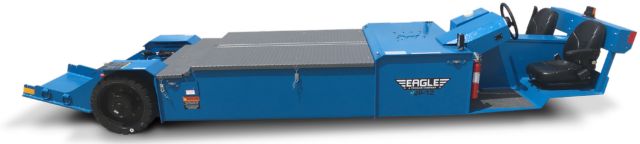
Eagle Tugs is a trusted U.S. manufacturer known for building robust, operator-friendly ground support equipment. Its electric towbarless eJP Series is purpose-built for safe, precise handling across a wide range of aircraft, with models that scale to different fleet sizes and weight classes.

Eagle eJP-3: For turboprops and light jets
The eJP-3 can tow up to 30,000 lbs, making it the ideal choice for operators handling smaller aircraft such as turboprops and light business jets. Its compact design and strong maneuverability make this tug perfect for tighter ramp environments.
Eagle eJP-10: For midsize business jets and regional aircraft
With a towing capacity of up to 100,000 lbs, the eJP-10 bridges the gap between light jets and larger platforms. It’s a versatile solution for operators managing a mix of midsize business jets and select regional aircraft, offering smooth electric torque and responsive control.
Eagle eJP-12: For heavier corporate and regional platforms
The eJP-12 handles up to 125,000 lbs, making it the top-tier option in the eJP Series. Built for heavier corporate jets and regional aircraft, it delivers maximum power without sacrificing precision, giving ground crews confidence during pushbacks and repositioning.
Each model delivers smooth electric torque for precise starts and stops, paired with a cradle-style nose-gear capture system that speeds hook-ups and enhances maneuverability.
For buyers, availability and support matter just as much as specs. Pilot John International® (PJi®) supplies Eagle’s eJP electric towbarless tugs, combining industry-leading equipment with expert guidance, financing solutions, and ongoing service support. Whether you’re replacing older towbar models or investing in a greener ramp standard, PJi makes it simple to choose the right tug for your aircraft mix and operational needs.
The Bottom Line
Electric towbarless aircraft tugs deliver a powerful combination of faster ground movements, safer handling, lower total cost of ownership, and cleaner operations. By eliminating the towbar and harnessing smooth, high-torque electric drive, they give operators tighter control in confined spaces, reduce damage risk, and simplify training – all while cutting noise and emissions. Best-practice guidance at airports continues to evolve alongside these technologies, with an emphasis on training, communications, lighting/marking, and clear operating procedures for tug operators and flight deck observers.
If you’re ready to modernize your ramp, PJi is your go-to source for Eagle Tugs’ eJP-series electric towbarless models. Our aviation specialists will help you size the right tug for your fleet, plan the transition from conventional equipment, and keep your operation supported with parts and technical guidance. Call, email, or start a live chat to get expert recommendations and a quote tailored to your aircraft mix and mission profile.