






ATEQ ADSE 743 – Pitot-Static Tester/Air Data Test Set


Create yours now for free.

Need a Quote?
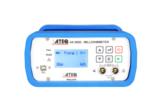
The ATEQ ADSE 743 is a high-performance pitot-static tester engineered for flightline testing across all aircraft types, including high-performance civil and military platforms. This advanced air data test set is designed to verify the accuracy and functionality of barometric and manometric pressure instruments such as altimeters, vertical speed indicators, airspeed indicators, and air data computers. Housed in a rugged, weatherproof transport case, the ADSE 743 features a wireless Windows-based touchscreen remote control unit (RCU) that gives operators full mobility and visibility during aircraft maintenance procedures.
This tester is available in three testing setups:
- Pitot Static Tool Option (same tester box dimensions)
- Low speed range (0 to 350 kts) instead of 0 to 800 kts range (same tester box dimensions)
- EPR / Cabin Pressure / Outflow Valve
Key Features
- Dual selectable outputs for independent or simultaneous Ps and Pt testing across two channels
- Remote control unit (RCU) with Wi-Fi connectivity and 8” touchscreen interface for cockpit-based operation
- Altitude simulation from -2,300 to 60,000 feet and airspeed generation up to 800 knots
- Built-in pressure and vacuum pumps for complete on-site test capability
- RVSM compliant with programmable leak testing and flight envelope protection
- High-resolution sensor suite delivers ±0.5 knot accuracy at 50 knots and ±0.0006 Mach at high altitude
- Supports multiple units of measurement, including hPa, psi, inHg, mmHg, ft, m, knots, km/h, and Mach
- Programmable, password-protected test schedules ensure repeatability and secure operations
- Fully weather-sealed enclosure meets MIL-STD-462D EMC standards, ideal for hangar and tarmac use
- Completely water-proof when lid is closed and sealed
- Delivered with hoses, cables, protective case, wireless RCU, connectors, and optional internal battery pack
With its flexible control interface, robust construction, and dual output channels, the ADSE 743 is the ideal air data testing solution for aviation maintenance professionals requiring portable, high-accuracy pitot-static validation across a wide range of aircraft types and operating conditions.
Training available by request. Reach out to one of our aviation specialists to schedule training.
| General Information | |
|---|---|
| Part # | ADSE743 |
| Manufacturer | ATEQ |
| Shipping Information | |
|---|---|
| HTS | 9026204000 |
| ECCN | EAR99 |
| Specifications | |
|---|---|
| Airspeed (1) | Range: 0 to 800 kts, Accuracy: ± 0.5 kt at 50 kts |
| Airspeed Mach | Range: 0 to 4.0 Mach, Accuracy: ± 0.0006 M at 0.8 M at 25,000 ft |
| Altitude | Range: -2,300 to 60,000 ft, Accuracy: ± 3 ft at 0 ft |
| Altitude rate | Range: 100 to 6,000 ft/min, Accuracy: ± 10 ft or ± 1 % |
| Calibration | Recommended period 12 months |
| Dimensions | 525 x 216 x 435mm (20.7 x 8.4 x 17.2 inch) |
| Ease of maintenance | Maintenance limited to calibration,regular external cleaning |
| Ease of use | Wi-Fi remote touch screen LCD colour, Integrated bag for cables and hoses |
| Housing | Completely weatherproof, meets EMC requirements MIL STD 462D |
| Pitot sensor (2) | Range: 0 to 1,455 DhPa, Accuracy: ± 0.30 DhPa |
| Power supply | 90/264 VAC from 50 to 400Hz |
| Static sensor (2) | Range: 72 to 1,100 hPa, Accuracy: ± 0.13 hPa |
| Temperature Operating | Operating: -5°C to 50°C (23°F to 122°F), Storage: -20°C to +60°C (–4°F to 140°F) (Extanded Range on-demand) |
| Weight | 18kg (40 lbs) |
Customers also viewed
AIRCRAFT COMPATIBILITY
| Compatible Aircraft* |
|---|
PRODUCT REVIEWS
This item does not have any reviews yet.
QUESTIONS & ANSWERS
The ADSE 743 is designed for high-performance civil and military aircraft, both fixed-wing and rotary-wing. Its wide measurement ranges and programmable flight envelopes make it versatile enough to cover barometric and manometric pressure systems across multiple fleets. This flexibility allows MROs and airlines to use a single tester for diverse operations.
Weighing 40 lbs (18 kg) and housed in a weatherproof mobile case, the ADSE 743 is robust enough for ramp environments while still manageable for technicians. The case includes an integrated bag for hoses and cables, keeping all accessories organized for transport. This design supports efficient deployment directly at the aircraft.
The ADSE 743 includes programmable flight envelopes that safeguard equipment under test by preventing overpressure or unsafe test conditions. Password-protected test schedules ensure that only approved procedures are executed. These features help prevent damage to sensitive flight instruments while ensuring compliance with maintenance protocols.
The unit includes a programmable leak test function that allows technicians to pressurize systems and monitor for changes in pressure over time. This function is essential for identifying leaks in pitot and static lines before they affect in-flight performance. Automated leak testing improves both efficiency and accuracy during inspections.
The tester supports altitude testing from -2,300 to 60,000 ft with ±3 ft accuracy at sea level. It can measure rates of climb between 100 and 6,000 ft/min, airspeeds up to 800 knots, and Mach numbers up to Mach 4.0 with high precision. These ranges ensure compliance with RVSM standards, making it suitable for modern aircraft requirements.
The ADSE 743 comes with a wireless color touchscreen PC running a Windows-based OS, allowing technicians to operate the unit from the cockpit. On-screen help functions and simultaneous display of critical flight values improve ease of use. This wireless control enables single-operator testing, reducing manpower requirements.
The tester operates in ambient temperatures from 23°F to 122°F (-5°C to 50°C) and can be stored from -4°F to 140°F (-20°C to 60°C). An extended operating range is available on request. Its weatherproof case and rugged design ensure durability in both hangar and outdoor environments.
The unit can be powered from 90V to 240V AC, 50 to 400 Hz, making it compatible with global electrical supplies. Optional power configurations, such as a 19V to 32V DC input or an internal battery pack, provide additional flexibility and ensure uninterrupted testing in varied environments.
Standard accessories include 10 m pitot and static hoses with connectors, Staubli/AN-4 nipples, a 5 m AC cable, and a special bag for tubes and cables. It also ships with a wireless tactile PC interface and a rugged plastic case. These included items ensure technicians have everything needed for immediate deployment.
The tester is fully RVSM compliant and meets EMC requirements (MIL-STD-462D). This ensures it adheres to stringent accuracy and electromagnetic compatibility standards required for modern aviation maintenance. Compliance helps MROs and operators meet both civil and defense regulatory requirements.
Routine maintenance is limited to annual calibration and external cleaning, keeping upkeep simple. Regular calibration ensures the continued accuracy of altitude, airspeed, and leak measurements. Low-maintenance requirements reduce downtime and keep operating costs predictable.
Even though the ADSE 743 is engineered for precision, its sensors and pumps may drift slightly over time. Annual calibration ensures that readings for altitude, airspeed, and Mach number remain accurate and traceable. Consistent calibration not only guarantees compliance with aviation standards but also ensures safe, reliable test results.


