






ATEQ 00430-4860 – BCA Battery Charger/Analyzer


Create yours now for free.

Need a Quote?
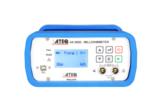
The ATEQ BCA 48V/60A Battery Charger/Analyzer is a powerful and versatile testing platform designed for aviation battery maintenance and diagnostics. Housed in a durable metal enclosure with an intuitive 7" color touchscreen, this unit is built to charge, discharge, and analyze a wide range of aviation batteries, including Ni-Cd, lead-acid, and lithium chemistries. This 48V version offers a full 60 amps of charging and discharging capacity, making it ideal for single-battery testing in high-demand environments.
This analyzer is available in two operating options:
- Multi Channel Management Software (MCMS) - communication cable T1-0106 sold separately
- Single Channel Setting Software (SCSS) - communication cable EG-0701 sold separately
Key Features
- Supports charging and discharging at up to 48 volts and 60 amps in both directions
- Allows immediate or delayed test starts and setup of multiple charge/discharge cycles or sequences
- Compatible with all major battery chemistries, including Ni-Cd, lead-acid, and lithium
- 24-cell voltage monitoring with optional temperature tracking using Type K thermocouples
- Integrated safety protections, including electrolyte level alarms and shutdown at preset voltage or time limits
- Automatic test result storage with user-defined search and data backup in the event of power loss
- Large 7" color touchscreen interface simplifies configuration and real-time test monitoring
- Multi-language support: English, French, Russian, and Chinese
- Connectivity via USB and RS-485 ports allows PC integration and multi-device network monitoring
- Enables predictive maintenance tracking and improves long-term battery life management
Whether you're testing batteries in the shop or maintaining GSE in the field, the ATEQ BCA 48V/60A Battery Charger Analyzer offers a cost-effective, accurate, and reliable solution to streamline aviation battery diagnostics and extend operational performance.
Training available by request. Reach out to one of our aviation specialists to schedule training.
BCA Accessories:
- EC-055X - Weatherproof VAC Plug - 16A or 32A - IEC309-2
- EZ-0191 BCA Deep-Discharge Testing Software Upgrade - Cable ordered separately
- ED-0073 - Thermocouple - Type K (6 m) with green plug - for the ATEQ BCA
- MD-005X - M8, M10, or M12 spacers - for battery cells connection - 25 pieces - for the ATEQ BCA
- EC-0551 - Alligator Clip Kit - for Battery Cell Connection (25 pieces) - for the ATEQ BCA
- T1-003X - Power Output Cable - 3.5m, 2m, or 5m - 2x16mm² + 2x0.5mm² - GRID GPE80 to Eyelet M8 - for the ATEQ BCA
- T1-013X - Power Output Cable Extension - 2m or 5m - 2x16mm² + 2x0.5mm² - GRID GPE80 to GRID GPE80 - for the ATEQ BCA
- T1-021X - Cell Measurement Cable - 24 cells - 3.5m or 10m - Souriau 26 pin to Banana plugs or DB25 - for the ATEQ BCA
- EC-0326 - Rebling 7007 - for the ATEQ BCA
- EC-0661 - Plug compatible Rebling 7007 - c/w central locking lever, two voltage measurement touch plots, ATEQ design and manufacturing
- EC-0507 - Deutsch Type 215 Connector - for the ATEQ BCA
- EC-0570 - Counter-Plug Rebling 7007 - Counter-plug used in case of charging only one battery with Cable T1-0211 - for the ATEQ BCA
- T1-0211 - Dual-Connector Battery Cable - 2 x 16 mm² - 2 x 0.5 mm² - 2m - GRID GPE80 to REBLING-REBLING (T1-0211) - for the ATEQ BCA
- EG-0400 - External Probes for Voltage Measurement - Black and Red - 4mm² - for the ATEQ BCA
- T1-0043X - BCA Cable - RS485 SubD 9 pins Male to female - 1.8m or 3m - for the ATEQ BCA
- T1-0106X - USB to RS485 sub-D9 Cable - 5m, 10m, or 15m - for the ATEQ BCA
- EG-0701 - USB Type A to Mini USB - 1.8 m by FineCable - for the ATEQ BCA
- EZ-0091 - Female Line Adapter RS485 DB9 - for the ATEQ BCA - for the ATEQ BCA
| General Information | |
|---|---|
| Part # | 00430-4860 |
| Manufacturer | ATEQ |
| Shipping Information | |
|---|---|
| Product Weight | 75 lbs. |
| Product Dimensions | 28 x 26 x 23 in. |
| HTS | 9030840000 |
| ECCN | EAR99 |
| Specifications | |
|---|---|
| Absorbed current | 0-60 Adc |
| Auxiliary Input Voltage (AutoRange) | Range: +/- 48 Vdc, Accuracy: +/- 0.05 % Max of Reading |
| Cell voltage – 24 cells (Option) | Range: +/-10 Vdc, Accuracy: +/- 0.05 % Max of PE |
| Cooling | By forced ventilation |
| Current Measurement | Range: + 60 Adc, Accuracy: +/- 0.2 % Max of PE |
| Frequency | 50-60Hz |
| Max Power | 1750 W |
| Max voltage accepted | 48 Vdc |
| Output current | 0-40 Adc |
| Output voltage | 0-48 Vdc per channel |
| PN EZ-0232 Version | Dimension: 380 x 440 x 265 mm |
| Regulation | 0,1 % for a variation of I from 10 to 90 % |
| Regulation in constant current | 0,1 % for a variation of U from 10 to 90 % |
| Sector Input | 100-240 VAC Monophased |
| Stability | 0,1 % at full charge for 8H |
| Storage Temperature | -20 to +70°C |
| Temperature (Option) | Range: 0 to 100 °C (type K thermocouple sensor), Accuracy: +/- 5°C (apart from sensor) |
| Temperature of Use | 0-50°C (0-20°C without derating) |
| Voltage Measurement | Range: +/- 48 Vdc, Accuracy: +/- 0.05 % Max of reading (+-0,01V) |
| Weight | ~26 kg |
Customers also viewed
Customers who bought this item also purchased
AIRCRAFT COMPATIBILITY
This item is for use on all aircraft.
PRODUCT REVIEWS
This item does not have any reviews yet.
QUESTIONS & ANSWERS
The BCA is designed to charge, discharge, and analyze multiple battery chemistries used in aviation, including nickel-cadmium (Ni-Cd), lead-acid, and lithium. It can support up to 24 cells per battery with precision monitoring, making it ideal for a wide variety of aircraft battery configurations. Its versatility ensures operators can test both main and auxiliary batteries with a single device.
The analyzer records a wide range of parameters, including voltage, current, temperature, restored or absorbed capacity, and cycle history. It also captures average, minimum, and maximum values for each cell, as well as events such as temperature excursions or voltage deviations. These records are automatically filed at the end of each test, ensuring full traceability and compliance.
Yes, operators can fully customize charge and discharge cycles using a PC, Excel file, or onboard touchscreen controls. Parameters such as constant current, constant voltage, maximum time, ΔV limits, and ΔT°/Δt can be adjusted to match specific battery models. This flexibility allows precise replication of OEM-recommended maintenance profiles.
The BCA incorporates multiple safeguards, including temperature probes, electrolyte-level alarms, predefined voltage limits, and automatic shutoff functions. These protections prevent overcharging, overheating, and deep discharge beyond safe levels. Built-in error messages and buzzer alerts notify technicians immediately of irregularities.
The unit is equipped with USB and RS-485 ports for easy data transfer, configuration, and network integration. Results can be exported to Excel, archived on a server, or shared between multiple test benches. This connectivity supports integration into digital maintenance management systems.
The BCA is controlled via a 7” color touchscreen paired with a rotary selector for quick navigation. The display provides real-time feedback on current, voltage, and temperature, while also showing cycle progress and cell data. Its intuitive interface makes it accessible even for technicians new to computerized battery analyzers.
The unit operates reliably between 32°F and 122°F (0°C to 50°C), with derating required below 68°F (20°C). It can be safely stored in environments ranging from -4°F to 158°F (-20°C to 70°C), making it suitable for a variety of hangar and workshop conditions. Forced-air cooling ensures stable operation during prolonged testing cycles.
If a power cut occurs, the BCA is equipped with data protection features that save current test results and settings. Once power is restored, the analyzer can resume or safely end the test without losing critical data. This ensures uninterrupted recordkeeping and prevents the need to repeat entire test sequences.
Optional accessories include cell measurement cables (3.5 m or 10 m), thermocouple probes, power output cables, and Rebling® 7007 connectors. Spacer kits for battery cell connections and external probes for voltage measurement are also available. These accessories expand the BCA’s functionality and make it adaptable to various battery configurations.
At the end of each cycle, the BCA automatically files results, test history, and error logs for traceability. Results can be printed, exported, or stored across a network for long-term archiving. This ensures maintenance teams meet regulatory standards and maintain reliable service records.
Like all precision test equipment, the BCA requires regular calibration to maintain measurement accuracy. Over time, slight drifts in voltage, current, or temperature sensors can lead to inaccurate results, potentially affecting battery health assessments. Routine calibration ensures that every test remains precise, repeatable, and compliant with aviation safety standards.


