






Create yours now for free.

Need a Quote?
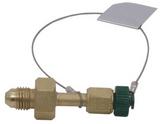
The Bombardier 173784 Aircraft Oxygen Fill Adapter provides a secure interface between a ground oxygen servicing system and an aircraft’s oxygen fill valve during recharging operations. Constructed from durable, heavy-duty brass, it features an integral filter and flow-restriction orifice to help protect the aircraft’s oxygen system from contaminants and pressure spikes. The adapter connects to a high-pressure service hose on one end and a 1/4" flared tube fitting on the other, supporting reliable oxygen replenishment for Bombardier and compatible aircraft.
| General Information | |
|---|---|
| Part # | 173784 |
| Manufacturer | Bombardier |
| Shipping Information | |
|---|---|
| Product Weight | 0.2 lbs. |
| Product Dimensions | 2 x 1 x 1 in. |
| Schedule B | 7412200000 |
Customers also viewed

Customers who bought this item also purchased

AIRCRAFT COMPATIBILITY
| Compatible Aircraft* |
|---|
PRODUCT REVIEWS
This item does not have any reviews yet.
QUESTIONS & ANSWERS
The Bombardier 173784 oxygen fill adapter serves as the connection point between the ground oxygen servicing system and the aircraft’s oxygen fill valve. It enables the controlled and secure transfer of oxygen during routine maintenance or oxygen replenishment procedures. By providing a standardized interface, the adapter helps ensure compatibility between the service hose and the aircraft’s oxygen charging system.
Yes, as long as the servicing system uses a high-pressure service hose terminating in a 1/4" flared tube connection (MS33656-4). This industry-standard fitting is widely used in aviation oxygen service carts and regulators. However, operators should always verify specific aircraft model requirements to ensure full compatibility.
Yes. The adapter includes an internal filter intended to trap particulate matter before it can enter the oxygen system. This is an important safety feature, as contamination in high-pressure oxygen lines can lead to valve wear, restricted flow, or oxygen-system malfunction. The filter also reduces maintenance burden on downstream oxygen components.
The flow-restriction orifice helps regulate oxygen flow during filling, reducing the risk of sudden pressure surges that may damage sensitive aircraft oxygen components. This design also supports smoother system charging, giving technicians better control over fill rates. It enhances both safety and the longevity of the oxygen system.
The 173784 adapter is designed primarily for Bombardier aircraft but can also be used on other aircraft models that require the same connection specifications. Operators servicing regional jets, business jets, or similar platforms should consult the aircraft maintenance manual to confirm compatibility. Many service centers standardize on this adapter for Bombardier fleets due to its rugged construction and reliable performance.
Yes. The adapter must be used in conjunction with an appropriate oxygen servicing regulator to safely control pressure during system recharging. The regulator ensures that the oxygen introduced into the aircraft stays within allowable pressure limits, preventing overpressurization and system damage. This combination is standard practice for aircraft oxygen servicing.
The dust plug helps prevent foreign material – such as dust, moisture, or metal particles – from entering the adapter when not in use. Keeping contaminants out is essential for maintaining oxygen-system cleanliness and preventing ignition risks associated with debris in high-pressure oxygen environments. The dust plug also reduces the need for frequent cleaning or maintenance between uses.
Each adapter is proof-pressure tested at 3,000 PSI to verify structural integrity and leak-free operation under elevated pressures. This test rating provides a significant safety margin over typical servicing pressures. Operators can be confident that the adapter is engineered for demanding high-pressure oxygen charging environments.
Yes, as long as the oxygen cart’s hose assembly uses the correct 1/4" MS33656-4 flared connection and is intended for high-pressure aviation oxygen service. Portable oxygen carts used for aircraft maintenance commonly meet these specifications. Operators should always verify the cart's regulator settings and hose compatibility before use.
Routine maintenance typically involves visual inspection for wear, contamination, or thread damage. Cleaning should be performed using oxygen-approved cleaning solutions and lint-free materials to avoid introducing debris. Lubricants must never be used on oxygen-service fittings unless they are explicitly certified for use in oxygen applications.
The adapter is constructed from rugged brass and designed for long service life; however, it should be replaced immediately if signs of cracking, deformation, or thread damage appear. Regular inspection schedules – often tied to oxygen-system maintenance intervals – help ensure continued safe operation. Replacement is also recommended if the filter becomes compromised or if the adapter experiences an impact event.
Yes. Anyone servicing aircraft oxygen systems should be trained in oxygen safety, handling of high-pressure gas, and aircraft-specific oxygen procedures. Training helps prevent contamination, improper pressurization, or unsafe handling practices that could lead to equipment failure or fire hazards.
Technicians should ensure that all components are clean, dry, and free of oil or grease, as hydrocarbons can ignite under oxygen-rich conditions. The servicing area should be well ventilated, and operators must open valves slowly to prevent sudden pressurization. Protective eyewear is recommended, and all steps should follow aircraft OEM and oxygen-equipment guidelines.
Technicians should confirm that the threads engage smoothly without binding and that the adapter mates securely with both the service hose and aircraft fill valve. A proper seal will prevent leaks and ensure stable pressure during charging. If resistance or misalignment is encountered, operators should stop and inspect the fittings before proceeding.


