






Create yours now for free.

Need a Quote?
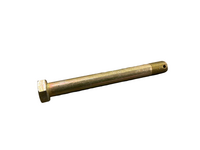
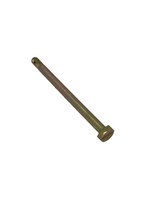
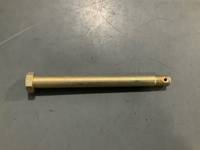
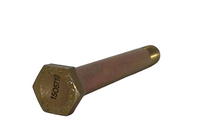
The Clyde 1505388 Aircraft Towbar Shear Bolt is a replacement safety fastener designed to protect aircraft nose landing gear and towbar assemblies during towing operations. Engineered to break under excessive load, this calibrated shear bolt acts as a mechanical fuse, helping prevent costly structural damage to aircraft and ground support equipment.
| General Information | |
|---|---|
| Part # | 1505388 |
| Manufacturer | Clyde |
| Shipping Information | |
|---|---|
| Product Weight | 0.1 lbs. |
| Product Dimensions | 3 x 0.5 x 0.5 in. |
| Schedule B | 8716900000 |
| ECCN | EAR99 |
Customers also viewed

Customers who bought this item also purchased

AIRCRAFT COMPATIBILITY
| Compatible Aircraft* |
|---|
PRODUCT REVIEWS
This item does not have any reviews yet.
QUESTIONS & ANSWERS
The Clyde 1505388 Aircraft Towbar Shear Bolt acts as a mechanical fuse within the towbar assembly. It is engineered to break under excessive load, protecting the aircraft's nose landing gear, towbar structure, and tug from structural damage. This controlled failure design is a critical safety feature during aircraft towing operations.
Aircraft nose landing gear components are highly engineered and expensive to repair or replace. If excessive torque or side loading occurs during towing, the shear bolt is designed to fail first, isolating the load from the aircraft. This prevents damage to steering collars, torque links, and structural gear components.
A shear bolt must be replaced immediately after it has broken during a towing event. Even if it has not failed, it should be inspected regularly for cracks, deformation, or corrosion. Preventative replacement is recommended if any visible wear is detected.
Sudden braking, sharp turns beyond allowable limits, tug acceleration under load, or impact with obstacles can create abnormal towing forces. In these situations, the shear bolt breaks intentionally to prevent a larger system failure. This sacrificial design protects both aircraft and ground support equipment.
No, aircraft towbar shear bolts are not intended to be reused once removed or sheared. Reinstallation of a previously stressed bolt can compromise its calibrated load rating. Always replace with a new, manufacturer-specified shear bolt.
Towbar shear bolts are engineered to fail at specific load thresholds based on aircraft type and towbar design. Substituting a generic fastener can alter the load rating, increasing the risk of nose gear damage or premature bolt failure. Using the correct Clyde 1505388 shear bolt ensures proper load protection.
Shear bolts should be visually inspected before each towing operation as part of routine towbar preventive maintenance. Ground crews should check for signs of bending, cracking, corrosion, or improper installation. Consistent inspections reduce the risk of unexpected failure.
If an incorrect or overstrength bolt is installed, excessive towing forces may be transferred directly to the aircraft's nose landing gear. This can lead to bent components, structural damage, or steering system misalignment. The shear bolt’s calibrated failure point is critical to overall towing safety.
Yes, both fixed-wing aircraft and helicopters commonly use shear bolts or shear pins in their towbar systems. The principle remains the same: controlled failure under abnormal loads to protect sensitive landing gear assemblies. This design standard is widely adopted across aviation ground support equipment.
Because shear bolts are designed to fail under abnormal loads, keeping spare shear bolts readily available minimizes aircraft downtime. A broken shear bolt can halt towing operations until a replacement is installed. Maintaining inventory supports efficient ramp operations and reduces delays.


