






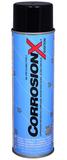
Corrosion Technologies CorrosionX Aviation, 16 oz Aerosol Can, Case of 12 - 80102-X12


Need a Quote?
The CorrosionX Aviation - 80102-X12 is a case of twelve 16 oz aerosol cans, delivering scalable and consistent protection for fleet maintenance and hangar operations. With military-qualified performance under MIL-PRF-81309H Types II and IV, this advanced formulation provides corrosion prevention, moisture displacement, and long-term protection for aircraft metal structures and electrical systems.
Key Features
- Complete case of twelve 16 oz aerosol cans for high-throughput aircraft maintenance
- Complies with MIL-PRF-81309H Type IV (Advanced Corrosion Preventive Compound)
- Protects and lubricates moving parts, avionics, micro switches, and electrical connectors
- Safe for use on all metals and composite assemblies
- Zero VOCs for safer indoor use and reduced environmental impact
- NSN: 8030-01-438-4093
Ideal for maintenance crews working across multiple aircraft, CorrosionX Aviation - 80102-X12 provides professional-grade corrosion control in a convenient bulk format.
| General Information | |
|---|---|
| Part # | 80102-X12 |
| Manufacturer | Corrosion Technologies |
| Shipping Information | |
|---|---|
| ECCN | EAR99 |
| Hazmat/Dangerous Goods | Yes |
Customers also viewed
AIRCRAFT COMPATIBILITY
| Compatible Aircraft* |
|---|
PRODUCT REVIEWS
This item does not have any reviews yet.
QUESTIONS & ANSWERS
Unlike traditional wax- or grease-based barrier coatings, CorrosionX Aviation uses Fluid Thin Film Coating (FTFC) technology, which actively displaces moisture and interrupts the electrochemical corrosion process. Rather than trapping moisture beneath a hard coating, it bonds to metal surfaces through polar bonding, forming a thin, dielectric film that penetrates deep into seams, lap joints, and rivet lines. This active barrier prevents electron transfer, which is essential to halting corrosion at the molecular level.
Yes! CorrosionX Aviation is not only safe for electronics – it’s actually recommended for use on electrical connectors, micro-switches, circuit breakers, and antenna bases. Its high dielectric strength helps prevent shorts while forming a moisture-resistant barrier. In many cases, it can restore function to components affected by corrosion, making it both a preventative and restorative tool for avionics.
CorrosionX is safe for most materials commonly found in aircraft. It does not stain or etch paint, and it won’t damage plastics or acrylics. However, it may cause swelling in certain natural or silicone rubbers, so caution should be exercised when applying it around sensitive rubber seals. As a general rule, if the material is affected by fuel or oil, it may also react to CorrosionX.
It’s generally recommended that CorrosionX Aviation be reapplied every two years, ideally during the aircraft’s annual inspection. A single treatment typically provides long-lasting protection by forming a molecular bond with metal surfaces, maintaining its effectiveness over time and through environmental exposure.
Yes, and that’s actually a good sign. After treatment, you may notice seepage from lap seams, rivets, and screws. This is evidence that CorrosionX is penetrating moisture-prone areas and displacing trapped water – providing protection exactly where corrosion tends to start. The product is harmless to exterior surfaces and can be wiped away easily.
No! One of the advantages of CorrosionX over traditional coatings is its practically weightless application. Unlike waxy barrier coatings that build up over time and may add weight or obscure flaws, CorrosionX creates a film only a few microns thick, which doesn’t interfere with inspections or weight-and-balance requirements.
The bulk liquid form of CorrosionX Aviation is nonflammable and does not contain volatile organic compounds (VOCs), making it a safer choice for use in confined hangars or maintenance spaces. The aerosol version uses CO₂ as a propellant, offering a nonflammable delivery method for spot treatments of accessible areas.
CorrosionX Aviation has been rigorously tested by the U.S. military and selected as the top performer in its category by the Joint Council on Aging Aircraft. For example, the Army documented more than $4 million in savings when helicopters treated with CorrosionX showed dramatically reduced corrosion-related repair costs compared to untreated aircraft after deployment in desert environments.
No! If rivets appear to loosen after application, it usually indicates preexisting corrosion that has compromised the surrounding metal – not a fault of the product. In fact, CorrosionX helps reveal these hidden corrosion issues, allowing owners or mechanics to address structural concerns before they become serious problems.
Yes, CorrosionX Aviation is safe for use on aircraft that feature composite construction with metal reinforcements or bonding points. It’s especially effective at protecting metal-to-metal contact areas, grounding points, and fasteners that may corrode even in composite airframes. Always avoid unnecessary application on non-conductive surfaces where corrosion is not a concern.
CorrosionX is petroleum-based, so it should not be applied before painting. If your aircraft has been treated, it’s best to wait at least one year before any painting is done to ensure proper adhesion. Always remove any traces of the product from areas intended for new paint applications.
Yes! CorrosionX Aviation is qualified under MIL-PRF-81309G Type II, which certifies it as a military-grade corrosion preventive compound. This standard requires proven performance in demanding conditions, including salt fog exposure and high-humidity environments. Its military-grade status reinforces its suitability for professional aviation use.
The aerosol form of CorrosionX Aviation is ideal for spot treatments in areas such as wing roots, landing gear bays, firewall recesses, avionics bays, or battery compartments. It can also be used on control cables, cannon plugs, hinges, and locking mechanisms. The precision nozzle allows targeted application in areas prone to moisture buildup or limited access.


