





Create yours now for free.

Need a Quote?
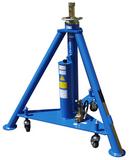
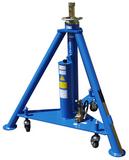
The Malabar 7215B is a 15-ton (30,000-lb) hydraulic aircraft tripod jack engineered to lift aircraft from the forward fuselage or main wing jacking points during maintenance, inspections, and ground operations. CE-marked for compliance with European aviation safety standards. OEM-specified for Embraer ERJ-135, ERJ-145. Also approved for the Boeing 717 and MD-80.
Standard Features
- Hand pump with built-in pressure relief valve
- Threaded rams with improved handwheel-style safety nut
- Quick-rising center extension for rapid initial lift
- Easy-access filler/breather cap
- Heavy-duty wheels for easy maneuverability
- Hydraulic fluid: MIL-PRF-5606
- ¾" (2 cm) spherical radius cup jack pad
- CE marked
Technical Specifications
- Rated Capacity: 30,000 lbs (13,608 kg)
- Operating Temperature: -4°F to 122°F (-20°C to 50°C)
- Pressure Relief Setting: 2,500 + 250/-0 PSIG (172.4 + 17.2/-0 bar)
- Hydraulic Fluid: MIL-PRF-5606
- Jack Pad: ¾" (2 cm) spherical radius cup
Safety Features
- Ram Lock Nut: Prevents the ram from lowering. The ram lock nut must be lowered as the aircraft is being lifted. Ram lock nuts must be kept within 2" of the stop while raising the aircraft.
- Lock Nut Retention Ring: Prevents the lock nut from being unscrewed from the second stage.
- Pressure Relief Valve: Prevents overload during raising operations.
Aircraft Applications
The 7215B is OEM-approved for the following aircraft types:
- Embraer: ERJ-135, ERJ-145
- Boeing: 717, MD-80
- McDonnell Douglas: DC-9 Series 10, DC-9 Series 20, DC-9 Series 30, DC-9 Series 33, DC-9 Series 40, and 1 more
This list reflects aircraft for which the manufacturer has specifically approved this jack. Additional applications may be possible — always confirm jacking capacity, adapter requirements, and placement procedures with the aircraft maintenance manual before use.
Need your Malabar 7215B 15-ton tripod jack serviced, repaired, or load-tested?
Pilot John is an authorized Malabar International distributor — one of a select group of authorized partners in North America. Our pricing on Malabar jacks is competitive: PJi prices have been verified as lower than those of other major aviation supply retailers on comparable models. Every jack ships new from our North Carolina warehouse with Certificates of Conformance (CofC) and FAA Form 8130-3 documentation available at no additional cost. Need jack service, calibration, or repair? Pilot John handles that too as an authorized service center.
| General Information | |
|---|---|
| Part # | 7215B |
| Manufacturer | Malabar |
| Shipping Information | |
|---|---|
| ECCN | EAR99 |
Customers also viewed
AIRCRAFT COMPATIBILITY
| Compatible Aircraft* | |
|---|---|
| Boeing | 717 , MD-80 |
| Embraer |
ERJ-135
NOTE
This jack is used on the wing and forward fuselage of the aircraft.
,
ERJ-145
NOTE
This jack is used on the wing and forward fuselage of the aircraft.
|
| McDonnell Douglas | DC-9 Series 10 , DC-9 Series 20 , DC-9 Series 30 , DC-9 Series 33 , DC-9 Series 40 , DC-9 Series 50 |
PRODUCT REVIEWS
This item does not have any reviews yet.
QUESTIONS & ANSWERS
The Malabar 7215B uses a two-stage hydro-mechanical lifting system that helps technicians achieve greater lifting range while maintaining controlled aircraft positioning during maintenance operations. This design improves lifting stability and supports smooth elevation changes when working on regional jets and narrow-body aircraft. The hydro-mechanical configuration also helps distribute lifting loads more efficiently across the jack structure. These benefits make the aircraft tripod jack well-suited for demanding airline and MRO environments.
The adjustable hand pump allows technicians to select different handle positions for either faster lifting speed or increased pumping leverage. A shorter handle position delivers greater oil displacement for quicker no-load lifting, while a longer handle improves leverage when lifting heavier aircraft loads. This flexibility helps reduce operator fatigue during repetitive maintenance procedures. It also provides technicians with better control throughout the aircraft jacking process.
The heavy-duty swivel casters make it easier to maneuver the 7215B around crowded hangars and maintenance areas before lifting begins. Once the aircraft load is applied, the spring-loaded casters retract, allowing the jack footpads to rest firmly on the ground for greater stability. This design helps reduce unwanted movement during lifting operations and improves load transfer to the floor surface. Stable footing is especially important during aircraft inspections, landing gear work, and structural maintenance.
The Malabar 7215B features a hard chrome-plated cylinder bore, plated, unpainted components, and Skydrol-resistant paint to help protect against corrosion and exposure to hydraulic fluid. Aviation maintenance facilities often expose ground support equipment to moisture, chemicals, and harsh operating conditions that can accelerate wear. Corrosion-resistant construction helps preserve hydraulic performance and structural integrity over time. This can reduce maintenance costs and improve long-term reliability for aircraft maintenance operations.
The 7215B is factory proof-load tested at 150% of its rated lifting capacity to verify its structural strength and hydraulic reliability before entering service. Proof-load testing helps confirm that the aircraft tripod jack can safely handle demanding lifting conditions encountered during aircraft maintenance. This added level of testing supports safer lifting procedures and greater operator confidence. It also aligns with aviation industry expectations for dependable ground support equipment.
The optional air-operated hydraulic pump allows technicians to raise the aircraft jack using compressed air instead of relying solely on manual pumping. This can significantly reduce physical effort during repetitive lifting procedures and improve workflow efficiency in busy maintenance facilities. Pneumatic operation also helps speed up aircraft positioning for inspections and servicing. Facilities with existing compressed air systems often achieve faster, more consistent lifting performance.
The optional load gauge provides real-time load indication in both tons and PSIG, helping technicians monitor lifting conditions throughout maintenance operations. This additional visibility can help crews identify uneven loading conditions and maintain safer lifting practices. Load monitoring is especially useful during structural inspections, landing gear servicing, and aircraft balancing procedures. Improved load awareness can also support more accurate maintenance documentation and troubleshooting.
The 7215B combines a compact footprint, 15-ton lifting capacity, and over 100" of maximum lift height to support a wide range of aircraft maintenance tasks. Its rugged tripod structure and heavy-duty components are designed to withstand continuous use in demanding maintenance environments. Features such as the optional tow handle and corrosion-resistant finish further enhance mobility and durability in airline hangars and MRO facilities. The jack’s OEM approvals also help maintenance teams meet aircraft servicing requirements with confidence.
The Malabar 7215B was designed with serviceability in mind, featuring replaceable repair kits, accessible hydraulic components, grease fittings, and availability of OEM replacement parts. The maintenance manual also outlines detailed inspection, troubleshooting, and testing procedures to help technicians keep the jack operating safely and efficiently. Malabar recommends periodically cycling the seals during storage to help maintain hydraulic integrity and extend component life. These maintenance-friendly features help reduce downtime and support long-term fleet maintenance operations.
The 7215B includes a controlled-release valve system that allows technicians to carefully manage lowering speed during aircraft maintenance procedures. Combined with the threaded extension screw and adjustable hand pump, the jack provides more precise aircraft positioning throughout lifting and lowering operations. The ability to fine-tune lifting motion helps reduce sudden load shifts and improves overall operational safety. These features are especially valuable during detailed inspections and maintenance procedures requiring careful aircraft stabilization.


