






Nav-Aids P96255-3 Pitot Test Adapter – Select Cessna Aircraft


Create yours now for free.

Need a Quote?
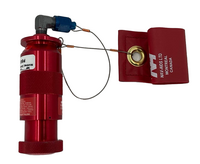
The Nav-Aids P96255-3 is a pitot test adapter designed for a wide range of Cessna aircraft, including the 150, 152, 170, 172, and 180 series, the 205, 206, and T206H, and the 210.
| General Information | |
|---|---|
| Part # | P96255-3 |
| Manufacturer | Nav Aids LTD |
| Shipping Information | |
|---|---|
| Product Weight | 1 lbs. |
| Product Dimensions | 11 x 4.5 x 3 in. |
| HTS | 9026906000 |
| ECCN | EAR99 |
Customers also viewed
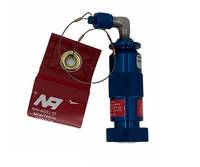
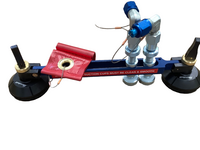
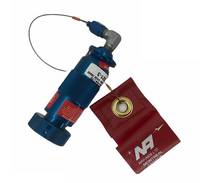
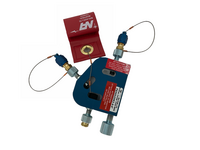

Customers who bought this item also purchased
AIRCRAFT COMPATIBILITY
| Compatible Aircraft* | |
|---|---|
| Cessna | 150 , 152 , 172 , 177 , 180 , 182 , 206 , 210 |
PRODUCT REVIEWS
This item does not have any reviews yet.
QUESTIONS & ANSWERS
The Nav-Aids P96255-3 is a pitot test adapter designed to connect a pitot-static test unit to the pitot probe on select Cessna single-engine aircraft during pitot-static system testing and certification. It provides a reliable, airtight interface between the test set and the aircraft's pitot system, allowing technicians to apply and measure pressure in order to verify the accuracy of airspeed-dependent instruments. The P96255-3 is a purpose-built tool for general aviation MRO shops, A&P mechanics, and avionics technicians maintaining Cessna piston aircraft.
The P96255-3 is compatible with a broad range of Cessna single-engine aircraft, including the 150, 152, 170, 172, and 180 series, the 205, 206, and T206H, and the 210. This wide compatibility reflects the shared pitot probe configuration found across many of Cessna's most popular piston airframes – from the entry-level 150/152 trainer to the high-performance turbocharged T206H and retractable-gear 210. Shops and independent A&P mechanics maintaining mixed Cessna fleets will find the P96255-3 covers a substantial portion of their pitot-static testing needs with a single adapter.
Under FAR 91.411, any aircraft operated under IFR must have its pitot-static system inspected and tested every 24 calendar months to verify that the altimeter, airspeed indicator, and vertical speed indicator are performing within prescribed accuracy tolerances. For popular IFR-capable Cessna models like the 172, 206, and 210 – widely used for personal transportation, flight training, and charter operations – this biennial inspection is a routine part of the maintenance schedule. Using a purpose-built adapter like the P96255-3 ensures a proper, leak-free connection to the pitot probe, which is essential for obtaining accurate and repeatable test results.
The P96255-3 is designed to fit directly onto the pitot probe of compatible Cessna aircraft, creating an airtight seal that allows pneumatic pressure from a pitot-static test unit to be introduced into the pitot system. A secure fit is critical – any gap or leak at the adapter-to-probe connection will prevent the system from holding the test pressure needed to accurately evaluate airspeed indicator performance. Always inspect the adapter's seals before use and confirm a proper fit before beginning the test sequence.
Yes. The P96255-3 is designed for use with standard pitot-static test sets commonly used in general aviation and light aircraft MRO environments. Its connection interface is compatible with the pitot hose assemblies included in dedicated Nav-Aids air data accessories kits, as well as most other professional pitot-static testers used in the field. Always confirm hose assembly compatibility with your specific test set before beginning a test procedure.
Yes. While the P96255-3 is sold individually, it is also included as a component of the Nav-Aids CES206/210-612 Air Data Accessories Combination Kit, which is designed specifically for the Cessna 206 and 210 aircraft. The combination kit bundles the adapter, hose assemblies, and accessories needed for a complete pitot-static test setup, eliminating the need to source components separately. For shops that primarily service Cessna 206 and 210 aircraft, the CES206/210-612 kit offers a convenient all-in-one solution.
For Cessna aircraft operated under IFR, FAR 91.411 requires pitot-static system testing every 24 calendar months – a test that must be performed by a certificated repair station or appropriately rated A&P mechanic. Aircraft flown exclusively under VFR are not subject to this regulatory requirement, though periodic pitot-static checks are still considered good maintenance practice to ensure instrument accuracy. Shops that perform these inspections regularly will benefit from having a dedicated, reliable adapter like the P96255-3 on hand.
The P96255-3 should be inspected before each use for signs of seal wear, cracking, or contamination that could compromise the pneumatic seal between the adapter and the pitot probe. The adapter's internal seals are wear items that should be replaced as needed; using a degraded seal risks air leaks during testing, which can produce inaccurate results and require retesting. When not in use, the adapter should be stored in a clean, dry environment to protect the sealing surfaces and extend service life.
Pre-testing the adapter and hose assembly before connecting to the aircraft is a recommended best practice in pitot-static maintenance – it confirms the test circuit is leak-free before any pressure is applied to the aircraft's instruments. This is typically done using a pre-test probe inserted into the adapter to simulate the pitot probe interface, allowing technicians to pressurize the circuit and check for leaks without involving the aircraft. Confirming test equipment integrity before aircraft connection helps protect sensitive avionics and ensure reliable test results.


