






ShockBox TK1763-2/935SB King Air Nose Landing Gear Test Box


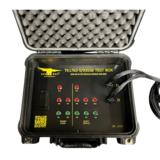
The ShockBox TK1763-2/935SB Hydraulic Nose Landing Gear Test Box is a landing gear rigging test box for Beechcraft King Air aircraft equipped with factory-installed, hydraulically actuated nose landing gear. It is derived directly from the King Air maintenance manual and is built to meet or exceed the Textron TK1763-2/935 test box schematic, giving technicians a dedicated tool to aid in rigging and verifying nose gear actuator limit switches.
By interfacing with the King Air’s nose gear control and indication circuits, this Shockbox unit enables quick diagnosis of rigging issues and misadjusted limit switches, reducing troubleshooting time and minimizing extended aircraft downtime. Although primarily aimed at aviation maintenance professionals working on King Air fleets, any shop responsible for similar hydraulic landing gear systems can benefit from its capabilities and straightforward layout.
Key Features
- Hydraulic nose landing gear test box for Beechcraft King Air aircraft with hydraulic gear systems.
- Designed in accordance with the King Air maintenance manual and the TK1763-2/935 schematic.
- Assists in rigging and verifying nose gear actuator limit switch settings.
- Packaged in a protective carrying case for durability and ease of storage.
- Reduces troubleshooting time by providing quick access to nose gear electrical circuits.
- Ideal for King Air maintenance shops, regional operators, and any facility handling comparable hydraulic nose gear systems.
| General Information | |
|---|---|
| Part # | TK1763-2/935SB |
| Manufacturer | Shockbox Test Equipment |
| Shipping Information | |
|---|---|
| Product Weight | 6.9 lbs. |
| Product Dimensions | 14 x 12 x 6 in. |
| Schedule B | 9031200000 |
| ECCN | EAR99 |
Customers also viewed
AIRCRAFT COMPATIBILITY
| Compatible Aircraft* | |
|---|---|
| Hawker Beechcraft | King Air |
PRODUCT REVIEWS
This item does not have any reviews yet.
QUESTIONS & ANSWERS
The ShockBox King Air Nose Landing Gear Test Box is a dedicated diagnostic tool designed specifically for Beechcraft King Air aircraft equipped with factory-installed hydraulically actuated nose landing gear. It provides technicians with a way to interface directly with the nose gear control and indication circuits to aid in rigging and verifying actuator limit switches per the King Air maintenance manual. This makes it a valuable asset for troubleshooting misadjusted switches without resorting to guesswork or disassembly. By offering a structured, maintenance-manual-based test setup, it supports faster, more reliable landing gear inspections.
By giving maintenance teams direct access to the King Air’s nose gear electrical and hydraulic control circuits, the test box eliminates the need to probe deep in the harness or rely on trial-and-error during troubleshooting. It allows technicians to verify wiring continuity, switch sequence logic, and sensor responses on the ground, which speeds up fault isolation. This ground-based test capability significantly shortens diagnostic cycles compared with traditional methods that may require partial system disassembly or extended bench testing. For operators, this translates into shorter maintenance events and faster return to service.
Proper rigging of landing gear limit switches ensures that the nose landing gear is correctly detected as “up,” “down,” or in transit, which is critical for safe operation and accurate cockpit indications. Misadjusted switches can cause false indications, system warnings, or even unsafe gear deployment logic. The ShockBox nose gear test box allows technicians to simulate and verify switch positions under controlled conditions, reducing the likelihood of such issues. This precision supports both airworthiness and pilot confidence during preflight checks.
Maintenance technicians working in FBOs, charter operations, and aviation repair stations that support King Air fleets benefit most, as this tool streamlines a specific but common maintenance task. Regional operators or line maintenance teams that routinely service hydraulically actuated nose gear systems will find the test box helps improve throughput and reduce aircraft downtime. It also suits facilities that aim to bring more diagnostic work in-house rather than rely on OEM support or external shops. Regardless of the setting, the tool helps ensure consistent, reliable landing gear diagnostics.
Using the King Air Nose Landing Gear Test Box during scheduled inspections helps catch limit-switch or wiring issues before they manifest as in-service failures. Regularly verifying gear sensor behavior and electrical continuity can highlight wear or drift in critical components that might otherwise go unnoticed. Early detection allows maintenance teams to address problems proactively during scheduled checks, minimizing unexpected gear-related events. This regular verification supports improved safety margins and predictable maintenance planning.
The TK1763-2/935SB is specifically designed in accordance with the King Air maintenance manual and the corresponding Textron schematic, which means its connectors and circuit interfaces are tailored to that aircraft family. While the ShockBox line includes breakout boxes for other models, this particular unit is not universal and should be matched to the correct aircraft to ensure reliable results. Using model-specific test boxes with the proper schematics ensures technicians can follow established procedures without risking incorrect connections or misleading test data. Always consult maintenance documentation before attempting crossover use.
Directly probing landing gear wiring or connectors during troubleshooting can risk damage to insulation, connector pins, or sensitive components, and may introduce shorts or false readings. The King Air Nose Landing Gear Test Box provides clearly labeled access points that eliminate the need for ad-hoc probing and protect the integrity of the aircraft harness. Using a purpose-built interface reduces the likelihood of accidental shorts or component damage while enabling technicians to safely monitor real-time electrical behavior. This structured approach enhances both technician safety and gear system reliability.
Because it is built to meet or exceed the specifications outlined in the King Air maintenance manual and the original TK1763-2/935 schematic, the test box allows technicians to precisely follow the official rigging and verification procedures as documented. This alignment with maintenance documentation supports compliance and helps ensure test results align with approved practices. When proper procedures are followed, it reduces the chance of oversight or interpretation errors that can occur with improvised testing methods. For organizations under regulatory oversight, this consistency helps maintain strong maintenance records.
During comprehensive pre-flight checks or functional tests, verifying the correct operation of landing gear sensors and switches can prevent in-flight anomalies. The King Air Nose Landing Gear Test Box lets technicians perform these checks on the ground with clear, interpreted feedback, avoiding guesswork. This not only confirms the gear’s electrical performance but also builds confidence that the mechanical system is responding as intended under load. For operators who prioritize readiness and reliability, this diagnostic clarity is particularly valuable.
The TK1763-2/935SB is packaged in a protective carrying case that enhances durability and makes it easier to transport between workshop benches or hangar locations. For line technicians or field maintenance teams that perform work away from central shops, this portability means they can bring the test tool directly to the aircraft without extra packaging concerns. It also helps keep the unit organized and protected when not in use, reducing wear and tear over time. Its compact, rugged design makes it a practical addition even in mobile support scenarios.


