






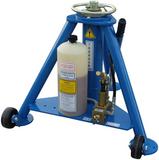
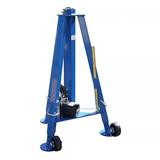
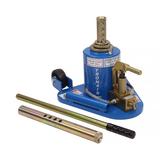
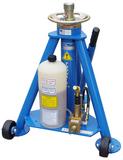
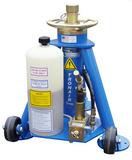
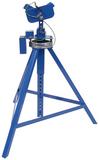
02-0517-0132 - Tronair 02-0517C0140 – 5-Ton Tripod Jack


The 02-0517-0132 is a specific part number of the series Tronair 02-0517C0140. For more generalized information on this item series or for more options, click here.

| Alternate Models | |
|---|---|
| 02-0517-0132 | Previous Model Number |
| 02-0517-0140 | Previous Model Number |
| General Information | |
|---|---|
| Part # | 02-0517-0132 |
| Manufacturer | Tronair |
| NSN | 1730016503416 |
| Manual 1 | View Tronair 02-0517C0140 Parts and Operation Manual |
| Shipping Information | |
|---|---|
| Shipping Weight | 176 lbs. |
| Shipping Dimensions | 37 x 32 x 25 in. |
| Freight NMFC | 186600 |
| Schedule B | 8425420000 |
| ECCN | EAR99 |
Customers also viewed
Customers who bought this item also purchased
AIRCRAFT COMPATIBILITY
| Compatible Aircraft* | |
|---|---|
| Agusta | AW169 , AW189 |
| Airbus Military (CASA) | 212-100 , 212-200 , CN-235/HC-144A |
| Bell | 206B3 , 206L4 , 206LT , 214 , 214ST , 407 , 407GX , 427 , 429 , 430 , 505 , CH-139 , OH-58 , TH-67 |
| Cessna |
Citation CJ4
NOTE
This jack is used on the main landing gear. Two jacks per aircraft are required.
,
Mustang 510
NOTE
Nose/main landing gear jacks – 3 jacks, 2 main jack pads (R-1798), and 1 nose jack pad (R-2008) per aircraft required.
|
| Eclipse |
500
NOTE
This jack is used on the aircraft's main landing gear. Two main jacks are required per aircraft.
|
| Eurocopter | AS365N Dauphin |
| Fokker | 50 |
| Grob | G120A |
| HondaJet |
HA-420 HondaJet
NOTE
This jack is used on the aircraft's main landing gear. Two main jacks are required per aircraft.
|
| Piaggio |
P-180 Avanti
NOTE
This jack is used on the aircraft's nose landing gear.
|
| Sikorsky | CH-148 , H-92 Superhawk , S-92 |
PRODUCT REVIEWS
While all other sellers give 8-10 weeks delivery time, PilotJohn's product was ready to ship the day after we ordered it, and for this alone it deserves 5 stars.
The product was packaged on a pallet, protected by a wooden frame, and arrived with intercontinental shipping, and we had no problems. However, it would have been better if it was a wooden case.
Product works as expected, and is being used on a regular basis with no issues. Price was better than manufacturer and was a shorter lead time than expected.
Jacks were received bolted onto small pallets with a wooden frame of 2x4s around them. The frames weren't even screwed into pallet and not constructed very well. Expected a crate considering value of product.
The jacks are the correct height for use on our 3 different types of helicopter.
QUESTIONS & ANSWERS
Yes, the tripod jack can be rolled by hand on its integrated wheels for easy mobility in the hangar or on the ramp. For longer-distance relocation, it can also be lifted with a crane or forklift and secured in a freight-rated transportation vehicle. Since the jack weighs about 105 lbs (48 kg), proper lifting and securing procedures are essential for safe handling. Using a wooden crate with the jack fully secured inside is recommended for shipping, and photos of crated units are available upon request.
The jack ships fully assembled and tested at the factory – no additional assembly is required. However, operators should conduct pre-use checks to verify fluid levels, inspect all nuts and fittings, and ensure the unit is free of leaks or damage before lifting an aircraft.
For long-term storage, the jack should be kept with the ram fully retracted in a clean, dry environment between -20°C and +50°C (-4°F to 122°F). If stored outdoors, a full-coverage waterproof tarp or canvas should be used for protection. The unit can also be exercised every 90 days to prevent seal deterioration.
The jack must be used by skilled and trained aircraft technicians familiar with aircraft jacking procedures. Employers are responsible for providing operator training that covers safe use, proper placement, and lifting techniques, as well as compliance with the aircraft manufacturer’s maintenance instructions.
Tronair recommends checking fluid levels before each use and performing a full capacity load test annually at 105% to 110% of rated load. Regular inspections should also include cleaning, lubricating casters, and exercising the rams to maintain seal integrity.


