






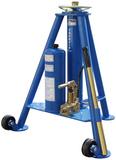
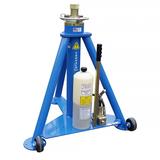
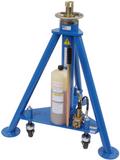
02-7828-0100 - Tronair 02-7828C0110 – 5-Ton Tripod Jack


The 02-7828-0100 is a specific part number of the series Tronair 02-7828C0110. For more generalized information on this item series or for more options, click here.

| Alternate Models | |
|---|---|
| 02-7828-0100 | Previous Part Number |
| 02-7828-0110 | Previous Part Number |
| General Information | |
|---|---|
| Part # | 02-7828-0100 |
| Manufacturer | Tronair |
| Manual 1 | View Tronair 02-7828C0110 Parts and Operation Manual |
| Shipping Information | |
|---|---|
| Shipping Weight | 170 lbs. |
| Shipping Dimensions | 31 x 31 x 24 in. |
| Freight NMFC | 186600 |
| Schedule B | 8425420000 |
| ECCN | EAR99 |
Customers also viewed

Customers who bought this item also purchased
AIRCRAFT COMPATIBILITY
| Compatible Aircraft* | |
|---|---|
| Fairchild/Dornier | Dornier DO328 , Dornier DO328 Jet , Envoy 3 |
| Gulfstream |
G200 (Galaxy)
NOTE
This jack is used on the nose landing gear.
|
PRODUCT REVIEWS
This item does not have any reviews yet.
QUESTIONS & ANSWERS
The Tronair 02-7828C0110 5-ton tripod jack is commonly used to support light- to mid-size aircraft during maintenance and ground handling operations. It is designed to work in multi-jack configurations to safely lift an aircraft at approved fuselage or wing jack points. Always consult the Aircraft Maintenance Manual (AMM) to confirm jack capacity and placement requirements.
This tripod jack is not intended to lift an aircraft on its own. It must be used in conjunction with additional hydraulic jacks arranged to maintain proper balance and stability during lifting. Using multiple jacks simultaneously helps keep the aircraft level and reduces stress on the airframe.
The 02-7828C0110 includes key safety features, including ram locknuts, a pressure relief valve, and controlled hydraulic operation. The ram locknuts act as a mechanical safety device to support the load once the aircraft is raised. These features help prevent unintended lowering and reduce reliance on hydraulic pressure alone.
The Tronair 02-7828C0110 must be used with aircraft-specific jack pads that match the designated jacking points. Using the correct jack pad helps distribute the load evenly and prevents damage to the aircraft structure. Jack pad selection should always follow OEM and AMM guidance.
Routine inspections should be performed before each use to check for leaks, damage, or worn components. Tronair recommends annual load testing at approximately 105% to 110% of the jack’s rated capacity to verify safe operation. Regular maintenance helps extend service life and ensures compliance with safety standards.
This tripod jack is designed for use with approved aviation hydraulic fluids such as MIL-PRF-5606. Using the correct fluid helps ensure proper seal performance and reliable hydraulic operation. Always verify fluid specifications in the manufacturer’s documentation before servicing the jack.
The jack can be used outdoors if it is placed on a clean, hard, and level surface. However, indoor hangar use is preferred to minimize exposure to wind, uneven ground, and environmental contaminants. When stored outdoors, the jack should be fully lowered and covered with a waterproof tarp.
After lifting the aircraft, the ram locknuts must be lowered and seated firmly against the jack body. This step transfers the load from the hydraulic system to a mechanical support point. Personnel should never work under an aircraft that relies solely on hydraulic pressure.
Yes, PJi offers OEM replacement parts, seal kits, and service components specifically for the 02-7828C0110. Using genuine Tronair replacement parts helps maintain safety certifications and ensures proper fit and performance. Replacement parts should be ordered by model and serial number.
The Tronair 02-7828C0110 is intended for use by trained aircraft maintenance technicians familiar with aircraft jacking procedures. Operators should understand proper jack placement, load balancing, and the use of safety locks before lifting an aircraft. Employer-provided training and adherence to the AMM are essential for safe operation.


