





PJi's 2026 Guide to Air Data Test Sets
Key Takeaways
- Pitot-static systems measure airspeed, altitude, vertical speed, and Mach number. Regular air data testing – typically every one to two years – is required to verify instrument accuracy, detect leaks, and maintain regulatory compliance.
- RVSM compliance is a critical selection factor for aircraft operating between 29,000 and 41,000 feet. The Laversab 6300 and 6600 series both meet RVSM accuracy standards.
- SmartProbe-equipped aircraft require a three-channel test set capable of simulating AOA and AOS. The Laversab 6600-NG is purpose-built for these platforms.
- The 6300-M3 and 6300-M4 are both military-focused, with the M3 supporting AC and 28V DC power and the M4 offering an extended altitude and airspeed range for fighter and attack aircraft.
- PJi offers the full Laversab lineup with purchase, lease-to-own, and rental options – with specialists available to match the right unit to your fleet.
Aircraft pitot-static systems require precise, reliable readings to ensure the safety of flight crews and passengers. For aircraft owners and maintenance professionals, Laversab air data test sets provide a trusted, proven solution for verifying that accuracy – whether you're servicing a light general aviation aircraft or a high-performance military jet.
In this article, we'll cover how pitot-static systems work, why regular testing is essential, what to look for when selecting an air data test set, and which Laversab models are best suited for different aircraft types and maintenance requirements.
What Is an Aircraft Pitot-Static System?
An aircraft's pitot-static system is a critical network of pressure-sensitive components that measure key flight parameters, including airspeed, altitude, vertical speed, and Mach number. It consists of a pitot tube – which captures dynamic (ram) air pressure – and one or more static ports that measure ambient atmospheric pressure.
These readings are transmitted to essential flight instruments or processed by an air data computer in modern aircraft. Errors in the pitot-static system can lead to misinterpretation of speed or altitude, making system integrity a direct flight safety issue.
Why Does an Aircraft Pitot-Static System Need to Be Tested?
Flight instruments – including the airspeed indicator, altimeter, vertical speed indicator, manifold pressure gauge, and engine pressure ratio (EPR) indicator – all depend on accurate pressure measurements from the pitot-static system. To verify system integrity, maintenance personnel use a pitot-static tester – also known as an air data test set (ADTS) – which simulates pressure and vacuum conditions to calibrate instruments and detect system leaks.
Testing intervals typically range from one to two years, depending on the aircraft's operating manual and applicable regulatory requirements. Adhering to these schedules maintains flight safety and ensures compliance with aviation standards.
Why Use a Laversab Air Data Test Set?
Founded in 1982, Laversab has built a reputation for delivering reliable, accurate, and innovative air data test equipment. As an audited and approved subcontractor for the U.S. Department of Defense, Laversab supplies military-specification products to the U.S. Air Force, U.S. Navy, and other government agencies.
Laversab equipment is OEM-approved by numerous aircraft manufacturers, making it a trusted choice for major airlines, aircraft manufacturers, and certified repair stations worldwide. The company's ISO 9001:2015 certification further reflects its commitment to quality and continuous improvement.
What to Consider When Selecting an Air Data Test Set
Selecting the right air data test set requires matching the equipment to your aircraft's specific requirements. Key factors include:
Aircraft Size and Type
The size and type of aircraft significantly influence which test set is appropriate. Light aircraft and helicopters may require compact, portable testers designed for non-RVSM applications, while larger commercial or military aircraft – operating at higher altitudes and speeds – require more robust systems capable of handling high-performance demands.
RSVM Compliance
Reduced Vertical Separation Minimum (RVSM) compliance is required for aircraft operating between 29,000 and 41,000 feet. RVSM-compliant aircraft require air data test sets that meet stringent accuracy standards. The Laversab 6300 and 6600 series are designed to meet these requirements, ensuring precise measurements and regulatory compliance for high-altitude operations.
SmartProbe Compatibility
Aircraft equipped with SmartProbes™ integrate multiple sensors to deliver comprehensive air data measurements. Testing these systems requires an air data test set capable of simulating a range of flight conditions across multiple channels. The Laversab 6600-NG, with its three independent pressure channels, is specifically designed for SmartProbe-equipped aircraft.
Number of Channels
The number of pressure channels in the aircraft's pitot-static system determines the required test set configuration. Two-channel systems handle standard pitot and static pressure testing, while three-channel systems are required for aircraft that also need angle-of-attack (AOA) or angle-of-sideslip (AOS) simulation. Matching the test set to the aircraft's channel configuration ensures comprehensive and accurate results.
Laversab Air Data Test Sets Available from PJi
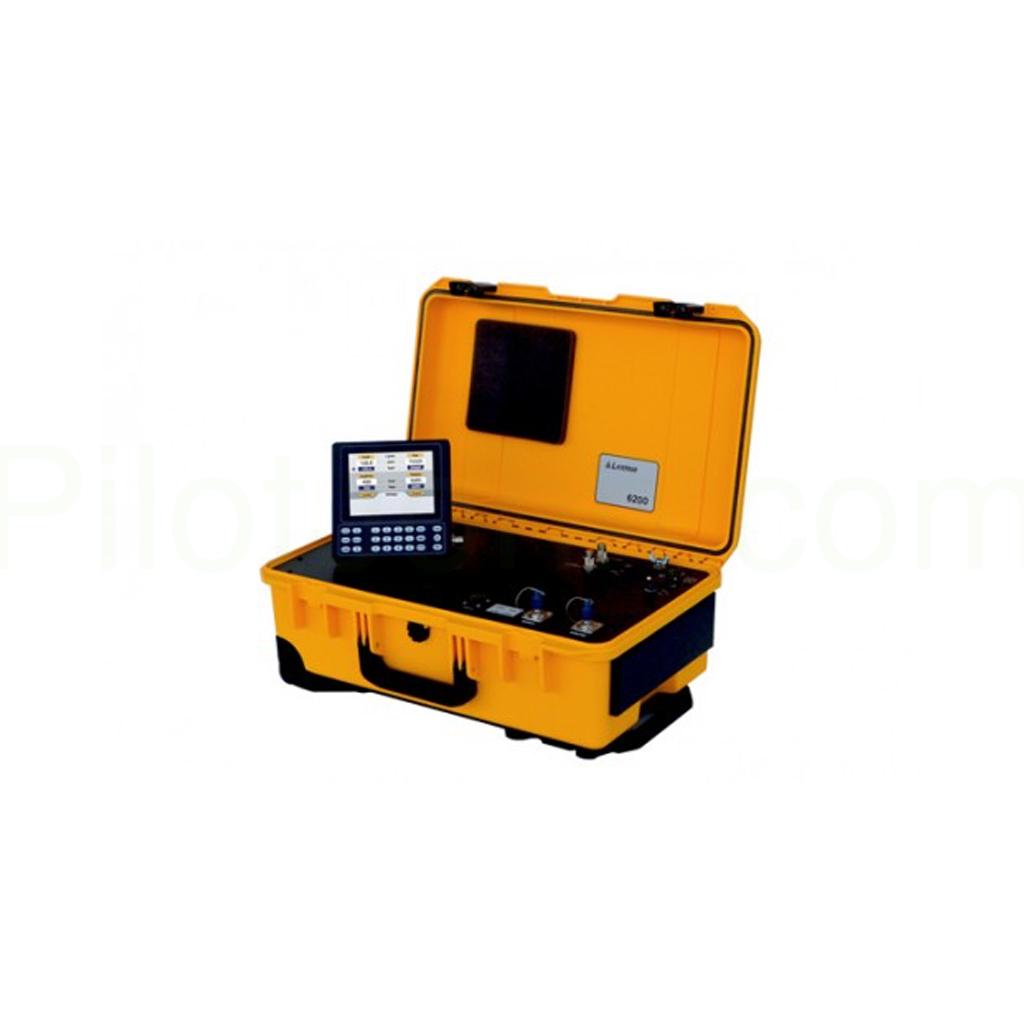
Laversab 6300-W
The Laversab 6300-W is an RVSM-compliant, two-channel automated pitot-static tester designed for direct integration with an aircraft's pitot and static systems. Built-in Wi-Fi allows technicians to operate the unit wirelessly from the cockpit using a compact, lightweight remote, supporting comprehensive testing of altimeters, climb indicators, airspeed and Mach indicators, air data computers, and autopilot systems. Integrated pressure and vacuum pumps, along with emergency manual bleed-down valves, ensure reliable, safe performance throughout the testing process. The 6300-W requires calibration only once a year, minimizing downtime for maintenance.
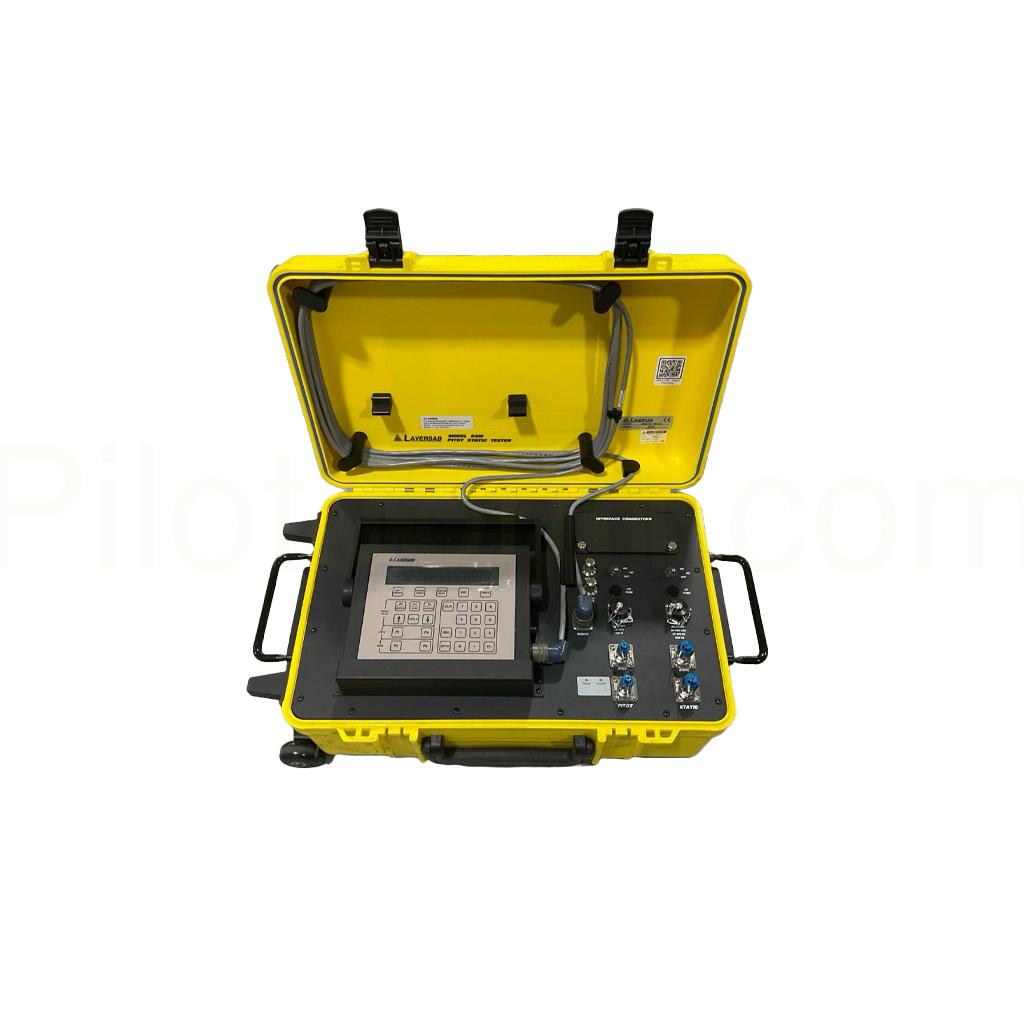
Laversab 6300-M3
The Laversab 6300-M3 is an RVSM-compliant, two-channel automated pitot-static tester engineered for military and defense applications. Its compact, lightweight remote unit allows cockpit operation for testing the full pitot-static system – including altimeters, climb indicators, airspeed/Mach indicators, air data computers, and autopilots. Built-in vacuum and pressure pumps with a membrane dryer and emergency manual bleed-down valves provide reliable, safe test performance across a wide operating temperature range suited for diverse military environments. The "Profiles" feature allows operators to execute preset test sequences with a single keypress, and the unit supports both AC and 28V DC power sources. Annual calibration keeps maintenance downtime to a minimum.
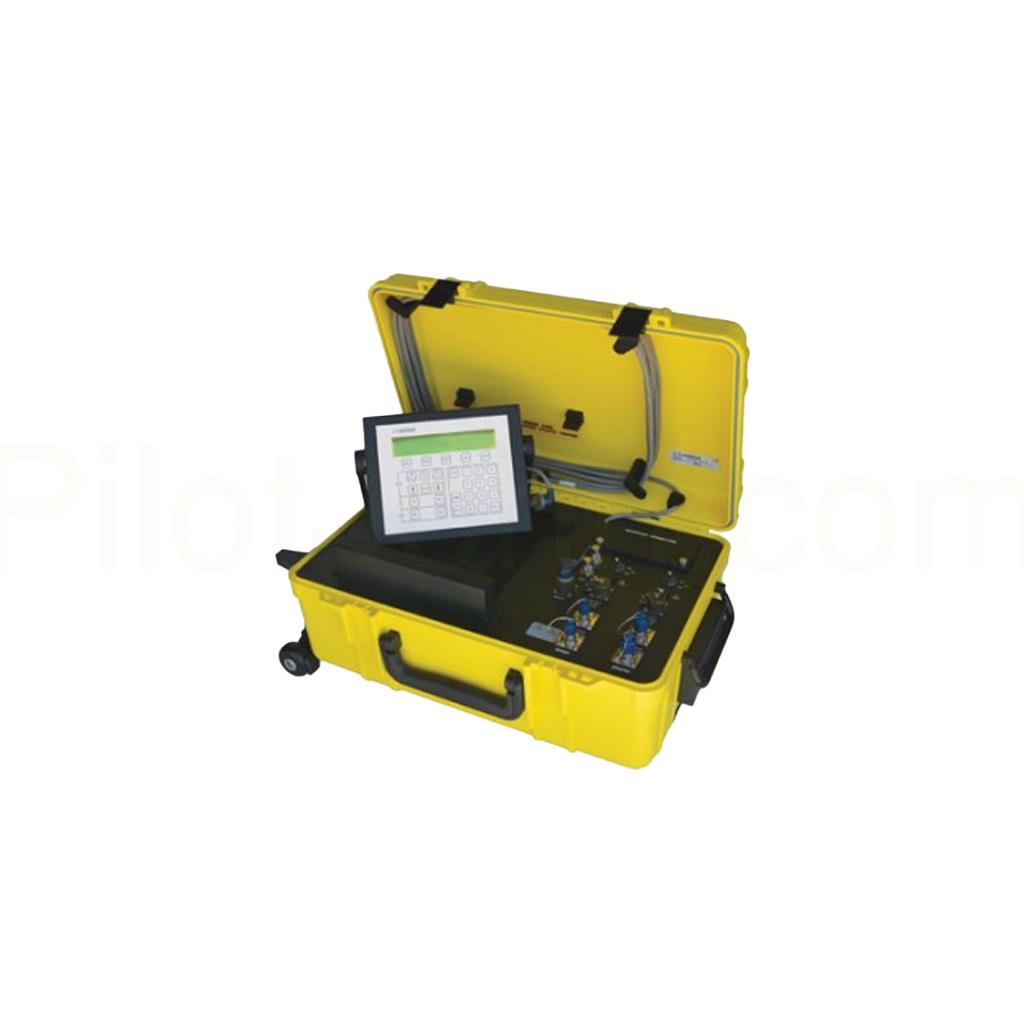
Laversab 6300-M4
The Laversab 6300-M4 shares the same core architecture as the 6300-M3 – RVSM compliance, built-in pump and membrane dryer, Profiles functionality, cockpit remote operation, and annual calibration – but is specifically engineered for high-performance fighter and attack aircraft. Its key distinction from the M3 is its extended altitude and airspeed range, tailored for the demanding performance envelope of combat aircraft, and its AC-only power compatibility (90V to 260V, 47 to 440 Hz), without the 28V DC option available on the M3.
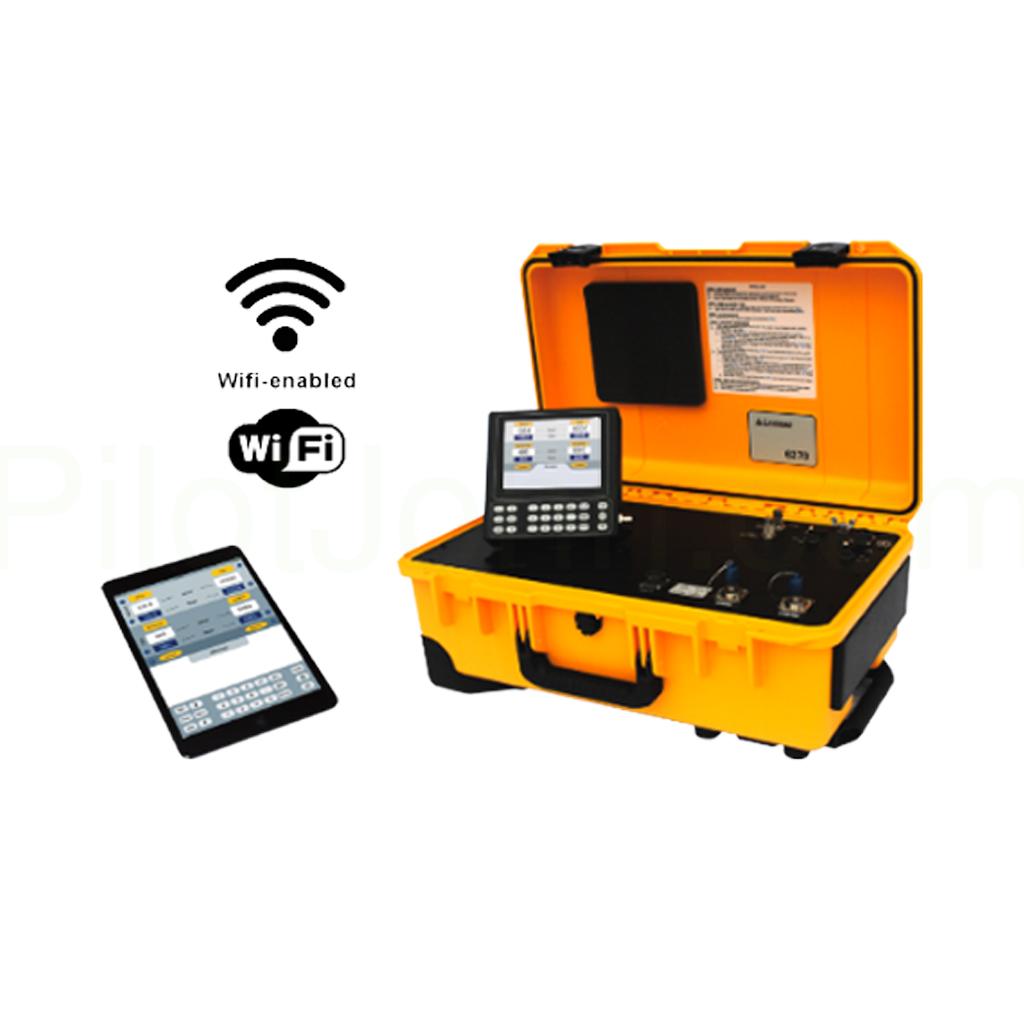
Laversab 6600-NG
The Laversab 6600-NG is an RVSM-compliant, three-channel automated pitot-static tester specifically engineered for aircraft equipped with SmartProbes™. Its three outputs – primary static (Ps1), pitot (Pt), and a configurable third channel (Ps2) capable of simulating AOA or AOS – provide the flexibility needed for modern SmartProbe-equipped platforms, including Embraer E-Jets, Bombardier C-Series, Gulfstream, and HondaJet. A compact remote allows cockpit operation for full system testing, and built-in Wi-Fi enables wireless control via tablet. The Profiles feature streamlines test execution, and optional features include a removable eight-hour battery and an extended operating temperature range for added versatility. Like other Laversab models, the 6600-NG requires calibration only once per year.
The Bottom Line
Accurate pitot-static system testing is fundamental to flight safety, and having the right air data test set for your aircraft type makes all the difference. Laversab's 6300 and 6600 series deliver RVSM-compliant, OEM-approved performance across a wide range of applications – from general aviation and commercial operations to military and SmartProbe-equipped platforms.
At Pilot John International® (PJi®), our aviation specialists are ready to help you identify the ideal Laversab air data test set for your aircraft and maintenance requirements. We offer flexible acquisition options, including purchase, lease-to-own, and one-time rentals. Contact our team today by phone, email, or live chat to get started.