






ATEQ ADSE 740 – Pitot-Static Tester/Air Data Test Set


Create yours now for free.

Need a Quote?
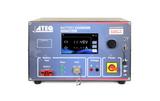
The ATEQ ADSE 740 is a precision-engineered dual-channel pitot-static tester designed specifically for laboratory and workshop environments. Housed in a 19-inch 6U rack mount chassis, this standalone air data test bench is purpose-built to calibrate and verify the performance of key flight instruments such as altimeters, airspeed indicators, Mach meters, vertical speed indicators, and air data computers. With RVSM-compliant accuracy, intuitive software integration, and built-in test automation, the ADSE 740 serves as both a calibration system and a pressure standard.
This tester is available in four testing setups:
- Static Pressure Extended Range Testing (up to 100000 ft & 10000 ft/min)
- High Speed Testing (Max 1000 Kts)
- EPR / Cabin Pressure / Outflow Valve Testing - Static Wick Only
- Low Speed Range Testing (0 to 350 kts) instead of 0 to 800 kts range - Static Wick Only
Key Features
- Enables independent or simultaneous generation and measurement of static (Ps) and total (Pt) pressures
- High-accuracy sensors deliver unmatched resolution across altitude, airspeed, and Mach testing ranges
- RVSM compliant with programmable leak testing and flight envelope protection
- User interface programmed with Windows® and LabVIEW® for streamlined programming, test scripting, and report generation
- Accepts pressure units in hPa, psi, inHg, mmHg, feet, meters, knots, km/h, and Mach number
- Front-panel 10" touchscreen display supports direct interaction and manual data entry
- Password-protected test schedule programming enhances data integrity and workflow security
- SCPI-compatible RS232 communication with HDMI, USB, and Ethernet connectivity options
- Delivered with pressure/vacuum pumps, tubing, fittings, power cable, and Windows software for plug-and-play deployment
- Modular internal layout simplifies servicing and electronic component access
Designed for aviation maintenance professionals, calibration labs, and avionics workshops, the ADSE 740 provides a flexible, high-performance solution for static and Pitot system testing in both standalone and integrated bench setups.
Training available by request. Reach out to one of our aviation specialists to schedule training.
| General Information | |
|---|---|
| Part # | ADSE740 |
| Manufacturer | ATEQ |
| Shipping Information | |
|---|---|
| HTS | 9026204000 |
| ECCN | EAR99 |
| Specifications | |
|---|---|
| Airspeed (1) | Range: 0 to 800 kts, Accuracy: ± 0.5 kt at 50 kts |
| Airspeed Mach | Range: 0 to 4.0 Mach, Accuracy: ± 0.0006 M at 0.8 M at 25,000 ft |
| Altitude | Range: -2,300 to 60,000 ft, Accuracy: ± 3 ft at 0 ft |
| Altitude Rate | Range: 100 to 6,000 ft/min, Accuracy: ± 10 ft or ± 1 % |
| Calibration | Recommended period 12 months |
| Dimensions | 440 x 260 x 380mm (17.3 x 10.2 x 14.9 inch) |
| Ease of Maintenance | Modular design permitting ease of accessibility to mechanical assemblies and electronic components |
| Ease of Use | Windows human/machine interface, Program script, Easy programming of test reports |
| Pitot Sensor (2) | Range: 0 to 1,455 DhPa, Accuracy: ± 0.30 DhPa |
| Power Supply | 90/264 VAC from 50 to 400Hz |
| Screen | 10” Touch Screen LCD colour |
| Static Sensor (2) | Range: 72 to 1,100 hPa, Accuracy: ± 0.13 hPa |
| Temperature Operating | Operating: 10°C to 40°C (50°F to 104°F), Storage: -20°C to +60°C (-4°F to 140°F) (Extanded Range on-demand) |
| Weight | 20kg (44 lbs) |
Customers also viewed
AIRCRAFT COMPATIBILITY
| Compatible Aircraft* |
|---|
PRODUCT REVIEWS
This item does not have any reviews yet.
QUESTIONS & ANSWERS
The ADSE 740 is designed to test and calibrate altimeters, airspeed indicators, vertical speed indicators, Mach meters, air data computers, and sensors. Its dual Ps (static) and Pt (pitot) channels allow it to function as a complete pressure standard, making it suitable for a wide variety of air data systems used in civil and defense aviation.
Unlike portable flightline testers, the ADSE 740 is designed for use in a laboratory or workshop environment. Its standalone test bench configuration makes it ideal for MROs, calibration labs, and OEM service centers. By providing controlled and precise conditions, it supports high-accuracy testing and certification.
The ADSE 740 weighs approximately 44 lbs (20 kg) and measures 17.3” x 10.2” x 15” (44 x 26 x 38 cm). While not designed for flightline use, it is compact enough to fit easily in workshops or calibration benches. Its manageable size balances precision with space efficiency in laboratory setups.
The ADSE 740 operates in temperatures from 50°F to 104°F (10°C to 40°C) and can be stored between -4°F and 140°F (-20°C to 60°C). Extended operating ranges are available on request. This makes it reliable for year-round use in typical hangar and workshop conditions.
The unit allows for programmable flight envelopes, which restrict test ranges to safe operating conditions for connected instruments. It also supports password-protected test schedules, ensuring only authorized test profiles are used. These safety measures reduce the risk of instrument overpressure or damage during calibration.
The tester supports altitudes from -2,300 to 60,000 ft with ±3 ft accuracy at 0 ft. It measures rates of climb from 100 to 6,000 ft/min with ±1% accuracy and airspeeds up to 800 knots with ±0.5 kt accuracy at 50 kt. Mach numbers up to Mach 4.0 can be simulated with ±0.0006 accuracy at 0.8 Mach and 25,000 ft.
The ADSE 740 features a programmable leak test function that allows technicians to apply pressure and monitor system stability over time. This ensures leaks are detected in pitot-static lines before they affect in-flight readings. Automated leak testing saves time and improves confidence in test results.
The tester features a 10” color touchscreen LCD running on a Windows-based and LabVIEW® environment. It allows operators to manage databases, generate test reports, and analyze statistics directly on-screen. This user-friendly interface makes it simple to program test scripts and evaluate results.
Standard delivery includes pressure and vacuum pumps, a 3 m Ps/Pt/AoA tube with AN-4 female/RB03-M connectors, a 2 m AC power cable, RS232 PC interface, Windows-compatible software, and two nipples (RB03-M/AN-4M). These accessories ensure immediate readiness for testing in laboratory settings.
The tester includes RS232 (SCPI command interface by default), plus HDMI, USB, and Ethernet ports for external communication. This connectivity supports integration with PCs, automated systems, and advanced reporting workflows, making the unit compatible with modern digital maintenance environments.
The ADSE 740 is RVSM-compliant, ensuring it meets Reduced Vertical Separation Minimum accuracy standards for high-altitude flight. Its precision sensors allow it to act as a pressure reference standard, making it suitable for certified calibration labs. Compliance supports both regulatory requirements and operator confidence.
ATEQ recommends annual calibration for the ADSE 740 to maintain its high accuracy in altitude, airspeed, and Mach number testing. Over time, even slight sensor drifts can compromise results, affecting safety and compliance. Routine calibration ensures the tester continues to meet aviation standards and deliver reliable, repeatable measurements.


