






ATEQ ADSE 746 – Pitot-Static Tester/Air Data Test Set


Create yours now for free.

Need a Quote?
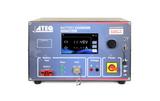
The ATEQ ADSE 746 is a high-capacity pitot-static tester built for advanced flightline testing across all aircraft categories, including high-performance civil and military aircraft. Designed with multi-channel functionality and a rugged mobile enclosure, this versatile air data test set enables full system verification of pitot, static, and AoA (Angle of Attack) parameters from a single operator interface. Featuring a wireless touchscreen tablet and four independent pressure outputs, the ADSE 746 delivers unmatched flexibility for simultaneous multi-circuit testing in complex environments such as large aircraft fleets or advanced avionics platforms.
This tester is available in three hardware options:
- 4 Channel Ps / 4 Channel Pt
- 2 Channel Ps / 2 Channel Pt / 2 Channel AoA (2000 hPa)
- 4 Channel Ps / 4 Channel Pt / 4 Channel AoA (2000 hPa)
This tester is also available in ten testing setups:
- Static Pressure Extended Range for Option (up to 100000 ft & 10000 ft/min)
- High Speed (Max 1000 Kts)
- Static Adapter Tool Suction Option
- Low speed range (0 to 350 kts) instead of 0 to 800 kts range
- EPR / Cabin Pressure / Outflow Valve
- Static Pressure Extended Range for Option (up to 100000 ft & 10000 ft/min)
- High Speed (Max 1000 Kts)
- Internal 19 to 32 V DC input
- High Speed (Max 1000 Kts)
- Pitot Static tool option
Key Features
- Supports multiple simultaneous tests with four independent pressure channels for Ps, Pt, and AoA
- Altitude simulation from -2,300 to 60,000 feet and airspeed testing up to 800 knots
- Wireless remote control unit (RCU) with waterproof touchscreen for cockpit-based control and monitoring
- RVSM-compliant with programmable leak tests, flight envelope protection, and secure test scheduling
- Displays all four critical flight parameters (altitude, airspeed, Mach, AoA) in real time
- Built-in vacuum and pressure pumps ensure complete autonomous test operation on the ramp or in the hangar
- Measurement accuracy includes ±0.5 kt at 50 kt and ±0.0006 Mach at 25,000 ft
- Optional AoA sensor range up to ±2,000 DhPa for differential pressure simulation
- Waterproof housing with integrated wheels, weather resistance, and MIL-STD-462D EMC compliance
- Delivered with power cable, hoses, fittings, Wi-Fi remote tablet, cable/tube suitcase, and rolling case
Ideal for operators servicing complex aircraft with multi-port configurations, the ADSE 746 combines power, flexibility, and portability to deliver accurate pitot-static and AoA testing for even the most demanding aviation maintenance scenarios.
Training available by request. Reach out to one of our aviation specialists to schedule training.
| General Information | |
|---|---|
| Part # | ADSE746 |
| Manufacturer | ATEQ |
| Shipping Information | |
|---|---|
| Product Weight | 68 lbs. |
| Product Dimensions | 28 x 20 x 10 in. |
| HTS | 9026204000 |
| ECCN | EAR99 |
| Specifications | |
|---|---|
| Airspeed (1) | Range: 0 to 800 kts, Accuracy: ± 0.5 kt at 50 kts |
| Airspeed Mach | Range: 0 to 4.0 Mach, Accuracy: ± 0.0006 M at 0.8 M at 25,000 ft |
| Altitude | Range: -2,300 to 60,000 ft, Accuracy: ± 3 ft at 0 ft |
| Altitude rate | Range: 100 to 6,000 ft/min, Accuracy: ± 10 ft or ± 1 % |
| Angle of Attack (2) | Range: ± 1000 DhPa, Accuracy: ± 0.35 DhPa |
| AoA Sensor (3) | Range: 72 to 2,000 hPa, Accuracy: ± 0.30 hPa |
| Calibration | Recommended period 12 months |
| Case | Completely weatherproof, meets EMC requirements MIL STD 462D |
| Ease of Maintenance | Maintenance limited to calibration, regular external cleaning |
| Ease of Use | Wi-Fi remote touch screen LCD colour, Integrated bag for cables and hoses |
| Physical | 625 x 500 x 297 mm (25.6 x 19.7 x 11.7 inch) |
| Pitot Sensor (3) | Range: 0 to 1,455 DhPa, Accuracy: ± 0.30 DhPa |
| Power Supply | 90/264 VAC from 50 to 400Hz |
| Static Sensor (3) | Range: 72 to 1,100 hPa, Accuracy: ± 0.13 hPa |
| Temperature | Operating: -10°C to 50°C (14°F to 122°F), Storage: -20°C to +60°C (–4°F to 140°F) (Extanded Range on-demand) |
| Weight | 20kg (44 lbs) |
Customers also viewed
Customers who bought this item also purchased

AIRCRAFT COMPATIBILITY
| Compatible Aircraft* |
|---|
PRODUCT REVIEWS
This item does not have any reviews yet.
QUESTIONS & ANSWERS
The ADSE 746 is designed for high-performance civil and military aircraft, covering both fixed-wing and rotary-wing platforms. It caters to all aircraft types and electrical power supplies, making it one of the most versatile pitot-static testers available. This adaptability allows operators to use a single unit across diverse fleets, streamlining maintenance processes.
Housed in a mobile weatherproof case and weighing 44 lbs (20 kg), the ADSE 746 is built for durability while remaining transportable. It includes a vertical rolling case and a separate suitcase for hoses and cables, ensuring organized storage and easy deployment. This rugged design supports efficient field use in both hangar and ramp environments.
The tester includes both pressure and vacuum pumps, making it completely self-contained for simulating pitot and static conditions. This eliminates the need for bulky external equipment, reducing setup time and simplifying maintenance checks. Built-in pumps also enhance field portability and reliability.
The ADSE 746 offers programmable flight envelopes to prevent unsafe pressure conditions that could damage sensitive avionics. It also allows technicians to create password-protected test schedules, ensuring only approved procedures are executed. Together, these features safeguard aircraft instruments while maintaining compliance with industry protocols.
The ADSE 746 includes a dedicated AoA channel that functions as a second pitot channel, enabling differential pressure simulations. This capability allows technicians to test specific AoA probes with high precision. By supporting AoA testing, the unit provides a broader range of coverage compared to standard pitot-static testers.
The unit supports altitude testing from -2,300 to 60,000 ft with an accuracy of ±3 ft at sea level. It can measure airspeeds from 0 to 800 knots, Mach numbers up to Mach 4.0, and climb rates from 100 to 6,000 ft/min. These ranges ensure compliance with RVSM standards, making the tester suitable for modern commercial and defense aircraft.
The ADSE 746 comes with a large color touchscreen PC running Windows that connects wirelessly to the unit. Technicians can perform checks directly from the cockpit or flight deck, with critical flight values displayed simultaneously and on-screen help. This feature enables single-operator testing, improving efficiency and reducing labor needs.
The unit operates between 14°F and 122°F (-10°C to 50°C) and can be stored from -4°F to 140°F (-20°C to 60°C). For specialized applications, extended operating ranges are available on request. Its rugged weatherproof case provides additional protection in challenging environments.
The tester operates on 90V to 264V AC, 50 to 400 Hz, making it compatible with global power standards. Optional configurations include 19V to 32V DC input or an internal battery pack for added flexibility. These power options allow uninterrupted testing in both hangar and remote environments.
Standard delivery includes Wi-Fi remote control, two RB03-M/AN-4M nipples, 10 m pitot and static hoses with connectors, a 10 m AC cable, and a vertical rolling case for storage. A separate suitcase is also provided for hoses and electrical cables. These accessories ensure technicians can deploy the unit immediately upon delivery.
Maintenance is straightforward and limited to annual calibration and routine external cleaning. The unit includes built-in self-check capabilities that further reduce the need for frequent servicing. Following the recommended 12-month calibration interval ensures accuracy and compliance with aviation safety standards.
Calibration ensures the tester maintains its high accuracy across altitude, airspeed, Mach, and AoA measurements. Over time, even small sensor drifts can affect results, potentially leading to incorrect maintenance decisions. Regular calibration preserves compliance with aviation standards and guarantees safe, reliable testing.


