






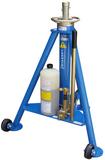
02-0524-0100 - Tronair 02-0524C0110 – 5-Ton Tripod Jack


The 02-0524-0100 is a specific part number of the series Tronair 02-0524C0110. For more generalized information on this item series or for more options, click here.

| Alternate Models | |
|---|---|
| 02-0524-0100 | Previous Model Number |
| 02-0524-0110 | Previous Model Number |
| General Information | |
|---|---|
| Part # | 02-0524-0100 |
| Manufacturer | Tronair |
| Shipping Information | |
|---|---|
| Shipping Weight | 150 lbs. |
| Shipping Dimensions | 27 x 25 x 27 in. |
| Freight NMFC | 186600 |
| Schedule B | 8425420000 |
| ECCN | EAR99 |
Customers also viewed
Customers who bought this item also purchased
AIRCRAFT COMPATIBILITY
| Compatible Aircraft* | |
|---|---|
| Aerospatiale | Nord 262 |
| Bombardier |
Dash 6 (Twin Otter UV-18A)
NOTE
This jack is used on the aircraft's nose landing gear.
|
PRODUCT REVIEWS
This item does not have any reviews yet.
QUESTIONS & ANSWERS
The ram locknut serves as a critical mechanical safety device that supports the aircraft independently of the hydraulic system. As the jack raises the load, the locknut must be lowered to remain close to the lifting point, helping prevent unintended descent. This feature is especially important in the event of hydraulic pressure loss. Proper use of the locknut significantly enhances operator safety during maintenance.
The built-in pressure relief valve protects the Tronair 02-0524C0110 from overload conditions by limiting hydraulic pressure within a safe range. This prevents excessive force from being applied to the jack or aircraft structure during lifting. By automatically regulating pressure, it reduces the risk of equipment damage or failure. This feature ensures consistent and controlled lifting performance.
Proper locking pin placement ensures the mechanical extension is securely supported and prevents structural damage to the jack. The manual highlights that incorrect placement can lead to deformation of the ram protection ring or failure under load. The locking pin must be fully seated in the designated groove, with all components correctly positioned. This attention to detail helps maintain safe load handling and prolongs equipment life.
A single-stage hydraulic design provides smooth, controlled lifting with fewer moving components compared to multi-stage systems. This simplicity reduces maintenance requirements while improving reliability in aviation maintenance environments. It also allows for precise height adjustments during lifting operations. These advantages make it a dependable solution for routine aircraft servicing.
Yes, this tripod jack is available in configurations that include an air pump for faster, less labor-intensive operation. Air-powered models use a hold-to-run valve that requires continuous operator input, adding an extra layer of control and safety. This setup can improve efficiency in high-volume maintenance operations. It also reduces manual pumping fatigue for technicians.
The jack is designed to operate from -4°F to 122°F (-20°C to 50°C), making it suitable for a wide range of maintenance environments. It should always be used on a clean, dry, and level surface to ensure stability. Proper environmental conditions help maintain hydraulic system performance and reduce component wear. Following these guidelines supports safe and reliable operation.
Regular inspection helps identify issues such as fluid leaks, worn seals, or loose fasteners before they impact performance. The manual recommends checking hydraulic fluid levels, verifying component integrity, and inspecting for leaks during operation. Early detection of wear helps prevent downtime and costly repairs. Consistent inspections also ensure the jack continues to meet safety and performance standards.
Proper maintenance includes keeping the hydraulic system clean, replacing seals when needed, and using only approved hydraulic fluid. The manual also recommends periodic lubrication of moving parts and annual load testing to verify capacity. Avoiding contamination and maintaining proper fluid levels are key to long-term reliability. These practices help ensure consistent lifting performance and extend equipment life.
The jack should be stored with the ram fully retracted to protect internal components and seals. It can be stored outdoors if covered with a waterproof tarp to prevent moisture exposure. Keeping the unit clean and within recommended temperature ranges helps prevent corrosion and degradation. Proper storage ensures the jack remains ready for use and maintains long-term durability.


