






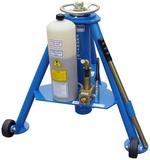
02-1040-0100 - Tronair 02-1040C0111 – 10-Ton Tripod Jack


The 02-1040-0100 is a specific part number of the series Tronair 02-1040C0111. For more generalized information on this item series or for more options, click here.

| Alternate Models | |
|---|---|
| 02-1040-0100 | Previous Model Number |
| 02-1040-0101 | Previous Model Number |
| 02-1040-0111 | Previous Model Number |
| 02A1040-0100 | Previous Model Number - With Air Pump |
| 02A1040-0111 | Previous Model Number - With Air Pump |
| 02A1040C0111 | Air Pump Installed (CE) |
| General Information | |
|---|---|
| Part # | 02-1040-0100 |
| Manufacturer | Tronair |
| NSN | 1730016533790 |
| Manual 1 | View Tronair 02-1040C0111 Parts and Operation Manual |
| Shipping Information | |
|---|---|
| Shipping Weight | 310 lbs. |
| Shipping Dimensions | 42 x 42 x 48 in. |
| Freight NMFC | 186600 |
| Schedule B | 8425420000 |
| ECCN | EAR99 |
Customers also viewed
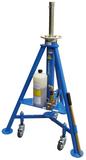
Customers who bought this item also purchased
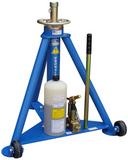
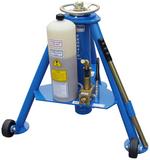
AIRCRAFT COMPATIBILITY
| Compatible Aircraft* | |
|---|---|
| Boeing | DC-9 Series 10 , DC-9 Series 20 , DC-9 Series 30 |
| Bombardier |
CL-215
NOTE
This jack is used on the aircraft's main landing gear. Two main jacks are required per aircraft.
,
CL-215T
NOTE
This jack is used on the aircraft's main landing gear. Two main jacks are required per aircraft.
,
CL-415
NOTE
This jack is used on the aircraft's main landing gear. Two jacks are required per aircraft.
|
| Cessna |
Citation X 750
NOTE
This jack is used on the main landing gear. Two jacks and two jack pads (R-1807) per aircraft are required.
|
| Dassault |
Falcon 50
NOTE
This jack is used on the main landing gear. Two jacks are required per aircraft.
,
Falcon 50EX
NOTE
This jack is used on the main landing gear. Two jacks are required per aircraft.
|
| McDonnell Douglas | DC-9 Series 10 , DC-9 Series 20 , DC-9 Series 30 |
PRODUCT REVIEWS
This item does not have any reviews yet.
QUESTIONS & ANSWERS
The Tronair 02-1040C0111 10-ton hydraulic tripod jack is engineered to safely lift an aircraft at designated jack points for maintenance, inspection, and servicing tasks. It supports fuselage or wing jacking when used in conjunction with additional jacks to maintain proper aircraft balance. The unit is intended exclusively for aircraft lifting and is not meant for metal forming or other non-aviation applications.
The jack incorporates several safety mechanisms, including a user-operated ram locknut designed to secure the load during lifting. A built-in pressure relief valve prevents the jack from being overloaded during operation. Additional safety labels, pinch-point warnings, and environmental operating guidelines further enhance operator protection. These features work together to support safe aircraft jacking and reduce the risk of accidental load shifts.
For safe operation, the tripod jack must be used on a hard, level surface that is free from contaminants or debris. The unit is designed for use in temperatures ranging from -4°F to 122°F (-20°C to 50°C), allowing for both hangar and moderate outdoor operations. Users should never work beneath a raised aircraft unless the ram locknut is properly engaged to secure the load.
The mechanical extension should be adjusted as close as possible to the aircraft jack point before applying hydraulic pressure. Operators must ensure the correct placement of the locking pin in the ram protection ring groove to prevent equipment damage or unsafe conditions. All aircraft jacks should be raised simultaneously to maintain aircraft stability. Additionally, tail or nose stands should be used when required by the Aircraft Maintenance Manual (AMM).
To lower the aircraft, all jacks involved must be lowered simultaneously to maintain the airframe's level position. If the ram’s locking nut cannot be loosened, raising the jack slightly may relieve tension and allow removal. The pump release valve should be opened slowly to achieve a controlled descent, and the ram locknut must be raised as the ram retracts.
Yes. The operator should check the hydraulic fluid level before each use, using MIL-PRF-5606 fluid when replenishment is needed. Casters should be lubricated every three months, and the jack should be cleaned as needed, avoiding pressure washing the ram area. Annual capacity testing at 105% to 110% of rated load is also recommended to verify continued performance and safety.
A pre-use check includes verifying that all nuts, bolts, and fittings are secure, confirming the correct hydraulic fluid level, and ensuring there is no visible damage to the ram, protection ring, or legs. The locking pin, washer, and ram protection ring must all be undamaged and seated correctly. Any discrepancies should be addressed before the jack is placed under load.
For long-term storage, the tripod jack should be kept with the ram fully lowered and protected from the elements with a waterproof tarp or cover. It may be stored in temperatures from -4°F to 122°F (-20°C to 50°C). If the jack remains unused for 90 days, Tronair recommends fully extending the ram and applying a water-repellant, Buna-N-compatible lubricant to preserve the ram surface.
Maintenance and repair must be performed by qualified technicians trained in hydraulic systems. O-rings and backup rings should always be replaced as sets, and great care must be taken to avoid damaging critical sealing surfaces during disassembly. Specific components, such as the pressure relief valve, are not field-serviceable and must be replaced as complete units if faulty.
Tronair recommends operators keep seal replacement kits, pump seal kits, and air-seal kits (for models equipped with the air-driven pump) in inventory. These items support routine maintenance and can reduce equipment downtime during servicing. Replacement parts must always be genuine Tronair OEM components to maintain safety and performance compliance.
The jack can be moved easily on its integrated casters for short-distance repositioning by hand. For longer-distance or vertical lifting, it may be hoisted using a crane and strap through the top of the tripod or transported with a forklift from beneath the lower tripod support. The unit weighs approximately 220 lbs (99.8 kg), so operators should follow proper lifting procedures.
The 02A1040C0111 variant features an integrated air-driven hydraulic pump, enabling faster lifting with a suitable air supply. While the operational principles remain the same, storage, installation, and maintenance involve additional considerations specific to the pneumatic pump. Model identification labels on the jack help determine which version is in service.
According to the Declaration of Conformity included in the manual, the 02-1040C0111 meets the requirements of the EU Machinery Directive 2006/42/EC. It also complies with EN ISO 12100-1, which outlines general principles for mechanical equipment safety. This certification ensures the jack is designed and manufactured to internationally recognized safety and performance criteria.


