






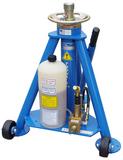
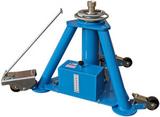
02C8130C0100 - Tronair 02-8130C0100 – 6-Ton Tripod Jack


Create yours now for free.
The 02C8130C0100 is a specific part number of the series Tronair 02-8130C0100. For more generalized information on this item series or for more options, click here.

Need a Quote?
| Alternate Models | |
|---|---|
| 02B8130C0100 | air pump and spring loaded casters |
| 02C8130C0100 | spring loaded casters |
| General Information | |
|---|---|
| Part # | 02C8130C0100 |
| Manufacturer | Tronair |
| NSN | 1730017021081 |
| Manual 1 | View Tronair 02-8130C0100 Manual |
| Shipping Information | |
|---|---|
| Shipping Weight | 180 lbs. |
| Shipping Dimensions | 34 x 34 x 30 in. |
| Freight NMFC | 186600 |
| Schedule B | 8425420000 |
| ECCN | EAR99 |
Customers also viewed
Customers who bought this item also purchased

AIRCRAFT COMPATIBILITY
| Compatible Aircraft* | |
|---|---|
| Embraer |
Phenom 300
NOTE
This jack is used on the aircraft's main landing gear and fuselage. Three jacks – 2 main, 1 fuselage – are required per aircraft.
|
PRODUCT REVIEWS
This item does not have any reviews yet.
QUESTIONS & ANSWERS
The Tronair 02-8130C0100 aircraft tripod jack has a rated capacity of 12,000 lbs (5,443 kg), making it suitable for a variety of light business jets and general aviation aircraft. It is designed to lift aircraft by the fuselage or wing when used in the proper position and quantity to maintain balance. The load on any single jack must never exceed its rated capacity.
The minimum closed height of the 02-8130C0100 is 24” (61 cm), and the maximum height obtainable is 60” (152.4 cm). It features 7” (17.8 cm) of mechanical extension and 29” (73.7 cm) of hydraulic extension. These dimensions provide flexibility for aircraft maintenance tasks requiring varied lift heights.
The Tronair 02-8130C0100 is designed to operate between -4°F and 122°F (-20°C to 50°C). This wide operating range allows the jack to perform reliably in both hangar and ramp environments. Always use the jack on a clean, dry, and level surface to maintain safe operating conditions.
This aircraft tripod jack requires MIL-PRF-5606 hydraulic fluid. Maintaining the correct fluid level is essential; the reservoir should be filled to approximately 1.5” (3.8 cm) below the vent. Using the specified aviation hydraulic fluid ensures proper performance and seal compatibility.
The maintenance schedule includes checking fluid levels before each use, lubricating casters every three months, cleaning annually or as needed, and performing a capacity test at 105% to 110% of rated capacity annually. Regular inspection of seals and hydraulic components helps extend service life. Proper maintenance is critical for safe aircraft lifting operations.
For storage, the jack should be kept between -4°F and 122°F (-20°C and 50°C). It must always be stored with the ram fully lowered to protect internal components. Outdoor storage is permitted if the unit is fully covered with a waterproof tarp or canvas.
Yes, the 02-8130C0100 is intended for use by skilled and trained aircraft technicians. Operators must be familiar with both the jack’s operation and the aircraft manufacturer’s specific jacking procedures. Employer-provided training is required to ensure safe and compliant ground support operations.
The jack includes ram locknuts that must be lowered as the aircraft is lifted to secure the load. A pressure relief valve prevents overload during raising operations. These built-in safety mechanisms are essential for maintaining stability during aircraft maintenance.
When performing a jack function load test, the applied load should not exceed the rated capacity by more than 5% to 10%. The test must be conducted under a suitable load, not on the jack itself. Following proper load-testing procedures verifies safe lifting performance.
Yes, the 02-8130C0100 is covered under the EU Declaration of Conformity and complies with the European Machinery Directive 2006/42/EC. It also meets applicable EN standards for aircraft ground support equipment. This compliance supports use in international aviation maintenance environments.


