






Create yours now for free.

Need a Quote?
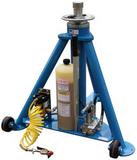
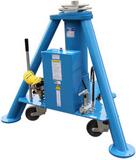
The Tronair 02A1248C0150 is a 12-Ton (24,000 lb) hydraulic aircraft tripod jack engineered to lift aircraft from the forward fuselage or main wing jacking points during maintenance, inspections, and ground operations. CE-marked for compliance with European aviation safety standards.
Standard Features
- Hand pump with built-in pressure relief valve
- Threaded rams with improved handwheel-style safety nut
- Quick-rising center extension for rapid initial lift
- Easy-access filler/breather cap
- Heavy-duty wheels for easy maneuverability
- Hydraulic fluid: MIL-PRF-5606
- ¾" (2 cm) spherical radius cup jack pad
- CE marked
- Durable powder-coat finish (Tronair Blue)
Technical Specifications
- Rated Capacity: 24,000 lbs (10886 kg)
- Operating Temperature: −4°F to 122°F (−20°C to 50°C)
- Pressure Relief Setting: 2,500 + 250/−0 PSIG (172.4 + 17.2/−0 bar)
- Hydraulic Fluid: MIL-PRF-5606
- Jack Pad: ¾" (2 cm) spherical radius cup
- Finish: Durable powder coat (Tronair Blue)
Safety Features
- Ram Lock Nut: Prevents the lowering of the ram. The ram lock nut must be lowered as the aircraft is being lifted. Ram lock nuts must be kept within 2" of the stop while raising the aircraft.
- Lock Nut Retention Ring: Prevents the lock nut from being unscrewed from the second stage.
- Pressure Relief Valve: Prevents overload during raising operations.
Aircraft Applications
The Tronair 02A1248C0150 is designed for use with a range of commercial, regional, and business aviation aircraft requiring 12-Ton tripod jack support. Specific aircraft model compatibility is defined in the Tronair Aircraft Application Guide. Always confirm jacking capacity, adapter requirements, and placement procedures with your aircraft maintenance manual before use.
Need your Tronair 02A1248C0150 12-ton tripod jack serviced, repaired, or load tested?
Pilot John is an authorized Tronair distributor and factory-authorized Tronair service center. Every jack ships new from our warehouse with Certificates of Conformance (CofC) and FAA Form 8130-3 documentation available at no additional cost. Need jack service, load-testing, or repair? Pilot John handles that too as an OEM-trained GSE service center. For more information or to request service, see our Service Center page, and see our article on why jack load testing matters. Pilot John also operates an ISO-17025 calibration center for all of your tooling and equipment calibration needs — learn more here.
| General Information | |
|---|---|
| Part # | 02A1248C0150 |
| Manufacturer | Tronair |
| Shipping Information | |
|---|---|
| Shipping Weight | 440 lbs. |
| Shipping Dimensions | 55 x 61 x 57 in. |
| Schedule B | 8425420000 |
| ECCN | EAR99 |
Customers also viewed
Customers who bought this item also purchased
AIRCRAFT COMPATIBILITY
| Compatible Aircraft* |
|---|
PRODUCT REVIEWS
This item does not have any reviews yet.
QUESTIONS & ANSWERS
The 24,000-lb lifting capacity allows the Tronair 02A1248C0150 tripod jack to support a wide range of commercial, regional, and business aircraft during maintenance operations. Higher-capacity aircraft jacks help maintenance crews safely perform tire changes, landing gear servicing, inspections, and structural work on larger airframes. The jack’s heavy-duty construction provides stable lifting support while maintaining precise control throughout the jacking process. According to the Tronair manual, the jack also offers a maximum lifting height of 92” for added servicing flexibility.
The integrated velocity fuse is designed to prevent unexpected ram lowering in the event of a hydraulic line failure during aircraft lifting operations. If a hydraulic issue develops, the velocity fuse automatically locks the ram in position until repairs are completed and the system is reset. This added safety feature helps protect technicians, aircraft structures, and nearby equipment from sudden load shifts. Tronair specifically includes the velocity fuse as part of the jack’s component safety features.
Operators should raise and lower all aircraft jacks simultaneously to help keep the aircraft level throughout maintenance procedures. Proper synchronization during lifting helps reduce uneven stress on the airframe and landing gear. This is especially important during major inspections, gear maintenance, and heavy servicing procedures where aircraft balance is critical. Maintaining a level aircraft position also improves overall workplace safety in the hangar environment.
The 92” maximum lifting height gives technicians additional clearance for maintenance tasks involving larger aircraft or extended landing gear systems. Increased lifting range can improve access to wheels, brakes, landing gear components, and lower fuselage sections during inspections and repairs. The combination of a 14” mechanical extension and a 30” hydraulic extension allows for flexible positioning across different aircraft configurations. This versatility makes the jack useful in a variety of aviation maintenance environments.
The ram protection ring helps ensure proper placement of the locking pin during mechanical extension setup. The Tronair manual includes detailed examples of correct and incorrect pin installation to prevent deformation, improper loading, or unsafe operation. Using the locking pin incorrectly could damage the ram assembly and compromise jack stability during lifting procedures. This protective design helps improve long-term reliability and operational safety for aircraft maintenance technicians.
The hold-to-run air valve requires the operator to actively hold the control lever while the air-powered pump raises the jack. Releasing the lever immediately stops upward ram movement, giving technicians better operational control during aircraft lifting. This feature helps reduce the risk of unintended jack movement and improves overall lifting precision. Pneumatic-assisted lifting can also help reduce operator fatigue during repeated maintenance procedures.
The tripod configuration distributes lifting loads evenly across the jack’s support structure, improving stability during aircraft maintenance operations. A wide stance helps minimize movement while supporting heavy aircraft loads on approved level surfaces. Tronair also recommends using tail stands or nose stands when applicable to provide additional aircraft stability. Combined with swivel casters for mobility, the tripod design balances maneuverability with dependable lifting support.
Tronair recommends checking hydraulic fluid levels before each use, lubricating casters every three months, and performing annual capacity testing at 105% to 110% of rated load capacity. The manual also advises protecting the ram seal from direct water exposure during cleaning operations. Proper preventive maintenance helps reduce hydraulic wear, improve lifting performance, and extend the operational life of the aircraft tripod jack. Using only approved MIL-PRF-5606 hydraulic fluid also supports reliable hydraulic system operation.
CE compliance confirms that the Tronair 02A1248C0150 meets applicable European machinery safety requirements and lifting equipment standards. The Declaration of Conformity references compliance with the European Machinery Directive 2006/42/EC and EN 1494 standards for mobile jacks and lifting equipment. For international operators and MRO facilities, CE-marked aircraft jacks can help support workplace safety initiatives and regulatory acceptance. This makes the jack well-suited for use in global aviation maintenance operations.
The Tronair 02A1248C0150 is designed with replaceable seals, service kits, and individually available replacement components to support long-term use. The manual includes detailed troubleshooting information, hydraulic schematics, and replacement part references to simplify maintenance and repairs. Recommended service kits for ram seals, pump seals, and caster assemblies help operators maintain performance over time. This service-friendly design can help reduce downtime and support lower long-term operating costs for aviation maintenance facilities.


